Course Management From 150 Yards

150 yards out

Hole 1 – Loyalist Golf and Country Club

The first hole at the Loyalist Golf and Country Club poses many challenges. The tee shot vexes most golfers with a  210 yard uphill shot to the crest of a hill. Due to the elevation, it plays more like 230 yards. If struck properly, the average player’s ball will be at the 150 yard marker or closer with a good view of the green (see above). The next shot is very important and this is where your course management skills are really tested!

My assessment of the hole matched the course description, with the exception of the wind direction. It was playing right to left and slightly in my face. Loyalist Golf Club’s view on their first hole is as follows:

Your Loyalist experience starts with a straightaway par that normally plays downwind. Your tee shot must avoid two large bunkers to the left side of the fairway. Careful club selection is necessary as you play your approach into an elevated, two-level green. A good chance at birdie to start.

When approaching a shot such as this, it is important to see all potential aspects of the hole that will affect your shot. Or in other words, focus on course management. The following is what I saw and used to determine my club selection:

  • The green is slightly above my ball  location because I cannot see the bottom of the flag stick. Impact: playing longer than 150 yards.
  • The green slopes right to left. Impact: The ball will likely move to the left after contacting the green.
  • Wind is blowing right to left and slightly in our face. Impact: The ball will be pushed right to left. Yardage will play longer.
  • Deep Grass on the right with large mounds. Impact: Must fly the ball to the green. Avoid going right.
  • Bunkers on the left. Impact: Stay to the right.
  • Mound at back helps protect from going long. Impact: Can be more aggressive with my approach shot.
  • Flag is up front (red flag). Impact: Sucker pin placement. Most shots will end up short if shot directly at the pin.
  • Sharp drop-off in the front of the green. Impact: A short shot will result in the ball being 10 feet below the green for the next shot.
  • Points you cannot see, but must be considered: lie of ball on the fairway (in a hole, divot, or on the flat surface), is ball above or below my feet, is the ground soft or hard and the exact yardage using my GARMIN Approach6.

These are the things that should be considered when making an approach shot from 150 yards on the first hole at Loyalist Golf Course.

After considering all the variables (took about 15 seconds) I decided to hit my 7-1ron. It is my 150 yard club, which was the yardage to the back of the green. I estimated that the ball would travel about 145 yards. I aimed just left of the pin despite the wind and slope of the green. I made good contact; the ball landed on the front part of the green and to the left of the pin. The ball only traveled 140 yards, 5 yards less than I estimated. I was left with a 30 foot putt. After a two putt, I walked away with a par.

If I was to replay the shot, I would select a 6 iron to reduce the margin of error on a possible miss hit. Also, the mounds in the back would provide the protection required if I hit the ball a bit long.

So, the variables to consider can be numerous and the time to do so short. I have learned through the years to start the analysis of the variables before I reach my ball. This helps speed up play and keeps me focused between shots.

What would you do different if you were to play this shot? All suggestions are greatly appreciated.

I am a grateful golfer. See you on the links!


Golf Quotes That Make You Think!

Sam Snead Golf

  • One of the most fascinating things about golf is how it reflects the cycle of life. No matter what you shoot – the next day you have to go back to the first tee and begin all over again and make yourself into something.  – Peter Jacobsen
  • Golf is a compromise between what your ego wants you to do, what experience tells you to do, and what your nerves let you do. – Bruce Crampton
  • I’ve heard people say putting is 50 percent technique and 50 percent mental. I really believe it is 50 percent technique and 90 percent positive thinking, see, but that adds up to 140 percent, which is why nobody is 100 percent sure how to putt. – Chi Chi Rodriguez
  • Golf is deceptively simple and endlessly complicated. – Arnold Palmer
  • Competitive golf is played mainly on a five-and-a-half-inch course… the space between your ears. – Bobby Jones
  • Find a good teacher that will keep the game fun. Work hard and don’t be afraid to have success or disappointment. That is what golf is all about. – Paula Creamer
  • But in the end it’s still a game of golf, and if at the end of the day you can’t shake hands with your opponents and still be friends, then you’ve missed the point. – Payne Stewart
  • They call it golf because all the other four letter words were taken. – Ray Floyd
  • Golf is won on 6 inches of real-estate! The space between your ears! – The Grateful Golfer
  • 100% of short putts never go in! – The Grateful Golfer
  • If you want to test your ability to handle pressure, make difficult decisions, and to conquer self-doubt; I suggest you take up golf! – The Grateful Golfer
  • Self-talk empowers….self-doubt erodes a golfer’s confidence. – The Grateful Golfer

These quotes hit home today. Golf provides so many fun times, challenges, and opportunities to grow as a person. I am feel particularly grateful today!

How about you?

Which quote do you like the best and why?

Or if you have a different favorite, please share!

I am a grateful golfer! See you on the links!


Chipping to Lower Your Golf Score

Chipping to lower your golf score is the goal of all golfers! For most amateurs chipping the ball during a round of golf, having a tap in putt helps lower their score very quickly. Recently, one of my normal playing partners shot 78 by getting up and down 6 times out of 7 during his round of golf. Although capable of shooting in the 70s most of the time, he has been plagued with challenging putts as a result of not chipping the ball close to the hole when given the opportunity. His challenge is one that most amateurs face every time they hit the links!

Previously, posts on club selection, chipping drills, and course management have outlined some of the concepts of chipping the ball close to lower your golf score. These are great points, but do not really discuss the mechanics of chipping. The “how to” chip is fundamental to beginner and intermediate players because saving strokes around the green is important to breaking 100, 90, or 80.

Derek Hooper has a fantastic video on chipping. Additionally, he is a great resource for other golfing techniques because he explains the golfing process in a manner that is clear and easy to follow.

The video discusses how to consistently chip close. However, three points during the video need to emphasized.  For consistent, successful chipping, pay attention too:

Keeping Your Head Still – Most miss hits are caused by extra movement in the upper body. As amateurs, we have the tendency to try and help the ball to the hole. The extra movement in the upper body will change the contact position of the club on the ball (resulting in topping or sculling the ball), hitting the ball fat (club hits the ground before the ball) or scooping the ball (sometimes known as a chilli dip). Keeping your head still will prevent additional upper body movement, thereby increasing the effectiveness of your chipping.

Weight Distributed on the Lead Foot – Having 80% of your weight on your lead foot is critical to solid chipping. The important aspect of this weight distribution is to keep your knees bent slightly and to have your weight distributed over the whole lead foot. Sometimes, amateurs will lean so the weight is on either the inside or outside of their foot. To build a strong foundation, keep the weight evenly distributed on the lead foot.

Keeping your Hands Ahead of the Ball – On contact, the hands need to be ahead of the ball slightly. Also, while following through, avoid breaking your wrists! It is important to let the hands lead the chip because it promotes crisp, solid and repeatable contact. Locked wrists also ensure that the ball is contacted first before the follow through, which allows for spin to be placed on the ball.

It is important to practice chipping. It is more important to practice focused chipping. By following these chipping tips, strokes will be saved during your round. Chipping the ball effectively is a great way to lower your score and have more fun while playing golf!

I am a grateful golfer! See you on the links!


Sunglasses and Golf

The RBC Canadian Open Golf Championship is heading into the fourth day. Jim Furyk is holding a 3 stroke lead over Tim Clarke and seems near impossible to beat. Graham DeLaet shot even par on moving day and will take a miracle to win his national title. The Royal Montreal Golf Club is living up to its hype and today’s final round should be exciting and fun to watch.

sunglasses and golf

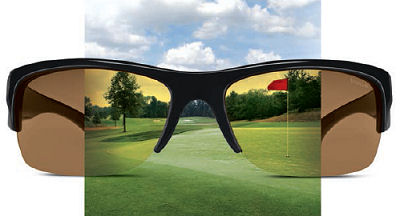
For the first three days, the weather was normal for the Montreal area with plenty of sunshine. The grass and trees are very green and when the sun shines an aura of brilliant colors surrounds the players and gallery alike. Interestingly, many players wear sunglasses either all the time, or at least during some aspect of their round. Personally, I do not wear sunglasses while playing, but wonder if it provides an advantage.

Sunglasses when fitted properly are very comfortable. According to my research, it is also important that they have the proper UV protection. It is only recently that professional golfers started wearing sunglasses and according to Robert Allenby are a must.

“Australian-born professional golfer Robert Allenby, one of the first pros on the PGA tour to wear sport sunglasses during tournament play, has said that he prefers polarized copper-colored lenses with a 50 percent transmittance rating for golfing.

“Polarized lenses help take glare and shine off the green so I can see the line better . . . The color helps me see the definition of the grass and covers all climates and light scenarios,” Allenby said in the February 2008 issue of Eyecare Business magazine.

Allenby mentioned that wearing sunglasses has helped him perform better on the links by relieving the need to squint, which keeps him more relaxed.

Following Allenby’s lead, many young players on the PGA tour are starting to wear sunglasses during tournament play, including Zach Johnson, winner of the 2007 Masters Tournament.

Also, Annika Sorenstam, perhaps the best woman golfer to play the game, with 72 career LPGA victories, has worn sports sunglasses during most of her tour wins. (AllAboutVision.com)

Sunglasses are definitely here to stay. The fact that many players sign endorsements to wear a particular brand has helped cement their place as must-have golfing equipment. I definitely see the benefits of wearing sunglasses, but I find it difficult to read the greens with them on. Now, it might help if I paid more that 10 dollars for a pair, but I am not really sure.

So Grateful Golfers, it is time to help me out:

  • Do you wear sunglasses?
  • If so, what brand?
  • Do you have a special lens colour?
  • What style do you like?
  • Would your recommend wearing sunglasses while playing golf?

Sunglasses are here to stay and if an advantage can be gained from wearing them, we all would like to know.

I am a grateful golfer! See you on the links!

Golfing In Ireland

Golfing in Ireland is on my bucket list! Ireland, Scotland and the United Kingdom hold a special place in my heart as places to golf. Until I have the opportunity to play in these three countries, and it will happen, this dream will stay alive and be fulfilled one day. In the meantime, I live vicariously through those who do golf in the promised land. My friend Kirk details his play at his home course of Northwood Golf Club in the UK. Also, he recently kept me spell-bound as he explained his round at St Andrews Old Course. Both sound amazing!

Ireland was the only country left of the three where I did not have any connection….until seven days ago. Through the power of social media, I was fortunate enough to talk to Patrick Mc Laughlin and Gary McLaughlin. (They are brothers, however spell their last names differently) It all started when they posted a picture of the signature hole at the Slieve Russel Hotel Golf and Country Club,  Ballyconnell, Co. Cavan, Ireland.

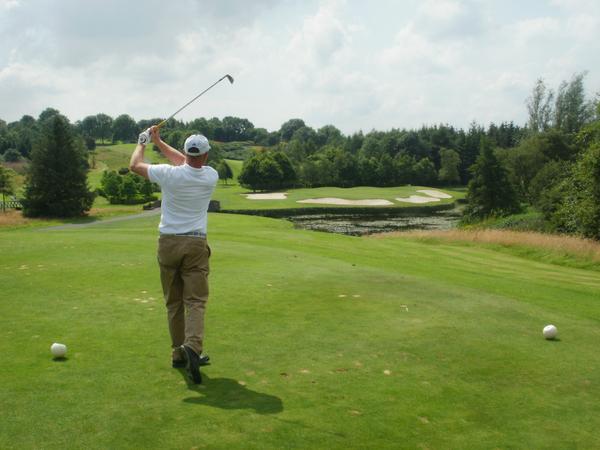
After answering this challenge, the conversation was on. He said that the Slieve Russell Golf and Country Club is a great place to play! In fact, he and his brother were playing there the next day and I asked them to send pictures. This is what they sent.

Playing the 11th hole - Heron Haunt

Playing the 11th hole – The Haunted Heron

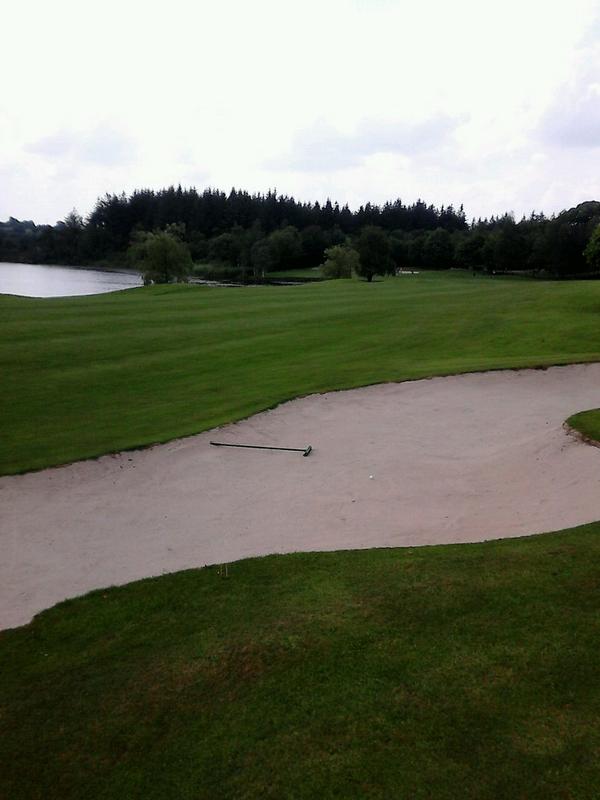
Pactrick Mc Laughlin - 2nd shot lay up from bunker at 13th

Patrick Mc Laughlin – 2nd shot lay up from bunker at 13th

Patrick mc laughlin ‏@lochlainn1 Protected Tweets  Jul 23 @TheGratefulGolf 12th tee shot, hit driver and 52* to 6ft but missed :( pic.twitter.com/gxJLZ2mKsA

Patrick Mc Laughlin – 12th tee shot, hit driver and 52* to 6ft but missed 😦

Patrick Mc Laughlin - 13th drove into bunker across the fairway

Patrick Mc Laughlin – 13th drove into bunker across the fairway

Not to be out done, the Slieve Russell Hotel sent this picture and comment along!  

Patrick Mc Laughlin and Gary McLaughlin both agree that the course is in awesome shape. The greens are fast and true and the fairways immaculate. The brief encounter with these two golf fanatics further increases my desire to play in Ireland. Actually, The Slieve Russell Hotel Golf and Country Club has made my bucket list.

I want to thank Patrick and Gary for taking the time to send me these awesome pictures. I am grateful you took the time and effort to share your experience on The Slieve Russell Golf Course.

If anyone wishes to use the pictures sent by Patrick and Gary, please contact them and ask permission as they have the sole rights to duplication.

I am a grateful golfer! See you on the links!