Tricks on the Range

To most golfers, the practice range is a sacred place. It is a place where players like Phil Mickelson, Tiger Woods, Michelle Wie, Vijay Singh or Grateful Golfers regularly hone their skills. A major difference between a professional golfer and an amateur is their intention as the approach the practice range. It is this intention that helps focus their practice to accomplish their goals.

After hours on the practice range, there is no question they have developed some tricks to help make the most out of their practice time. Here are some sites to check out:

Each of these offer good advice on developing a routine and a great starting place for anyone trying to improve their game through focused practice.

Through the years, I have used many of the above suggestions and the following tricks that helped fix my woes.

When fixing a slice or a hook, I stand on the far side of the range. As a right-handed player with a slice problem, I stand on the far left side. This may seem strange, but it forces me use a different swing plane and aiming point.  I am so focused on not hitting the ball out of bounds, that it helped me straighten my slice.

It is important to use aiming sticks. At the very least, use two clubs. These training aides help align your swing and your aiming point. I use them to determine my ball position in relation to my stance, determine my swing plan by the relation of my divot to the aiming sticks, and my alignment of my feet in comparison to how I am aimed. Check out toursticks.com for a complete guide on how to use alignment sticks.

Flag AlignementMy last tip deals with using the flag sticks out in the range.  On my course, it is possible to line up all the sticks until they are one behind each other. I use this visual aid to help identify a poor swing, whether I am fading or drawing the ball that day and to help with my aiming points. If I am on a different range, I will try to line up at least two flags and use them as my aiming point!

There are plenty of tips and tricks to use on the practice range. Today I have mentioned just a few that worked for me.

Golf is all about sharing, so do you have any tips or tricks to use on the practice range?

I am grateful golfer!  See you on the links.
Golfing in the Rain

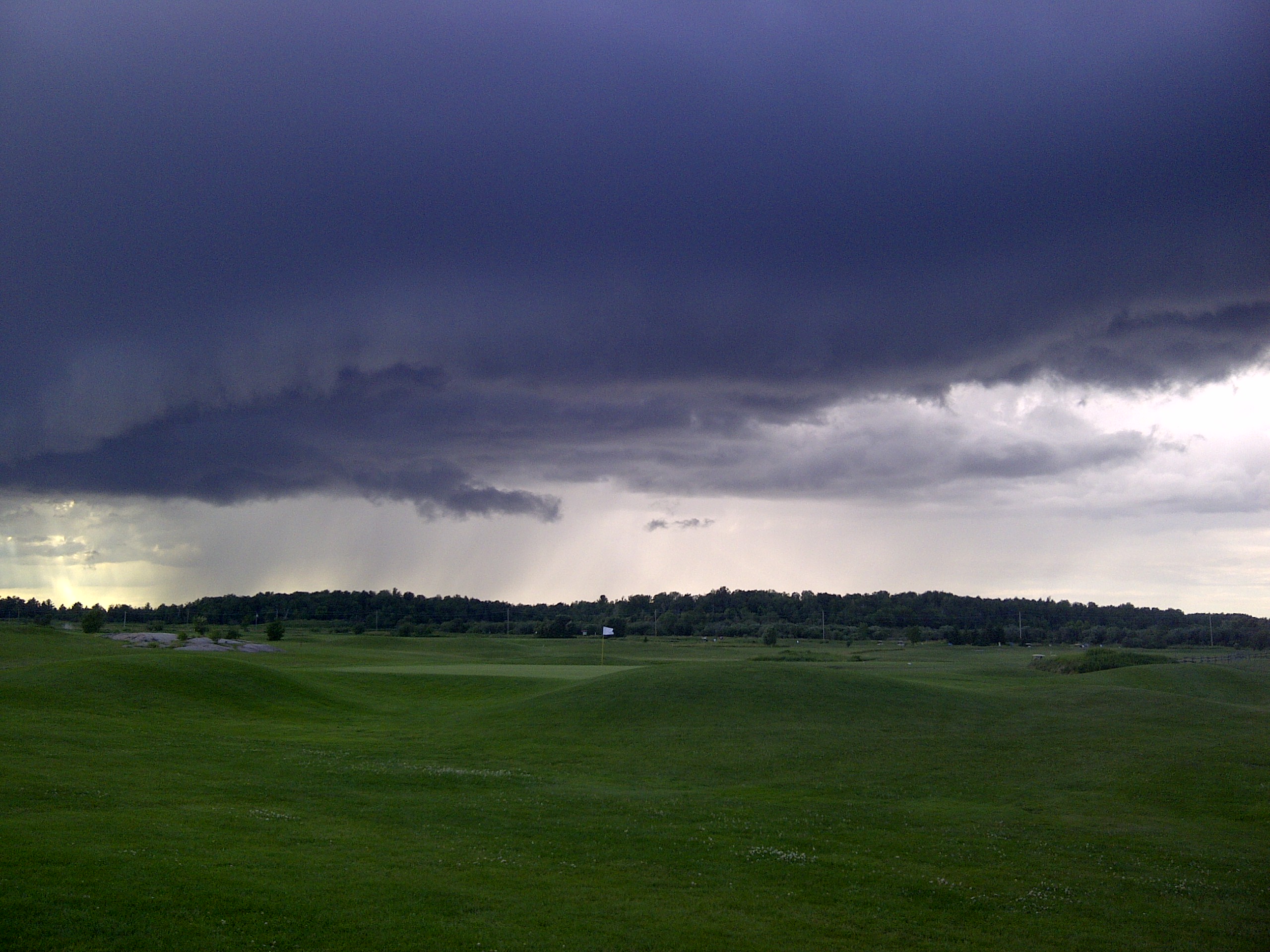
Well my first two days of the golf tournament were postponed. In the last 36 hours our area received about 80 mm or rain.  Our course is under water and it is draining very slowly.  It is unlikely we will be able to play on Friday, so the entire event will be delayed one week.  Of course I am disappointed, but at least the event is not cancelled all together. But, as always, each experience is a learning one; so now we talk about playing golf in the rain.

IMG-20130710-00061Many golfers dislike the rain. Personally, it does not bother me because I believe I have a fool-proof system to keep the important aspects of my equipment and body as dry as possible. The first important point has to do with equipment. I carry the following when I suspect it is going to rain:

  • Plastic cover that actually covers my entire golf bag;
  • a 64 inch umbrella that can be attached to my golf cart (which I push so it does not hurt my shoulder);
  • clear plastic freezer bags to keep my score card dry;
  • spare socks in a clear plastic bag;
  • spare clothes in the car for after the round;
  • two towels so I can hang them under the umbrella; and
  • a hat and rain suit.

All of these things keep me very dry unless it is really pouring, then I just have to suck it up and be grateful I can still golf. When making a shot, expect on the green, by routine is very simple:

  • I point my clubs into the wind because it cuts down on spray;
  • I remove my club while under my umbrella and wipe the grips (if required) with one towel and my hands with the other;
  • I normally do not take a practice swing, so I walk out behind the ball and visualize;
  • step up and hit the ball;
  • walk back under the umbrella, wipe my grips and replace the club; and
  • seal up my plastic cover and move on.

When putting, I use a slightly different routine:

  • I take out my putter and wipe the grips and my hands;
  • I take the umbrella with me – my clubs are covered with plastic;
  • stand behind the ball and read my line;
  • adjust my ball still holding the umbrella;
  • place the umbrella at the one o’clock position with the top facing the wind. It is usually about 6-10 feet away; and
  • make my putt and collect it from the hole. If I miss, I go mark the ball (if required) before retrieving my umbrella.

Playing in the rain will mess with a golfer’s normal routine. However, I have found that by following my routine, the rain does not bother me as much as others. Following a routine is the best way to break 100 or lower your score; following a routine in the rain only helps more. A couple other things to consider when playing in the rain:

  • most shots will need an extra club due to lack of roll and the rain hitting your ball during flight;
  • greens will play slower than normal;
  • if you are wearing a rain suit or outer clothing, your swing will feel different. Focus on contact not swing mechanics and this will help ensure solid ball striking;
  • course management may have to be adjusted due to the rain reducing the distance your ball carries; and
  • the noise of the rain hitting your umbrella, rain suit or the ground may affect your concentration – just ignore.

Golfing in the rain can be difficult, but if you develop a routine, understand the impact of the wet weather, and focus on what you already do well, your score should remain the same.  If not, always remember you could be working!

If you have any suggestions on how to improve my routine, I would love to hear them.

I am a grateful golfer! See you on the links!

Par 3 – Are They Suppose To Be Easy?

Most courses have at least four par 3 holes. Some will have five or six, but in general four is the normal number. Playing from the blues (furthest back tee box) most par 3s will play between 160 – 185 yards; challenging but not demoralizing. Personally, I consider par 3s scoring holes. I expect to birdie at least one per round and par the other three. This may sound a be ambitious, but given the general length of most par 3s, not unrealistic. Additionally, most par 3s are spread evenly throughout the course, which is an advantage because they help with the flow of each round.

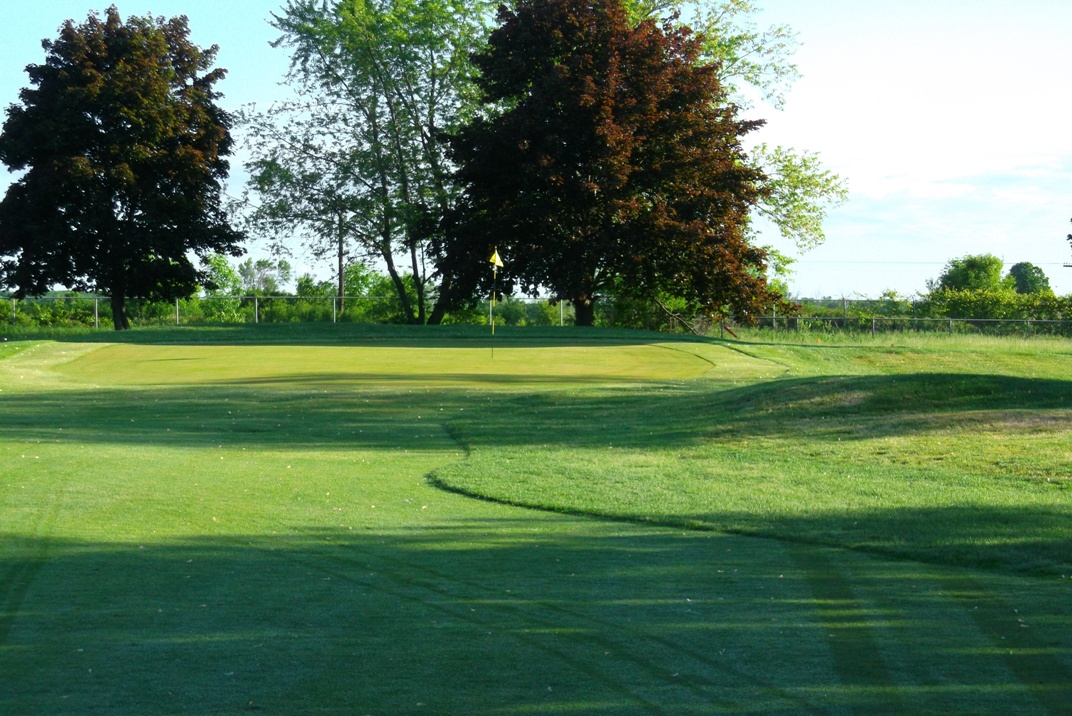
hole 1

Hole 1 halfway up the fairway.


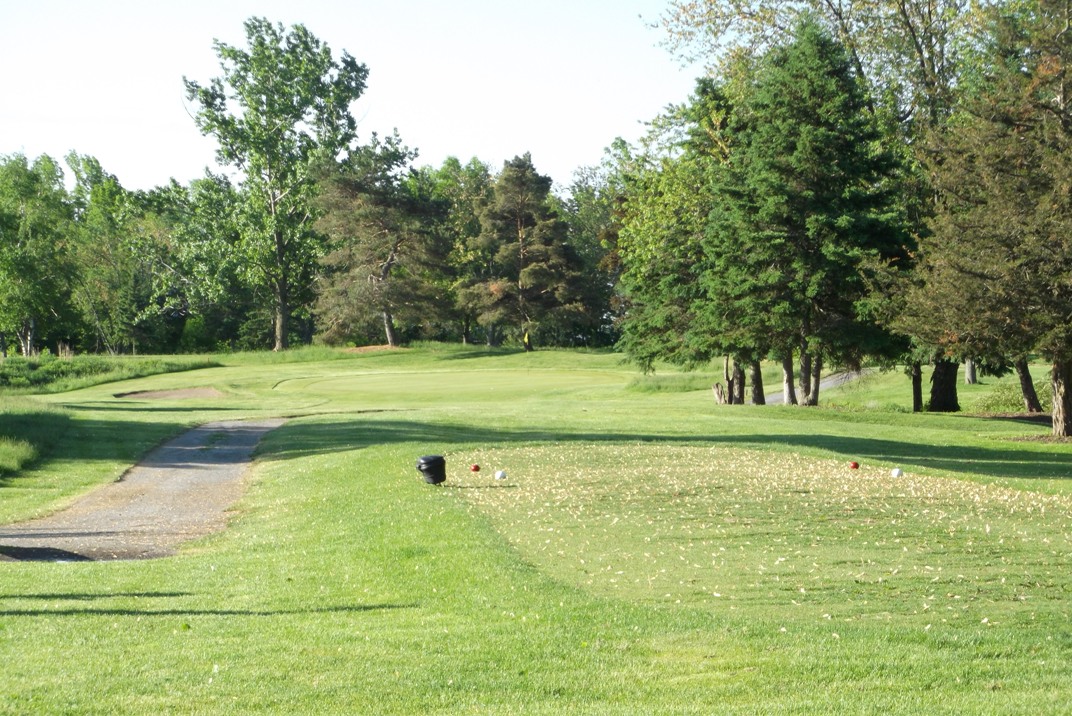
Hole 3 from Tee Box.

Hole 3 from Tee Box.

Well, my confidence of conquering these short holes has taken a bit of hit as of late. My home course of Roundel Glen has a different course set up that challenges even the most experienced amateur. All but one of the par 3s are long, difficult to approach, and well guarded. Adding to the difficulty, when I play in the morning there is very little roll and the ball does not travel as far because it is cold. In addition to their length, the par 3s are placed in more challenging positions which disrupts the normal flow of a golf course. From the blues this is what it looks like:

  • Hole 1 – Par 3 – 210 yards – 3 hybrid;
  • Hole 3 – Par 3 – 205 yards – 3 hybrid;
  • Hole 10 – Par 3 – 200 yards – 3 or 4 hybrid; and
  • Hole 17 – Par 3 – 173 yards – 6 iron or 5 hybrid.

Roundel Glen’s course layout is actually very good. I like the course, but I need some help. I have racked my brain on ways to play these holes. In the middle of the day, I can easily reach the green with the clubs shown, but in the morning it is very difficult. My woods, even choked down, do not work – I have tried.

At this time, I play these holes by trying to hit as close to the green as possible (and sometimes on) and relying on my short game to eek out a par. Not sure there is any other way to play these holes. If you have any suggestions I am all ears!

I am a grateful golfer! Always willing to accept advice!

Seeing and Believing

Welcome to the second installment of “Seeing What is Important” when playing golf. As we prepare to watch The Masters, it would be in our best interest to pay attention to what the players and caddies are saying and where they are looking while preparing to make a shot. Value is gained by focusing on their conversations and the language they use to discuss influences on their game.  The last post dealt with knowing your yardage, what the wind was doing and how the ground felt.  I wonder if the pros at the Shell Huston Open are talking about how these variables affect their score!

Learning the finer points of golf can occur anywhere; watching the pros, your buddies or complete strangers navigate around the links. Rarely is a golf course hazard free. Every hole as something that will catch your eye; something the makes your hair on your neck stand up; or something that makes the voices in your head start to speak!

Uphill shot

Landing area is higher than tee. Expect to hit shorter off the tee.

down hill shot

The green is below the ball. Time to throttle back!

Unlike a mirage, most changes in elevation on the course are real. Elevation changes are the most misunderstood challenge on any golf hole.  Modest changes to the elevation will create a 1/2 to 1 club difference regardless of the yardage.  The challenge for most players is to determine if the modest changes in elevation are real or not.  Here is my guideline – if I can see the entire fairway leading to the green without it looking smaller – throttle back and think about hitting one less club.  If the fairway looks like a railroad track going away, the yardage is as paced.  If the fairway disappears quicker; add one club to your approach shot.  This rule of thumb works for me.  Thanks to the Dave at One Bearded Golfer for this topic!

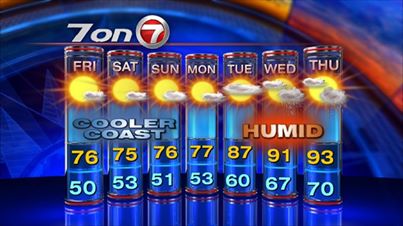
Cooler and Humid

Your ball will travel further on Tuesday, Wednesday, and Thursday!

The second point for today deals with the temperature! Most experienced golfers are saying that the colder the temperature the shorter the shot; but wait, there is more. Temperature is really broken down into three categories: Temperature, Barometric Pressure and Humidity.  As an overview, the ball travels further if it is hot, your golfing at a higher elevation like my buddy Craig in Denver, and the greater the humidity. For amateurs, this is hard to believe, but it is true.  For a more detailed explanation, check out Golf Digest.

Last tip is to believe is what you see and visualize what you want.  How many times have I heard the saying, “come on, this is ridiculous!”  There will be many times over a round when a player thinks they hit the perfect shot; only to walk up to the green and wonder what happened.  After shaking their head in disbelieve, they walk to their ball and hit a poor shot and blame it on their lie.  As an experienced golfer, I would have to tell that player that the lie did not cause the problem – it was caused by disbelief; then frustration.  Acceptance to the situation is extremely important to lower scores.  Everyone hits poor shots, it is the next shot the will determine if you score a par or double bogey – you get to choose.

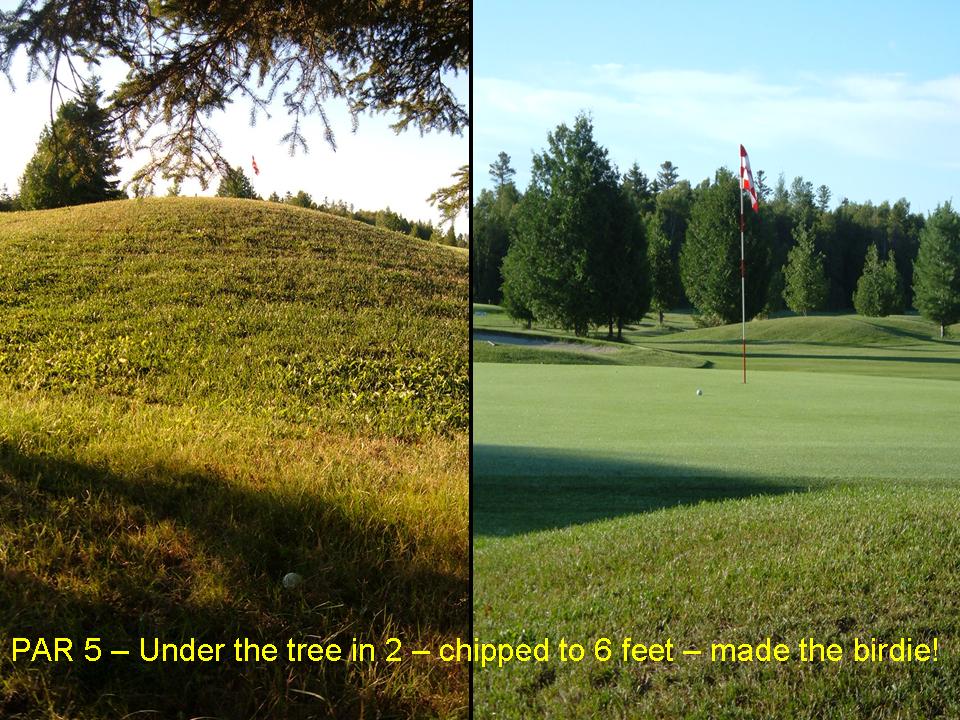
Slide1

There are many optical illusions in golf and it takes an experienced eye to identify them and adjust their shot accordingly.  Understanding and recognizing the potential hazards is one of the first steps to lowering your score.  Anyone can do it, it is a matter of “Seeing and Believing!”

I am a grateful golfer!  See you on the links!

Seeing What’s Important!

Jims EyeGolf is a unique sport that requires mental focus and attention to detail.  Most beginners miss the subtle signs and sometimes the obvious signs while walking the links.  It is very important to read the signs the course, weather, and your surroundings tell you while you are walking to your ball, visualizing your shot, or reading the greens.  The challenge for most inexperience players is they do not know what the do not know.

To rectify that problem, it is important to break down the signs and explain them in the context of any golf shot.  So, over the next couple weeks, we will address this knowledge gap and explain what is important to see ‘what is happening’ when you’re hitting the links.

Along the way, if anyone has suggestions, please speak up to improve the quality of the information.

The first area of “Seeing what’s important” is while walking to your ball.  The little signs around you are more significant than finding it and looking at the green.  Although those are important, a couple other things many be just as important.

First, what is your yardage?  If you have a Garmin Approach 6, (no affiliation) determining your yardage is easy.  However, if not then it is time to pace the distance.  Some courses have the yardage on the sprinkler heads, but most of the courses use the 200 (blue), 150 (white) and 100 (red) yard stakes placed in the middle of the fairway or off to the side.  The key to pacing off your yardage is to start at your ball and walk in a straight line forward or backward keeping the pin and ball on that line.  Walk to the closest yardage marker and do the math. Pacing your yardage will help with club selection.

Second, what is the wind doing?  This may be obvious, but it is important to understand that the wind at ground level might be different from the wind above the trees or in an open area.  The key to knowing the wind direction is to look at the top of the trees.  The direction they lean is the direction of the wind.  Lastly, look at the flag on the pin.  This is a good indicator unless trees on all sides, except the fairway, surround it.  However, I think you get the point.

Third and last for today, how does the ground feel under your feet?  Is it soft, hard, or normal?  Why is that important?  Well if the ground is hard the club will bounce and therefore prevent the player from getting a clean hit on the ball.  If the ground is soft, there is a very good chance a player will dig in with their club and only it the ball a couple of yards.  I am sure you understand what to do with ground that feels normal.

As you can see, we have only scratched the surface of “seeing what is important” when preparing for a golf shot.  These tips were learned over the years through trial and error. Wisdom says that the more I pay attention, the better I score.

I am a grateful golfer!  See you on the links!