Why 14 Clubs – Part Two

As previously discussed, the 1938 rule limited the number of clubs during a round of golf to 14.  If you ask 100 golfers I bet most would say that 14 is plenty.  However, if you ask a professional golfer they would say it is not enough.  Why the discrepancy?

When I started golfing 37 years ago…..OK, no old jokes….I had a started set.  It consisted of a driver, 3-wood, 3-5-7-9 iron and a putter.  As a beginner, this was plenty.  I did not have to over think club selection or worry about any finesse type shots.  Basically, I bashed the heck out of the ball and developed a passion for the game.  Slowly, my game improved I started looking for another set of clubs.

My first full set of clubs was Spalding Rebels.  I bought them 34 years ago; the set included 1-3-5 wood, 3-pw irons and a putter – 12 clubs in all.  They were my first cavity back set of clubs and I used them for about 10 years.  My game did not really improve because I played on and off during that time.  This set was perfect for me because I did not have much money invested and they were of a good enough quality that it matched my game.  I was about a 16 handicap during this period.

In 1990 things changed.  I was given an old set of Ping Eye 2 red dot clubs and started golfing more seriously.  1990 was the first year I broke 80.  I went from a 16 handicap to a solid 10 handicap in no time.  I carried a 1-3-5 wood, 3-pw irons, sand wedge and a putter – 13 clubs in all.  I used these clubs for about 10 years and only replaced the ping eye 2 persimmon woods with Callaway Warbird 1-3-5 metal wood.  It was during this time that I had quality equipment, practiced 3 days a week and played approximately 100 games per year.  The result of my increase play was a solid 8 handicap, which stayed that way for about 10 years.

Whats in your golf bag?From 2000 to present, my game improved exponentially. I have hovered around a 5 handicap with runs of breaking par once in a while. My success resulted in some club changes. I removed my 5-wood, added a 52 and 60 degree wedge, and change to hybrids for my 3-4-5 iron – I now carry 14 clubs.

This transition to more wedges has propelled my game to a new level.  The extra wedges help with the scoring around the green and that is where most amateurs should focus.  Currently, I use Cleveland Launcher irons, Callaway Razr Fit driver and 3-wood, Titlest vokey (52-56-60 degree) wedges and a pro gear putter.

The 14 club rule is limiting for some players.  Personally, I would add my 5-wood and 64 degree wedge.  The reality is that I would only hit these clubs once every 3 rounds because my other clubs cover all the normal gaps in distance and position. So I stick to 14 clubs because 16 clubs is not legal.

Ultimately, the skill and experience of any golfer will have a direct impact on the type, quality and number of clubs in their bag.  As most players improve the number of clubs will change to match their abilities; there is not set rule or rule-of-thumb.  The reason for club changes will vary, but low handicap players identify early that focusing on their short game will result in lower scores.

See what is in the pros golf bag:

What do you carry in your golf bag?

I am a grateful golfer!  See you on the links!
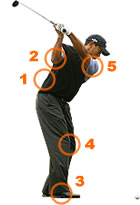
The Caddie Race 2014

The Waste Management Phoenix Open starts today.  It is one of the most exciting tournaments of the year for fans because of the interaction on the 16th hole.  This stadium style hole provides a unique opportunity for up close and personal entertainment not experienced on any professional tour.

During last years tournament did not disappoint.  Winner Phil Mickelson’s lip out for 59, the antics on the 16th hole, the hole outs from the fairway, and Rick Fowler winning the inaugural “Going for the Green” closest-to-the-pin contest are just a few highlights of 2013.

The Waste Management Phoenix Open offers things that most subdued events do not….endless excitement!  This professional golfer tournament is like no other.

The expectations of this fan crazed event seem to have changed in recent history.  Each year, the fans on the 16th hole get louder and more rambunctious.  Is this what golf needs to attract new fans and sponsors?  Or, does this event take away from the true nature of golf?

Personally, I like the Waste Management Phoenix Open.  I believe that once or twice a year this type of fun is great for golf.  The players know what to expect and embrace their role as entertainers.

Let me know what you think?

I am a grateful golfer!  See you on the links!

Golf Injuries

Phil Mickelson withdrew from the Farmers Insurance Open last night.  He cited a “locked back” that occurred when playing a shot out of the rough on the fifth hole in the second round.  With the Masters just around the corner, Mickelson decision was smart because he does not want to jeopardize his chances at a Major by aggravating any injury this early in the 2014 golfing season.  He also stated that if he played, the injury would probably change his swing and that is something he could not afford.  Too bad for the fans at Torrey Pines, Mickelson is a fan favorite.

Phil Mickelson’s decision to withdraw is not uncommon.  Many pros have withdrawn from tournaments citing injury.  As seasoned athletes, it is understandable that even the slightest injury could have long-term negative effects to their livelihood.  Mickelson’s back injury is a common injury for golfers, but it is only one of several that golfers want to avoid.

Golf InjuriesThe Physio Room discusses the five most common golf injuries.  Through the years, I and many of my friends can attest that they are correct.  I am sure if you quickly think about it you can name them:

About.com Golf expands this list even further.  Their list is more specific, but no less scary.

Injuries in golf are more common than non golfers realize.  The mechanics in golf are not natural and can cause strain on the joints, soft tissue and in come cases bones. The repetitive impact of the club hitting a ball, ground, rock, or thick rough does take its toll on the human body.  However, with proper preparation all injuries can be prevented.

To prevent injuries, the Mayo Clinic state ” Many golfing-related injuries are a result of poor mechanics or overuse, particularly in golfers who are new to the game or play infrequently. Although golf isn’t a contact sport, it puts significant demands on your body — which can easily lead to golf injuries. Follow these tips to stay in shape on the course.” Some of their suggestions are:

  • Warm up.
  • Start slowly.
  • Strengthen your muscles.
  • Focus on flexibility.
  • Build up your endurance.
  • Lift and carry clubs carefully.
  • Choose proper footwear.
It is important to understand that golf injuries can occur at anytime.  For some, are caused by poor mechanics, others because of course conditions and yet a few because players try something completely out of the ordinary.  If an injury does occur, as with Phil Mickelson, it is important to immediately take care of it to prevent long-term effects to your golf game.
I am a grateful golfer!  See you on the links!
Ko and Spieth Against the World

ko-lydia-

Lydia Ko, pictured here after winning the Canadian Women’s Open in Edmonton on Aug. 25, will join the LPGA Tour next year. (Jason Franson/Canadian Press)

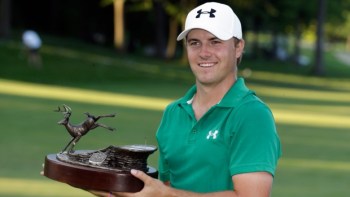
spieth-trophy

Jordan Spieth holds the trophy after winning the John Deere Classic on Sunday at TPC Deere Run in Silvis, Ill. (Charlie Neibergall/Associated Press)

The female and male darlings of golf are Lydia Ko and Jordan Speith. Both have fantastic starts to their career and seem to be well on their way to making a name for themselves as professional golfers. Ko just turned pro and has already won an event on the LPGA. Speith is also a one time winner with 2013 rookie of the year honors to boot. Both appear to have focused goals and positive personalities that the golf industry want to leverage.

There is no question the media are going crazy, the golfing world is talking about their successes and the sponsors are circling. But, is this really what golf is about? Don’t get me wrong, golf is a business and there is money to be made; however, at what cost. There are several players who were treated with the same awe and reverence in the past 10 years, but have disappeared completely or failed to meet the huge expectations of being a world ranked golfer. They were discarded like yesterday’s newspaper. Is to be the fate of Lydia Ko and Jordan Speith?

Expectations of professional or amateur golfers can be a positive influence or a destructive power. We do not have to look far to see the fickle nature of the sports media, golfing fans or professional pundits. Examples like Rory McIlroy playing so poorly in 2013 – how many times was he kicked; Tiger Woods stalled at 14 Majors…..stalled at 14 Majors – are you kidding; Phil Mickelson not winning the US Open is tarnishing his greatness … come on; and finally Henrik Stenson touted as one of the greatest golfers never to win a Major…wow! Is there a possibility that the expectations of some of the golfing greats is a little out of whack?

It is important to understand that expectations are relative. At every level, each golfer has expectations (realistic or unrealistic) about their capabilities. Those are easy to accept. What is difficult to swallow are the golfing analysts who pass judgement on players while sitting in their armchair in a climate controlled room. Is it possible, that golf has lost its way and some major re-tuning is required?

Golf is a great sport! We all have expectations, but let us not forget that golf is meant to be enjoyed.  Competition is healthy, fun and exciting. However, a ‘win or else’ competition seen at the professional level is not good for the game. What do you think?

I am a grateful golfer!  See you on the links!

Changing of the Guard or Is It?

In every sport, the changing of the old guard to a new group of defenders occurs about every seven to ten years.  Age finally catches up to the élite; while continuing to empower the stronger, faster, and hungrier players.  Eventually, the young lions surpass their aging heroes and carry the torch forward.  The real question in golf is when does this occur?  

Image from Golf.com

Who will be on top at the end 2014? Rory, Phil or Tiger?

During the past few years, the world of golf appears to have shifted its focus towards younger players and that 2014 will be the year for major changes in the world rankings. However, pundits who follow golf would agree that this potential shift is not an actual power struggle.  It is more like the media creating hype by pitting old bulls like Tiger Woods, Steve Stricker and Phil Mickelson against the young lions like Rory McIlroy, Dustin Johnson, and Keegan Bradley.

The reality of golf at the professional level is that it is all about the hype!  It is no different from any other sport; however its slower evolution does restrict the potential for financial gains experienced by teams like Manchester United or the Toronto Maple Leafs.

Golf is starting to generate a world craze and continues to grow in popularity, but the glacial pace can be frustrating.  As new emerging players try to break into the ranks of the élite, they will find it extremely difficult to sustain the prowess required to stay at the top because golf is not a sport dominated by youth.

In 2013, there were approximately 160 world events.  In 2014, this number is expected to expand as new markets in Asia, specifically China, develop.  Of the 2013 events, 19% were won by those in their 20s; 80% were won by those in their 30s; 31% in their 40s and 1% in their 50s.  Therefore, professional golfers in their 30s and 40s won 71% of tournaments.

In the PGA last year, the numbers were even higher.  Of the top 25 on the money list, 28% were in their 20s, 60% were in their 30s, and 22% were in their 40s.  Thus 82% of the top PGA 25 money list were in their 30s and 40s.  The percentage of top ten money winners goes even higher!

Lastly, the world rankings demonstrate that the young guns may be stronger than the 2013 numbers demonstrate, but that is largely because players like Rory McIlroy had a great season two years ago and it was carried forward to 2013.

Regardless, the numbers are very consistent.  In professional golf, the bulk of the world-class players are in their 30s.  The next strongest group are in their 40s. How do you promote golf when the players are mature, focused and generally avoid the spot light off the course?  Where players are friends and animosity is rare? Despite recent events, golfers are generally considered gentlemen and conduct themselves accordingly.

Interestingly and to the chagrin of some, the age of the élite players is getting older, not younger.  Players like Tiger Woods, Phil Mickelson and Steve Stricker have dominated the top of the golfing world for the past 10 years.  They move up and down the world rankings, but at the end of each year they are at or near the top! How is this possible?  The thought of older players dominating the top of a sport is virtually impossible or is it?

Golf has changed over the past 20 years, but not as the media would suggest.  Older players continue to dominate for many reasons and three seem to top the list:

  1. Technology has improved exponentially, thus allowing older players to hit the ball farther without any extra effort;
  2. Players have a greater understanding of a regimented training program.  They embrace proper training methods and therefore extend their playing career; and
  3. Their ability to travel the world in hours versus days has improved their quality of life. The ability to move from event to event is grueling, but now they have the ability to travel home faster for that much-needed rest during their golfing season.

The media, promoters and financial investors would like the world to believe that an epic battle is being waged for golfing supremacy and partly they are correct. However, not in the manner that fits the traditional sporting world.

A shift is occurring in golf.  More, older players in their 40s are still very competitive, some younger players in their 20s are breaking through, but the bulk of the élite golfers are still in their 30s.  The unmentioned shift is the dominance of older players. Golfers between 35-40 years old are more competitive than ever.  As the élite players get older and they see not reason to relinquishing their title without a fight.  As the world prepares for the upcoming golf season, they should be ready to see the same names at the top of the leader board and not be duped by the media hype hailing for a changing of the guard!

I am a grateful golfer!  See you on the links!