Severiano “Seve” Ballesteros Sota – Golfing Legend

The world of golf lost one of the most charismatic golfers a few short years ago. Severiano “Seve” Ballesteros Sota was the most famous Spaniard to ever play! Known for his creative shot making, Seve was never one to shy away from any challenge. Losing his final battle to cancer on 7 May 2011, he might be gone, but definitely not forgotten!

With 90 career wins world-wide, Seve first appeared on the world stage by finishing second at The Open at the age of 19. His 5 Major Championships (3 British Open, 2 Masters), 50 European Titles, 9 PGA wins and 32 World Wide wins supports Seve’s induction into the World Golf Hall of Fame in 1999.

ballesteros-logo-horizontal-large-gallery

The special logo of Seve Ballesteros has been emblazoned on the golf bags of the European Ryder Cup team at Medinah

He was an anchor for the European Ryder Cup team for years. More recently, in 2012 and 2014, Seve was a huge inspiration for the Europeans.   “The 2012 Ryder Cup, the first to be played after Ballesteros’ death, saw the European team wearing navy blue and white garments on the final day in memory of Seve, who traditionally wore navy blue on the last day of a tournament. Additionally, the team’s kit also bore the silhouette of Ballesteros after his win at the 1984 Open Championship. The Irish golfer Pádraig Harrington, Nick Faldo and other European players proposed that the PGA replace the image of Harry Vardon on the European Tour‘s official logo with one of Ballesteros (a silhouette of the iconic image of Ballesteros’ “salute”, following his win at the 1984 Open Championship).” In 2014, every European would tap Seve’s picture as they entered the first tee each day. The reverence held by all golfers for Seve Ballesteros cannot be mistaken.

Not surprisingly, Seve was a great teacher as well. He made some teaching videos, which despite their age, are still applicable today. Famous for his short game, it is no surprise that his videos focus on his strengths! Check these out:

Putting

Chipping

Bunker play

Severiano “Seve” Ballesteros Sota was the most notable European golfer for years. His charismatic nature and love of the game was infectious. Although he was taken far to early, his legacy will live on for a very long time!

I am a grateful golfer! See you on the links!
Chipping or Putting From the Fringe

A while back, the commentators of the The Masters caught my attention. This may not seem that odd, but it actually made the stop and think about the answer. The whole premise was about putting or chipping from the fringe. I have discussed this before and personally I prefer to chip, but that does not seem to be the case any more.

IMG_20140506_165505

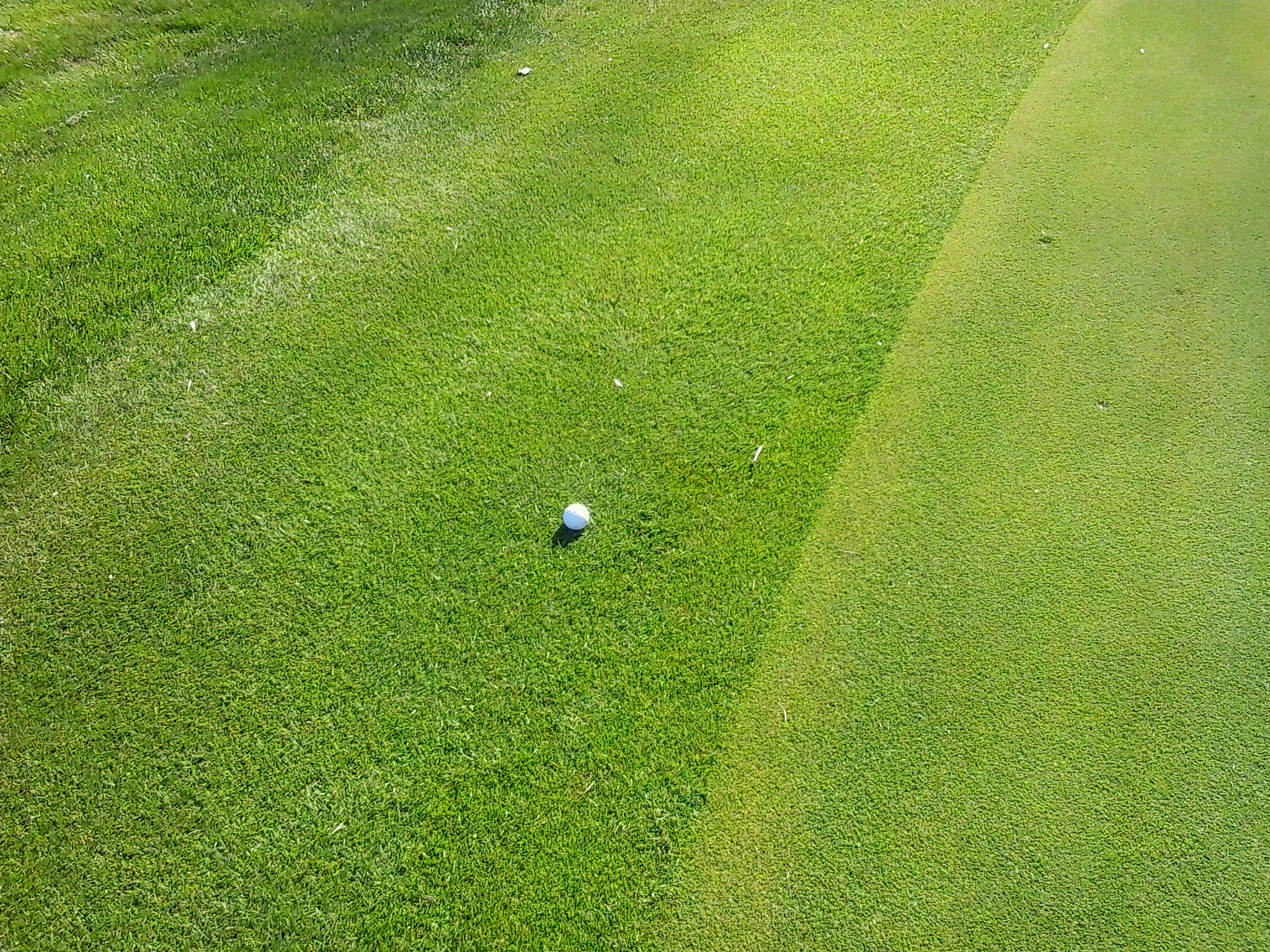
Image 1 – 2 feet to green

The commentator said younger players prefer to putt and older players prefer to chip. He never really suggested that either was better, but did indicate a change in way fringe play was being conducted. He said that if the ball is 5 yards off the green younger players are putting if they are on the fringe or in the fairway.

IMG_20140506_165520

Image 2 – 6 feet from green

I would suggest that the courses are manicured better than our local course and this may attribute to the change. However, 5 yards off the green would be extremely difficult to judge the speed and how the ball will exit the fringe grass. Personally, chipping would be the safer shot from 5 yards, but the young pros do not see it that way.

I really do not have an answer to this question – anyone want to weigh in? Would you putt or chip Images 1 or 2?

I am a grateful golfer! See you on the links!

The US Open – Is it Worth the Wait?

The 114th United States Open Championship is scheduled for June 12–15 at the No. 2 Course of the Pinehurst Resort in Pinehurst, North Carolina.  This is one of eight courses on the resort and is famous for hosting the US Open two other times since 1999.  This majestic course is a Par 72, 7495 yard creation of Donald Ross that has been host to six other major championships through the years.  This course has a rating/slope of 76.4/141 – all I can say is ouch!

Slide1

The US Open Golf Championship is, in my opinion, the third most coveted tournament in the golfing world.  Personally, I prefer The Masters, then British Open, but that discussion is for another day. However, The US Open is by far the most difficult of all the Majors. The course is extremely long and the setup is unfair at best.  When comparing toughness of courses the comment I hear the most “Well at least it is not US Open rough!” Winning scores have ranged from -16 to +5; all due to course setup and weather conditions.  The drier the course the more challenging.

Choosing a course is no easy feat, but the USGA does have certain criteria they use during the selection process. “The following list of 14 factors impact overall U.S. Open course set up. The mix of these factors varies from course to course, year to year. Evaluation of course set up should not focus on any single element but consider the composite result.

  1. Length, variation and playing characteristics of individual holes;
  2. Length of overall golf course relative to total par;
  3. Teeing ground locations (i.e., angles of play, variation of distance day to day);
  4. Fairway width and contours;
  5. Fairway firmness and speed;
  6. Green speed relative to percentage slopes and contours of the putting greens;
  7. Putting green firmness;
  8. Rough height, density and stages of severity;
  9. Bunker preparation (i.e., create challenge of recovery);
  10. Green surrounds (e.g. closely mown areas -vs.- primary rough);
  11. Hole locations (relative difficulty, balance in location of left-vs.-right, front-vs.-back, anticipated wind, anticipated length of approach shot);
  12. Risk and reward options;
  13. Anticipated weather conditions; and
  14. Pace of play.

There is no USGA target score for a U.S. Open. While the final score at some U.S. Open sites will be at or near par, the USGA does not try to formulate a course set up that will only produce a winning score of at or near even par.”

So the course is extremely tough, the best players in the world will be ready to play, and the media hype is starting to going crazy! The second Major of the year is more often than not a war of attrition verses skill! In one round, a player can be out of the tournament. Does this really seem fair? With Tiger Woods likely not able to play with the tournament hold the same meaning?

Through all of this, my question remains – Is the US Open Worth the Wait?

I am a grateful golfer! See you on the links…..soon!

See What I See

Before the Masters took over the golfing world, we were discussing what to look for when approaching your golf ball. This topic is much debated, but often overlooked by higher handicap players. It is important to aware of your surroundings when playing golf because it is a big part of course management.

As discussed in Seeing Whats Important and See to Believing there are many factors to consider before making any golf shot.  As a recap, this is what we identified so far:

  1. What is your yardage?
  2. What is the wind doing?
  3. How does the ground feel?
  4. Is there an elevation change between your ball and the green?
  5. What is the temperature like? Is it humid?
  6. Do you believe what you see and visualize what you want?

So far these points only account for about half of the things I look for when approaching my ball. Adjusting for these above points will help lower your score. Yet, there are still more!

Is the ball above or below your feet? After watching the Masters, it becomes very clear that a flat lie is rare in golf. It is important to understand the adjustments required when hitting from an uneven lie. If the ball is above your feet, grip down on the club a little and lean forward so your weight is in your toes.  With the ball above your feet, players have a tendency to hit left or draw the ball (for right-handed players). If the ball is below your feet, flex you knees a bit more and put your weight in your heels. Have a quieter lower body when you swing to prevent lifting up on the shot. Balls below your feet have a tendency to go right (for right-handed players)

Are you hitting uphill or downhill? When hitting the ball uphill the general rule is to take one more club to adjust for the changes in the loft of the club caused by the angle of the hill. Play the ball slightly forward in our stance. Shot it uphill have a tendency to go left or draw (for right-handed players). When hitting the downhill, the general rule is to take one less club for the same reasons and an uphill lie. Place the ball back in your stance and do not over-swing. Downhill shots have a tendency to go right or slice (for a right-handed player). Regardless if your swing is uphill or downhill, try to swing the club parallel to the slope of the hill. This will help ensure crisp contact.

This video by Ben Austin is about 7 minutes long, but worth watching to understand the challenges when hitting a ball from an uneven lie.

Did you hit the fairway or the first cut?  If you are on the fairway, congratulations! Remember the other points we discussed. If your ball is in the first cut; pay attention. Most of the time, when the ball is in the first cut it has an increased chance to be a flyer. The first cut of grass acts like a natural tee and enables most players to get a cleaner hit on the ball. As a result, the ball travels 10-15 yards further than expected. If the ball is lying in the first cut, consider going down a club to adjust for the flyer lie.

There are so many things to consider when approaching a golf ball. Many experienced players go through a checklist of things that could influence their shot. After watching Bubba Watson and Jordan Spieth approach each shot with precision, a check list of variables may be just what is needed to lower your score!

I am a grateful golfer!  See you on the links!

The Masters – What I Learned

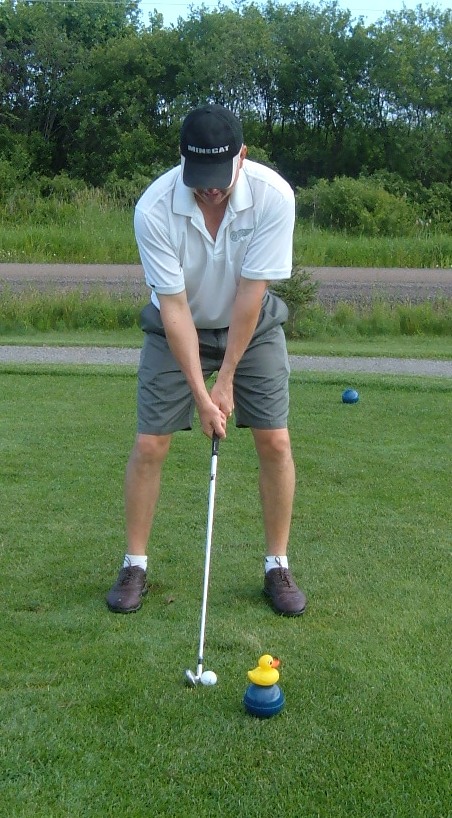
Jim with a DuckThe 2014 Masters is in the books. For golfing enthusiasts, the first Major did not disappoint. Many pundits discussed the lack of charge by the players chasing Bubba Watson, but that is a discussion for another day. Personally, I did enjoy watching the professionals navigate a difficult course under ideal weather conditions. With no flat surface on Augusta National, many of the players used unique and creative shots to try to tame the beast.

Every time I watch a professional tournament, I expect to see something that will help improve my game. Sometimes it is big changes and others times it is the finer points of how to play specific shots that catches my attention. The Masters was no different. Therefore, I thought I would share what I learned at this years Masters that will improve my game:

Course Management. I have discussed this topic before, actually three times, but the recent Masters showed me something different. Course management is about setting up the next shot and playing to the strengths of your game, however it is now important to include making up for miss hits. Many of the players were forced to change their thought process during a hole due to hitting the ball in the wrong spot. Watching the top players adjust, like Watson on the 15th hole, changed how I look at course management!

Chipping or Putting. How many times did we hear the announcers talk about chipping or putting around the green? They made it quite clear that there are two schools as seen throughout the tournament. The older and more experienced players (Couples, Jimenez, Mickelson) chipped; the younger more adventurous players (Spieth, Blixt, McIlroy) putted. This whole issue will be addressed a future blog, but personally, I lean towards chipping….but I am an older more experience player!

Length Rules. Distance off the tee has always been important. After watching many of the players on the past weekend, it reinforces the thought that length rules. Hitting it long opens so many options for a player’s next shot. Bubba Watson’s drive on the 13th hole was an eye opener. Understanding that being closer to the green on your second shot is better, it is unbelievable the difference distance makes; therefore, as my season progresses one of my goals will be to hit the ball longer off the tee.

The three points are subtle, but are important. If you have the opportunity to watch the replay of the 2014 Masters maybe you will notice aspects of golf that will help your game. Maybe you have noticed something already, if you have, share – everyone is listening.

I am a grateful golfer!  See you on the links!