Golf’s Missing Piece

Golf is a complex game. Many experts elude to the idea that golf is broken down into manageable segments to which the answer is simple. In some cases, this is true. However, my experience suggests that to become a better golfer, a whole approach to golf is required.
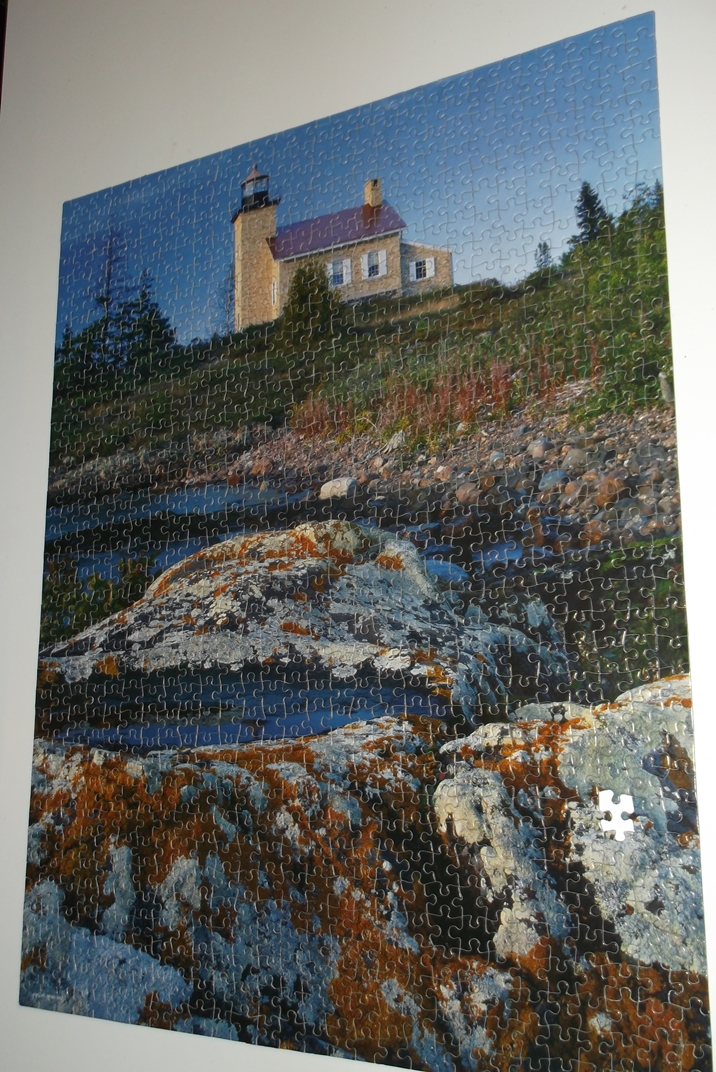
Missing Piece1

The Whole Approach to Golf! Do you see the missing piece?

I really enjoy making puzzles. For some reason, I find it relaxing and stimulating to patiently find all the pieces and place them in their proper spot. I especially like putting in the last piece. The sense of accomplishment after hours of sorting and placing is quite rewarding. Unfortunately, I did not have that sense of accomplishment on my last puzzle because I lost one of the pieces. So, even though the puzzle still looks nice, it is incomplete.

A puzzle is a bit like golf. All the pieces represent the different aspects of our game. Slowly and patiently, we work at different areas until one day it all comes together and we shoot our best score ever. Then, we examine our game and think of where to improve next and start the process all over again. This is ‘whole’ approach to golf that many novice players tend to overlook.

Think of the best golfer you know; now imagine their entire routine. From the moment they step onto the golf course, it is all about golf. They usually have a very set routine which prepares them for the upcoming round. This player practices the same way, chips and putts with intent, and arranges their equipment in a very specific way. When they finally step up to the first tee, they are ready to play.

When on the course, this same player becomes a creature of habit which reinforces the positive aspects of their game. If something is off, the may adjust slightly, but make sure no major changes occur during their round. They accept what the course and their swing gives them that day, but are cognizant of areas that will need improvement. (For a novel approach to “the answer” check out Vet at The Goofy Game of Golf Searching for the Answer) These players rarely focus on a segment of their game, they focus on the entire aspect of playing well.

Golf is very much like a puzzle. Building a complete picture of our game takes time and patience. We could spend hours improving a selected skill only to realize, when putting all the pieces together, that it was not the area that needed the most attention. As the 2015 golfing season approaches, focus on the big picture first. Look at your whole game before deciding which individual skills you want to improve. You may be surprised at what you find.

I am a grateful golfer! See you on the links!


Slow Play and Golf

Slow play is one of my pet peeves in golf! I find that waiting on every hole is frustrating and fuels my negative talk about golf and life in general! Playing with or behind players who are more focused on talking, having a libation, or watching every play from every position should not be allowed on my course! Slow play…grrrr….where is that marshal!

Turtle1

Can I play through?

I have talked about slow play before and many people have chimed in with their frustrations. (See May I Play Through and Can I Play Through for more details) I realize that this topic can push the buttons of most golfers, however it is an important topic that many amateurs seem to overlook.

There are some players who are naturally slow players. Others like a very quick pace. The natural flow of a round of golf, for these diverse players, is completely different. It is this natural flow that I want to discuss.

The natural flow of any player is not limited to their golf swing. The tempo of their swing is extremely important and generally correlates with how long it takes a player to loop around the course. The natural flow of a player encompasses their swing, their routines, how fast they walk between shots, their decision-making, etc. Every action during their round of golf is part of their natural flow of their round.

Natural flow is critical to low scores in tournaments. How many times have you played with people who stated they are a single digit handicap, yet shoot in the 90s! I realize it can happen once in a while, but not two or three days in a row. If asked about their challenges, they would suggest that they are just having a bad day. However, under closer scrutiny, they have changed their natural flow and it was completely messed up.

Novice amateurs try to ape a better golfer. This is a great practice (learning from others), but not during a tournament. I have played many rounds with players who completely change their natural flow under the pressure of competition; interestingly, the times I score the best is when I keep to may natural flow and ignore theirs. Sometimes this is challenging when playing with extremely slow competitors, but if it is their natural flow, there is nothing one can do. To compensate for slow play in tournaments, I have developed some techniques that work to keep my natural flow.

I will let you know what they are, but before I do I would like to know what you think. Am I crazy to think there is a natural flow to a persons golf game? Inquiring minds want to know!

I am a grateful golfer! See you on the links!
Your Favorite Shot In Golf

What is your favorite shot in golf? If you take a moment to think about it, there is that one shot that you love more than any other. Maybe you like it because it keeps you out of trouble. Maybe because the ball flight is something to marvel. Or even it is because the of the sound the ball makes off your club. The reason can be just about anything, but I bet you have a favorite shot in golf.

As I think about this perplexing question, I can visualize every shot in my bag. I can see me standing on the tee as I prepare to smash the cover off the ball. With no difficulty I can see my set up for a wedge shot into the green. And I can imagine making that long left to right putt for birdie! I can visualize every shot, so narrowing down the options in my game is a bit difficult.

Well, I have narrowed down my select too three possibilities. Here are my options for my favorite shot in golf:

  1. I am on the edge of the green. The ball is sitting on top of the grass and I have to a perfect lie. I have several club selection options, but I reach for my trusty 7-iron. Following my pre-shot routine, I envision the ball going into the hole. I step up over the ball and make my swing. Right at impact, I know when I have hit the ball pure. The crisp click I hear as the ball cleanly bounces off the club face is music to my ears! I love that sound!
  2. It is 6 am on a Saturday morning. I grab my clubs out of the car and quietly walk towards the first tee. I am the only person at the course. The sun is just starting to rise, revealing the beauty of the course hidden by the night. I hear the birds announcing the morning and letting the world know that a new day of adventure has finally arrived. I stand on the tee box, survey my surrounds and breath deeply. Every time I am grateful as I take my first swing of the day!
  3. I am standing on the tee box of any par three. I check the wind, pin location, and possible hazards I must conquer to hit the green. I think of the possibilities of my next swing as I approach my ball. The risk reward of every par three weighs on my mind. Finally, I clear my head and make that full swing. The anticipation as my ball heads towards the green offers hope beyond imagination. This is a golf shot.
First Tee at Laurentide

Walking Towards The First Tee at Laurentide Golf Course

So what do you think? Well golfing fans, I will take what is behind door number 2! The serenity I feel early in the morning is really tough to beat. That first swing early in the morning is my favorite shot in golf.

What is your favorite shot in golf?

I am a grateful golfer! See you on the links!

Your Next Shot In Golf

Important Golf Shot Ben Hogan

10th Hole – Glen Abbey Golf Club

Ben Hogan is a genius.

Imagine, after three putting the last hole then talking to yourself to the tee box, you face a tee shot like the 10th hole at Glen Abbey Golf Club. As you approach the hitting area, look out over the hole, you start to think….oh my, now what.

Novice golfers worry about their last shot and forget to focus on what is in front of them. Experienced golfers are able to focus on the job at hand. Competitive golfers are able to execute shots under pressure. Professional golfers think about their next shot and how to take advantage of the hole layout. There are many other variations to focused golf, but I think you get the point.

By following Hogan’s advice to only worry about the next shot, many of us amateurs would cut down on the multiple stokes gained from making a mistake. I know that through the years I earned many ‘extra strokes’ because I focused on the past instead of the present. It happens less now, but still happens.

This year, it is time to stay focused  mentally on my next shot and reduce those unwanted errors. Not sure I fully understand how I am going to do this……any suggestions?

I am a grateful golfer. See you on the links!

More Than Just a Water Hazard!

Water on any golf course provides untold challenges. A pond can lie between the tee box and the green on a par three, there are the famous island greens, or water can follow you down the fair way like a lion stalking its prey! Water evokes fear in most amateurs, which ultimately affects their golf game.

Glen Abbey Golf Course, Oakville, Ontario

Tough shot over water to green at Glen Abbey Golf Course!

Hitting your ball into the water is frustrating and does cost a player strokes. However, what is more frustrating is being award more penalty strokes or hitting the ball out of a tough lie for not understanding the drop rule related to a water hazard.

Red and Yellow stakes are often confused. Most amateurs who do not understand the rules and drop the ball within 2 club lengths of their point of entry into the hazard and then just carry on. They often ask the question about the number of penalty stokes they must count and sometimes ‘forget’ the penalty all together. For the weekend golfer who does not really care that much about their score, it really does not matter. But for those who want to play in competition; the video below by Golf.com is for you!

So not that we have demystified the Red and Yellow stakes issue. We can confidently remove the fear of all water hazards. One last tip, the best way to make sure avoid the red/yellow stake rule for a water hazard….do not hit your ball into the water!

I am a grateful golfer! See you on the links!