National Golf Day

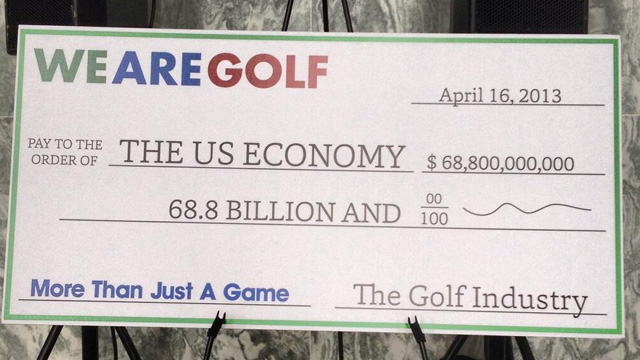
Today is National Golf Day! Who knew! Well, it is National Golf Day in the US. It is all about how the golf industry affects the US economy and it is not a far stretch to see how the golf industry effects all economies.

Supported by Jack Nicklaus, how could National Golf Day not be a success!

Interestingly, We Are Golf spearheads the initiative and today is the seventh year in a row that the golf industry lobbied the US Congress. What a great idea! In case you wonder what kind of impact the US golf industry has……

nationalgolfday

Yes, that is BILLION! National Golf Day is also about charities. We Are Golf tells us that “Golf is a key driver of charitable giving in the U.S – $3.9 billion a year to be exact. Philanthropic contributions, including those from professional tournaments, are a huge part of the industry, with the majority of funds going to causes outside of the sport. Beneficiaries include health, youth, education, environmental and cultural groups nationally, regionally and locally.

According to a 2011 study conducted by the National Golf Foundation, golf as a fundraising vehicle includes an estimated:

  • 12,000 golf facilities (75 percent of U.S. total)
  • 143,000 events
  • 12 million participants
  • $26,300 average per function”

I for one did not realize it was National Golf Day! For all my friends in the US, I hope you hit the links today!

I am a grateful golfer! See you on the links!

2014 Golf Rules – Decisions

IMG_20140517_074007My last post garnered some discussion about application and interpretation of the 2014 Golf Rules. Specifically, Brian Penn from All About Golf pointed out the finer points of rule 25-1 Abnormal Ground Conditions. Ultimately, we decided that hitting your ball into a temporary lake (and not being out-of-bounds or in a hazard) warrants a free lift no closer to the hole and to place our ball one club length within the nearest point of relief. Thanks Brian for the great discussion!

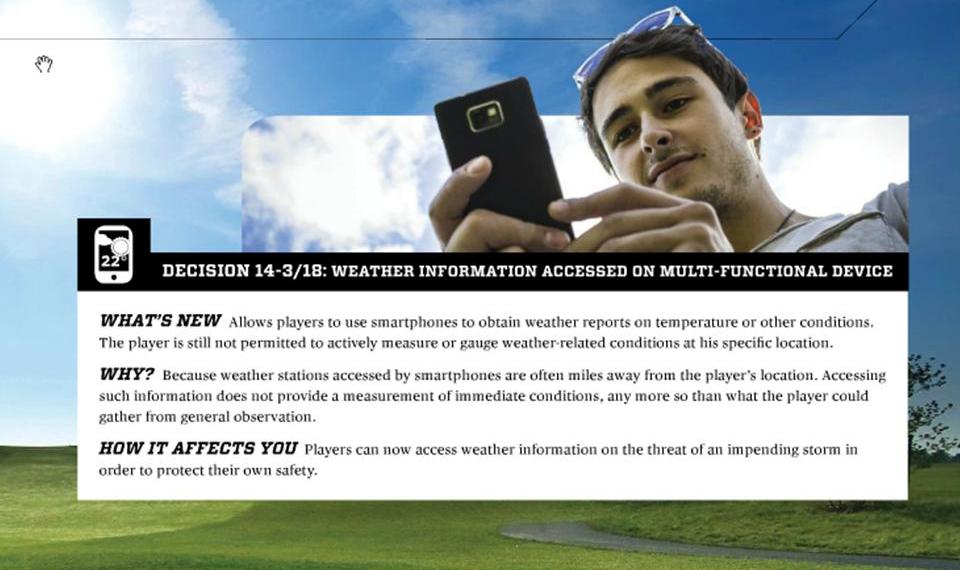
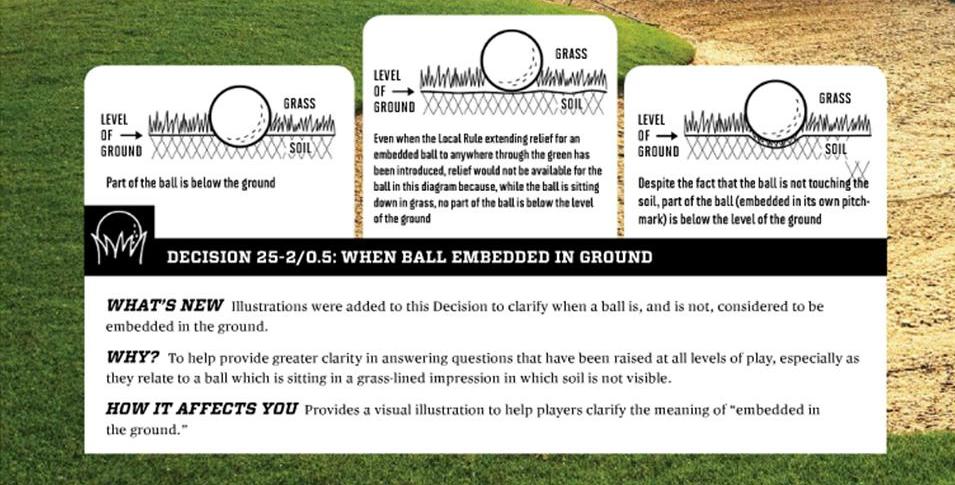
Coincidentally, my copy of Golf Canada Magazine came in the mail on Friday and I came across a two pages of golf decisions that are important for every golfer; specifically, those who like to compete.  I have discussed these rules before, but I want to thank Golf Canada for outstanding information and adding the “How it Affects You” portion. These small tidbits of information make all the difference!

2014 Rule Decisions provisional Ball 2014 Rule Decisions Weather Information 2014 Rule Decisions Imbedded Ball

Staying informed of the changing rules of golf is important. Understanding how to play within the rules is as important as playing golf. I have played in many competitions and every time a question about the rules surfaced. If you are still not convinced, read this article about Rory McIlroy who lost by one stroke at the 2014 Abu Dhabi HSBC Championship

I am a grateful golfer! See you on the links!


Jumping to Confusion

Lost and Confused SignpostHave you ever walked up to your ball with a club already in your hand before you actually looked at what was going on around you? This usually happens when a player is familiar with the course and draws conclusion before their next shot. We are all guilty of it, but is it really a case of familiarity or confusion?

One of the major challenges to members of a golf course is familiarity. Many players use the same club off the same tee all the time. Next they walk to their ball with the exact distance in mind; then select their club because it is the one they always use! After shooting the same score over and over, they question what is wrong!

Complacency on the golf course is a real challenge for most players. It causes them to stop thinking and to play golf on autopilot. Playing without thinking is the root of many challenges for amateurs. Having a preset plan on each hole stagnates the development of the famous Jack Nicklaus course management, degrades the Seve Ballesteros shot ingenuity, and limits their Lee Trevino’s love of the game!

Ultimately, by jumping to confusion players limit their ability to lower their score. Fortunately, there is a fix to this quagmire – change your approach to playing your favorite course. Instead of using your driver, use your three wood off the tee. Instead of bashing the ball each time, play to your favorite distance to the green. Instead of pin hunting, shoot for the middle of the green. There are many fixes, the real approach is just deciding to make a change.

As Jack Nicklaus says: Success depends almost entirely on how effectively you learn to manage the game’s two ultimate adversaries: the course and yourself. The only thing that a player can control is themselves; so instead of jumping to confusion, try something different. Only you can decide what changes are required, but changes are required if you want to lower your score!

I am a grateful golfer! See you on the links!

Failing to Succeed

Failing to succeed is a reoccurring theme in my life recently! Driving to work everyday, I listen to self-help, novels, or how to books on CD. I find that this helps pass my 20 minute journey each morning and evening. The CD I was listening to over the past couple days is from Success Magazine. There were five stories that dealt with failure and how it ultimately leads to success in life. As I listened, it hit me that their message was exactly the same as anyone trying to lower their golf score!

Slide1

How many times has a player practiced the same chip shot from 10 yards off the green; each time, they make a minor adjustment until they are confident in the shot. How often have we gone to the range and hit ball after ball until we felt comfortable? How many rounds of golf have we played only to see slow glacier-like improvement in our scores? Each time we play the failures are actually lessons for success.

This is exactly the message from the speakers on the CD. They stated: “fail often, fail fast, and fail big”! There is truth to their statement, but I would also add – and learn from your failures. It is important that golfers do pay attention to the many aspects of their game. Try to emulate the successes and always be open to learn.

Last night I played my first nine holes of golf for the year! It was very exciting and rule 25-1 was my best friend (casual water). The course was extremely soggy and it was difficult to find dry land on some of the shots. As I continued to play, I quickly realized that taking a divot was a real bad idea! My wedge was more like a shovel and my divots were more like patches of sod. Each swing taught me that I should be picking the ball instead of hitting through it. So after the third hole, I stopped taking a divot and my success rate went up significantly. This small example shows that failure is not necessarily a bad thing as long as we take away a positive lesson.

So as the season unfolds, I hope to fail early, learn, and be successful when it counts! Have you had repeated failures only to conquer a skill? If so, what was it?

Golf season is here and I am a grateful golfer! See you on the links!


Golf is an Elite Sport

This was a fantastic week! I am grateful for the opportunity to watch my daughter play at the Canadian Forces National Volleyball Championship. It brought back fond memories of her days in high school and university when my wife and I traveled weekend after weekend watching her play. It was then that my wife and I understood the term “bottomless coffee cup”, but that is a story for another day. As years progressed, her skill level improved; also her desire to play volleyball at the elite level blossomed.

Blocking The Ball

Watching these players spike, dig, serve, and volley was thrilling. These young elite athletes live and die by each play. Etched on their faces was elation or agony depending on the result. If asked, these players would describe the countless hours of training on and off the court; the endless hours of learning new skills; the plethora of social events missed willingly sacrificed because of their dedication to the sport they love!

Sitting in the bleachers, I wondered if golf has the same dedicated athletes. The obvious answer is yes. But, do the elite golfers experience the same challenges as volleyball players. As with all sports, golfers have to put in the time, dedication and sacrifices to be successful at the elite level. Their passion is a bit less overt, however the drive to the top of their sport equals that of volleyball.

Golf is an elite sport. Not because it is difficult to play at the elite level; not because the swing mechanics is as complex as advanced calculus; or not because the mental stresses of 4+ hours of competition would even challenge the concentration of the Dali Lama! Golf is an elite sport because of the road to the top. The years of training, learning and dedication does ape all other sports. A parallel can be drawn from any sport to golf. Golf is elite in every aspect, in fact, golf eclipses all sports as “the” elite sport. Wonder why?

Golfers are considered elite athletes into their 60s. Anyone can become an elite golfer regardless of his or her current state of ability. Anyone can start golfing at any age and be successful. Golf accepts everyone. There are no height, speed, or strength restrictions. Anyone can swing a club and become an elite golfer if they are willing to put in the time, dedication and have the willingness to change.

Golf is an elite sport. It appeals to the masses and turns no one away. The process to greatness is the same as other sports. If you decide that being an elite golfer is in your future – the only question is “what are you willing to do to achieve this goal?”

I am a grateful golfer! See you on the links!