Do You Trust Your Swing!

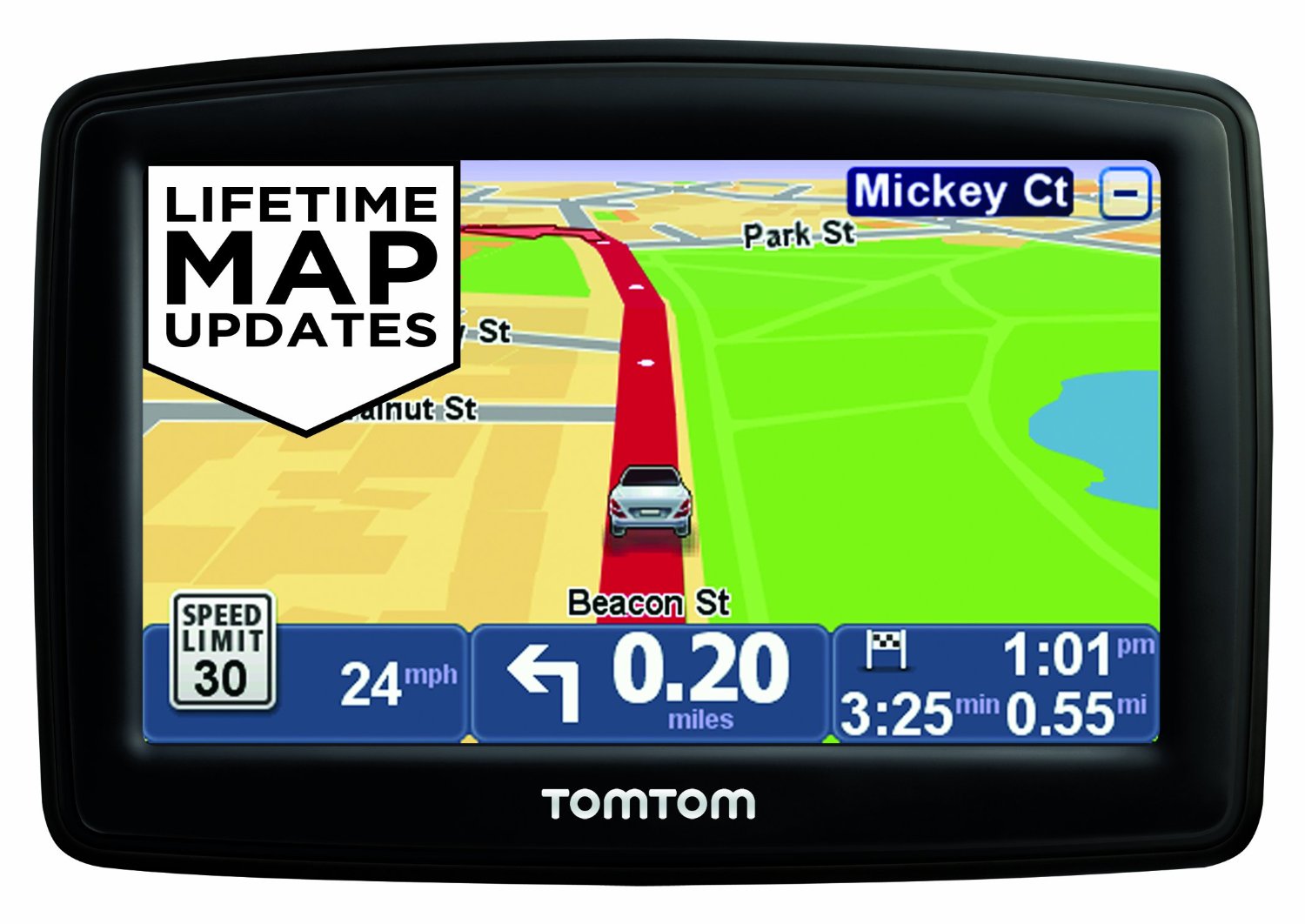
Image from:  http://www.amazon.com/TomTom-Navigator-Lifetime-Roadside-Assistance/dp/B007M4Z6FG/ref=sr_1_cc_2?s=aps&ie=UTF8&qid=1383045629&sr=1-2-catcorr&keywords=55mRecently, I purchased a TOM TOM 55M.  I thought about buying a GPS for  some time, but just never made the buy because the need was not great enough.  Preparing for a vacation, I realized that the route we wanted take was through unfamiliar territory and a bit off the beaten path.  So it made sense to make the purchase and let TOMTOM be our guide.  Needless to say, it was worth every penny and after we figured out how to use most of the features it made our trip quite enjoyable.

So how does this apply to golf you may ask?  Well, great question.  Once we enter the unfamiliar roads on our trip, I started to second guess the TOMTOM.  I thought I could cut of miles by taking a different road or have a more scenic route around the next bend.  I started to second guess the device until finally my darling wife said, “If you are not going to follow the directions, we are taking it back”.  In other words, trust that the TOMTOM is going to direct us on the path we chose and enjoy the drive.

Fixing a SwingHer statement, although not really earth shattering, was significant because it made me think about how this applies to the golf swing.  How many times have golfers stood over their ball and started to make adjustments, change their grip, address, stance, finish or mental attitude because all of a sudden they did not trust their swing.  Golfers suddenly decide that, in that moment, it was important not to trust the swing they have honed, shaped and worked on over years of tedious practice.  Golfers believe that not trusting something that has proven reliable was a smart.

How many times have golfers found themselves in this situation?  The fact of the matter is that trusting your swing is extremely important break 100, 90, 80 or 70.  Trusting your swing instills confidence to mentally play well.  Trusting your swing empowers golfers to apply proper course management because they are not thinking about mechanics.  Trusting your swing just makes sense!

There are times when all golfers need to work on their swing, but that should be saved for the range.  Once you leave the range and head to course, it is time to trust your swing.  Golf is a sport that is both complex and easy at the same time.  The path you choose really depends on trust!

I am a grateful golfer!  See you on the links!

How to Play Golf?

The dawn of a new day! What a great time to play golf!

What a great question!  If a poll was taken of 100 different teaching pros on what is the most important skill required to play golf, I bet there would be 100 different answers!  Golf is a unique sport where the elusive perfect swing comes in a million forms.  Yes, a million forms!

The golf swing is a series of different movements broken down, analyzed, and taught at varying skill levels.  Each player requires something unique to match their fitness, coordination, and willingness to change.  Reading many great articles from White Dragon Golf, Mind Body Golf, Golf Habits, GP Golf Report, or Hitting it Solid, I have concluded that great advice is found for those who are searching.  However, to break 100 consistently or to maintain a single digit handicap each player has to find their own way on how to play golf.  Golfers must find their swing, develop it, and hone the skills required to find their perfect swing.

If you are just starting golf or wondering how to play better, all I can say is welcome to the endless merry-go-round of trying to improve your swing.  It will be challenging, frustrating and exhilarating all at the same time!  The first time you hit the shot of your life, you will want to hit a better one!  What a vicious circle…..no wonder golf is the greatest sport!

Golf is really meant to be played; the only way to get better is to practice, play, adjust, practice and play; then repeat one million times.  It seems like a pretty simple system, well give it a try.  Actually, golf is meant to be enjoyed!  If you are not having fun, then what is the point.

Finally, 3underthru12 has a fantastic video on how to play golf that will make you laugh. For some of us seasoned golfers, we will remember watching it when it first came out!  For others, enjoy it for the first time.

I am a grateful golfer.  See you on the links!

Are You a Professional Golfer?

Canadian Armed Forces National Golf Tournament

Canadian Armed Forces National Golf Tournament

Have you won more than $750 playing golf at your local club in a skins game?  Do you use golf as a primary method to make a living?  Are you receiving financial gain from golfing? Are you the local golfing sensation whose likeness is used to promote a local charity golf event? Do you compete at the elite level regularly?  If you answer yes to any of these questions, you may be considered a professional golfer!

Determining whether a player should be a card carrying professional is important.  It is safe to say that it is easy to distinguish between a professional and an amateur. Or is it?

Lyndia Ko is a perfect example of a 16-year old phenom amateur who has won four (2 LPGA and 2 International) professional tournaments.  How does she maintain her amateur status and still compete in at the elite level?  The last amateur to win a PGA event was Phil Mickelson in 1991.  He turned pro 1992 and has won 42 professional tournaments, including five majors.  Did winning this PGA event push “Lefty” towards an amateur career sooner than expected?

By definition, an “amateur golfer”, regardless of whether he plays competitively or recreationally, is one who plays golf for the challenge it presents, not as a profession and not for financial gain. (R&AUSGA)  Is it really that simple?

One major distinction about being a professional golfer is “golf skill or reputation“. Generally, an amateur golfer is only considered to have golf skill if he:

  1. has had competitive success at regional or national level or has been selected to represent his national, regional, state or county golf union or association; or
  2. competes at an elite level.

Golf reputation can only be gained through golf skill and such reputation is deemed to continue for five years after that player’s golf skill has fallen below the standard set by the Governing Body.  This statement is very important to most amateurs.  Basically, local heroes with fantastic reputations would not be considered professional golfers.  It takes much more than having a scratch handicap.

Other aspects of maintaining your amateur status are important. A recent change to the hole-in-one prizes is significant.  Traditionally, if you won more that $750 for a hole-in-one during a fun tournament, you lost your amateur status. Fortunately that has changed because Kurt Kramarenko of Dimondale would be a professional golfer today after winning ten thousand dollars in a charity golf tournament on 13 September 2013.  It may have been a life time dream, but one awesome shot does not make a professional golfer.

Another major change important distinction on a player’s status deals with subsistence expenses. An amateur golfer can receive subsistence expenses to assist with general living costs provided the expenses are approved by and paid through the player’s national golf union or association.  (R&AUSGA)  This new rule allows amateurs to keep their status while in school, compete at the elite level and prepare for a professional career.

What about the local player who travels within a three-hour radius of his house and consistently wins prizes in tournaments?  What if this local player participates directly or indirectly in a “sweepstake” or “calcutta” auction and receives money from the person who purchased their team? Or, he likes to enter tournaments that offer cash prizes because he has enough golf stuff; does this effect their amateur status? The short answer is yes. Every time a player wins money during a tournament, even non-optional skins games, the prize money goes towards the $750 limit regarding their amateur status.  A prize such as golf equipment does not appear to count towards the $750 limit.

In 2012, the USGA and R&A joined forces to make one set of governing rules to clarify the difference between professional and amateur status.  This was a good move for the overall health of golf.  Bloomburg.com suggests that golf is a 69 billion dollar industry. Amateur versus professional status is important.  The following R&A video outlines the new changes and the importance of understanding if a player is considered a professional golfer.

New Amateur Status 2012-2015

So, are you a professional golfer?  Most likely, the answer is no.  However, for some, it is a great dream.  As the golf industry continues to grow, more pressure will grow on the governing bodies to ensure an even and fair playing field. There is so much at stake that making poor decisions early in an amateur career could have detrimental, long-term results.  Being a professional golfer may not be the life-long dream of most players, but for some it typifies expertise in a sport they love.

I am a grateful golfer!  See you on the links!
The World Cup Rules

Fifa-World-Cup-2014-BrazilThe World Cup 2014 is a long anticipated event.  It is the world’s largest sporting event followed by millions of fanatic soccer (football) fans!  Qualifying starts years prior to the event with hopeful nations vying for sports supremacy.  On 12 June 14, Brazil will host this exciting event that will surely capture the world’s attention!

Golf does not have anything nearly exciting as the World Cup, however for golfing enthusiasts, the FedExCup would be considered that event.  “The PGA TOUR season is divided into two segments – the FedExCup Season and the FedExCup Playoffs. The FedExCup Season generally includes events between the beginning of each calendar year and the middle of August, while the FedExCup Playoffs include four events from the middle of August until the middle of September.”  This format matches the qualifying process for the World Cup, but this is where the similarities stop.

FedExCupThe FedExCup Playoffs opened on Aug. 22-25 with The Barclays at Liberty National Golf Course in New Jersey City, NJ, then shift to the Deutsche Bank Championship at TPC Boston and BMW Championship at Conway Farms Golf Club outside of Chicago, before concluding on 23 September 2013 at the TOUR Championship by Coca-Cola at East Lake Golf Club in Atlanta.  These playoff events whittled the field from 125 players to 30.  But, where is the excitement; hype; the must watch matches?

The hype around the World Cup eclipses almost every event.  Despite that soccer is the worlds most played sport, it brings a level of excitement to each match that is unmatched anywhere.  The format of ‘one and done’ is the only way to conduct playoffs.  After all the training, commitment, and dedication, the playoffs add extra spice to the mix.  If a team loses in the playoffs they go home!  Past performances do not matter; world rankings do not matter; all that matters is playing for the moment.  Consider the greatest upset of all time, Uruguay over Brazil, 1950, demonstrated that at any given time, anyone can win!  Talk about Sport is Everything!

The FedExCup….not so much.  The limiting of the field through the final four tournaments is definitely a must!  It does provide a level of excitement that peaks the interest of most sports enthusiasts.  However, this is where real excitement for sports fans fades. The current FedExCup format does produce a strong field, but unfortunately format only ensures the big names in golf make it to the finals. There is no real “David and Goliath” excitement; the underdog remains under; and there is no last-minute heroic sand shot remembered for 60 years!  The FedExCup playoffs is like watching the same group of players week in and week out win large purses without any real excitement.  8 of the top 10 ranked players in the FedExCup are also in the top 10 in the world!  It is somewhat exciting for true golfing fans, but the current format does not generate the enthusiasm of a World Cup event.

The FedExCup should take a page from the World Cup.  Have all the qualifying tournaments to set up the 125-man field to start the playoffs.  Then, let the chips fall where they may.  Lose and go home!

Adopt the World Cup way.  Once the playoffs start, everything should be performance based.  If a pro plays well, they make it to the next stage.  If not, better luck next year.  Regardless of their world ranking, it allows that 125th ranked player the opportunity to reach out and rip the title out of the hands of the giant.

This format will make for great golf!  It will elevate the FedExCup to the ranks of a must see sporting events!  All sport nuts remember the huge upset, but rarely remember the team that should have won. Creating excitement on any playing field is really what fans want!

I am a grateful golfer!  See you on the links!

Choices Choices Choices

Recent adventures on the links makes me wonder if I really have a handle on golf or have I been kidding myself for years.  Course management is definitely a key aspect to success on the links. Knowing when to press or play defensively can determine whether you score a birdie or a bogey.  But is course management really important to having fun and improving your game?

Smart Shot Out of the Sand

Smart Shot Out of the Sand

Well of course it is!  Or at least I thought so!

It is the distinguishing factor between low and high handicap golfers. Determining how to play a hole, which club to use, whether to fire at the pin or to lag putt are all aspects of course management that are developed over time.  Thus, experience and the willingness to improve your course management skills are extremely important aspects of successful golf.

So, why am I going on about course management and its importance.  On the weekend I was playing with my friend and his brother.  As per normal, we were talking golf and how best to improve our game; which shot would be best in certain situations; and which club to use at certain times.  Through our discussion, we were basically talking about course management.

As we plodded along, the conversation turned to a earlier shot where my friend chose a 3 wood instead of an iron out of the long grass.  Additionally, he went on to describe how the ball was in a bit of a hole, but he really wanted to get to the green that was 220 yards away.  When challenged about his selection he responded, “I knew what the smart shot was but chose to not to do it!”  I stopped dead in my tracks and looked at him and said what?  He coolly said, “I know, but I just wanted to put the ball on the green and the knew I would not make it with an iron….it was not the smart shot, but oh well, I am still having fun.”  I chuckled out loud and walked to my ball with a smile on my face.

So my friend chose not to make the right shot!  Never a good idea to throw stones when you live in a glass house, I think we have all been in that situation.  Taking the low percentage shot over the smart play….it still makes me laugh.

The “so what” to this story is that choosing to actively participate in course management is the first and most important step to course management.  Although I never really thought that it was an option, apparently it is. Sometimes playing golf is about making the impossible shot and having fun doing it!  I guess that day was not wasted because I learned something new!

I am a grateful golfer!  See you on the links!