Managing Expectations

Managing expectations has a tremendous impact on everyone’s life.  We may not know it, but it can elicit various responses that will shape our mood, outlook, and attitude of day-to-day events.

Recently, I played in a curling fun-spiel.  It consisted of 30 teams of various skill levels.  On our team, I was the most experienced as I had curled a couple of times before.  So we set out our expectations early; contribute as much as possible and don’t get hurt!  As we played through each game, we laughed, poked fun, and made some great shots.  Our light-hearted approach landed as runner-ups to the fun-spiel champions.  We managed our expectations early and thus had a fantastic day!  Others who expected to do better have a different view of that days events.

Image from: http://en.wikipedia.org/wiki/Albert_EinsteinManaging expectations also applies in golf.  How we feel about our latest round is directly related to how we expected to play that day.  How many of us have shot 100 or 90 or 80 or 70 and felt we had a fantastic round.  We exceeded our expectations of that day and felt awesome about our golf game.  After playing well last time, we shoot the same score and walked off disappointed, frustrated and wondering what went wrong.  Most of the time, nothing went wrong, we just expected to do better!

So how can managing expectations improve our score?  I think it is important to always expect more out of our game, but as Albert Einstein defined Insanity: doing the same thing over and over again and expecting different results.  To properly manage expectations, it is important to understand your strengths and weaknesses and what we can actually achieve.  Additionally, it is important to do something by working on our putting, chipping, pitching, etc.  Then and only then can we really manage our expectations properly.  

To expect something different from your game is a good thing, but working at your game is equally important.  How do you manage your expectations?

I am a grateful golfer!  See you on the links!
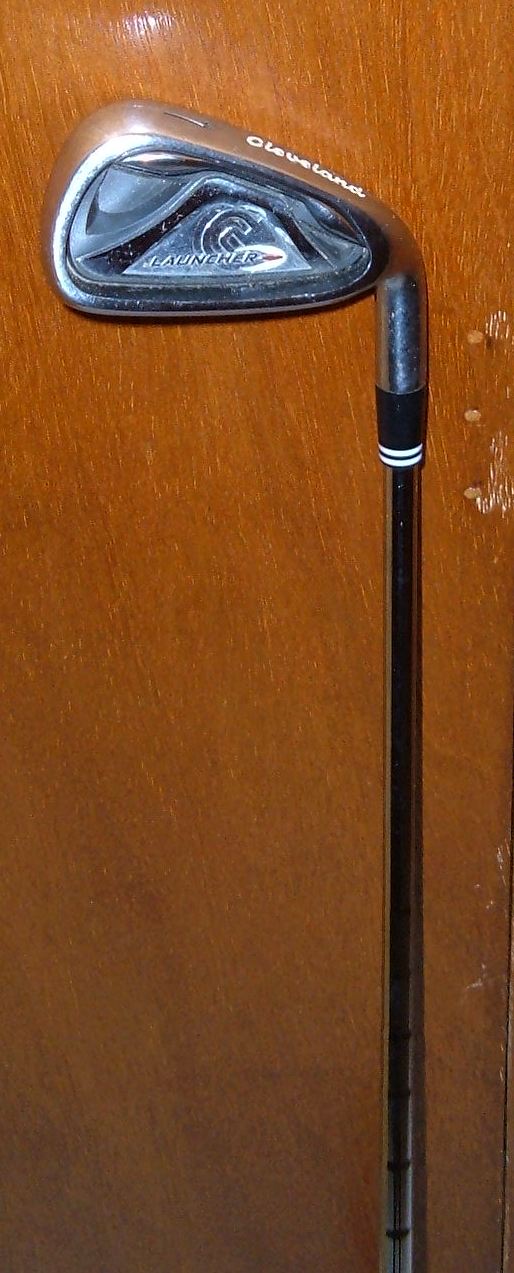
What is Your Favorite Club

What is your favorite club?  You know, that one club that no matter where the ball lies, no matter what is between the ball and the hole or which way the wind is blowing you are almost assured of a great shot.  Everyone has one, but which is yours?

Cleveland Launcher 7-ironIt is important to have an answer to this question.  It is definitely a shot saver!  The old adage of “take your medicine” when you play a poor shot is really important.  Because most often you will use your favorite club to get you out of trouble. Playing many rounds of golf each year, I have found that using my favorite shot to set up my next shot or putt is vital to my success.

In my case, it is my Cleveland Launcher 7-iron.  I am so confident from 150 yards with this club, that no matter where my ball lies, I can manufacture a shot.  I feel I can hood it, punch it, chip it, loft it, or just nuke it with a high degree of success.  It really is my favorite club.

I remember breaking 70 last year at my home course where my 7-iron saved my bacon.  I was on the 9th hole and hit my ball directly behind a huge tree (that is in the middle of the fairway, but that is another discussion) 150 yards from the green  At that time, I was 1 under and feeling great about my round.  Unfortunately, I could not go over the tree, so I decided to go around it.  I hooded my 7-iron; played a low sweeping hook around the tree and rolled the ball on to the middle of the elevated green like it was nothing.  I was so confident that I could make this shot with my 7-iron I did not even hesitate.  As a result, I finished 1 under for the front and 1 under for the back (par 71 course).  It was my second best round of the year…..thank you 7-iron!

Through the years, I have played Nike, Ping, Wilson, and Spalding clubs, and regardless of the brand my 7-iron has always been my favorite club.

Everyone has a favorite club….which is yours?

I am a grateful golfer!  See you on the links!

What Golfers Will Do!

Sergio Garcia is in the spotlight again.  The Arnold Palmer Invitational at Bay Hill Golf and Country Club always produces things to talk about.  Right now, many media outlets are talking about Garcia’s climb up a tree to play the ball out to the fairway.  It can be seen at PGATOUR.COM.

I, however, what to talk about another shot that Sergio made during the second round.  Unlike Nicholas Thompson who hit the ball out of the water hazard to within 2 feet of the pin, Garcia hit a ball, it landed on the bank in the hazard and jumped back into the water.  He could not play the ball the second time and took a drop adjacent to the spot he took his swing.

While watching, I was confused how they figure out the point of entry in the red staked hazard.  I did not see the ball go into the hazard, but must assess that his point of entry into the hazard would not have changed regardless if he tried the shot or not.

I realize this sounds confusing.  Well I am confused.  I have not encountered this situation before so I need some help.  I believe that rule 26 applies, but since he took a shot, missed and it stayed in the hazard….does it still apply?  Can someone explain which rule to apply and number of stroke penalty Sergio Garcia should be assessed?

A Change is as Good as a Rest!

Recently, I visited my family who I have not seen in quite some time.  During our visit, I was caught up on all the news, entertained by the young and potential golfers (well everyone is a potential golfer in my eyes) and realized how much I miss visiting these fantastic people.  During many of the interesting conversations, I thought how refreshed I felt and how energized I was when we had to say good-bye.

This fantastic visit had a positive impact on my attitude and energy level.  As always, I wondered how my experience could be applied to golf.  After much contemplation, I think I have it:  a change is a good as a rest in golf?  I would say a change is absolutely good for your golf game.

I and many golf advocates talk about consistency, repetition, and staying focused.  Of course this is very important.  But what do we do when we hit the wall and all our efforts do not result in any tangible improvement in our game.  I suggest making a change.  Specifically, play a different course!

Playing a different course will help change your mental thought processes towards your game.  I know, many are saying no way, but how many of us are choosing the same club on the same hole even before we get to the tee.  On our home course, we know which club we want to use (whether it is the right club or not), when, and where.  After ten rounds in two weeks, this approach may become stale and actually have a negative affect on our score.

Many websites provide information on vacations, rating and walking of golf courses.  Sites like: Golf Vacation Insider,  World Golf, The Walking Golfer, Golf Association of Ontario, Dallas Divot Report, and Gorilla Golf.  All are valuable resources when choosing local or destination golf excursions.

Regardless, the benefits of periodically playing different courses throughout the golf season will only improve your game.  It will keep you mentally strong, focused and provides many new experiences.  I like to play about 10 different courses throughout the year.  An added bonus is that playing different courses helps check if my handicap is real or not!  Additionally, It is fun, challenging and as the Mindful Golfer says: Golf is a Contact Sport.  Meeting new people is always a grateful experience.

How many courses do you try to play during the year?

I am a grateful golfer.  See you on the links.

I Need To Work On My Swing!

I have heard this statement so many times that I wonder if people really mean it!  “I need to fix my swing”.  Yet they never do; they ask a player with a 20 handicap for tips…not sure that is a recipe for success.  Each swing is unique to each player.  Of course we would all like to swing like Ben Hogan, but that is usually not the case.

The Bleacher Report covers the Top 20 swings of all time.  I am sure, that after you look at it, you can come up with many players who could make that list.  Ultimately, they all have the same basic swing and the results are in their successes.

But what about the rest of us!  We do not have that smooth take away or high follow through that ensures consistent results all the time….but do you really need it!  I remember pros like Ray Floyd and Lee Trevino who had less than text-book swings, but were very successful.  Also, look at this video of pros who have swings that you do not want to duplicate.

As you can see, even swings that are not text-book can still lead to success.  Moe Norman, considered one of the best ball strikers of all time had an ugly swing.  But could he hit a ball!

Ultimately, your swing is your swing.  Sometimes it is best just to embrace what you can do and not worry so much about what you cannot.  If you do decide to change, it is best to see your local club pro or a PGA professional (like Rick Williams at mindbodygolf.com).  They will be able to help you work out all the kinks.  Tips from your friends is probably not the best way to solve your swing problems.

In closing, if you are deciding to buy a new $500 dollar driver thinking it will fix your swing…may I suggest you save $400 and take two lessons before you buy new equipment!

I am a grateful golfer.  See you on the links!