Practice Golf The Way You Play

3-6-9 Chipping Drill

3-6-9 Chipping Drill

Focused practice is nothing new at The Grateful Golfer blog. This extremely important topic has cropped up and never seems to lose its importance or relevancy to playing great golf. As I think of the many tips on this topic, I started to wonder if these perils of wisdom actually help the average player.

I am strong believer in the 3-6-9 drill for putting and chipping. I believe they offer the biggest return on your most precious investment: time. This and other drills will make us a better player and lower your golf scores, if we practice. However, after some thought, there is one aspect of focused putting that seems to be overlooked by most amateurs and teachers. Continue reading

Chip, Pitch or Putt for Lower Golf Scores

Choosing the right club at the right time is critical to lower golf scores. It haunts all golfers because club selection is the holy grail of knowledge only gained through years of practice and playing lots and lots of golf. (the second part of gaining knowledge is my favorite)
IMG_20140506_165520

Chip, Pitch or Putt, what is your call?

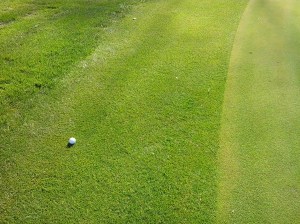
A while back, I wrote an article about a situation where the ball was on the fringe and I was left with a choice to chip or putt.  There was many opinions and for the most part, choosing between putting or chipping was about 50/50.

Recently, I asked the same question without the picture and the response was different. I am not sure whether it was because the picture was not present, but the 25% increase for players wanting to putt was not really surprising.

Apart from the qualifying remarks such as: is the ball above the hole, is there a mound between the ball and the hole, what time of day is it, is the green freshly cut or how am I playing, most amateurs seem to agree that putting the ball when possible is the best option.

I generally agree, however it is important to have other shots in your bag for those times when either chipping, pitching or putting is required. My years of experience have taught me that relying on just one type of shot is not conducive to consistent low scores.

As someone who likes to always move forward, I like trying new methods to lower my score. My constant pursuit for improvement does not always meet my overall expectations.

Have you ever heard the saying ‘3 steps forward, 2 steps back’? That is what happened to me when I decided to putt more from the fringe. I focused all my attention on the flat stick and as a result, my chipping and pitching started to atrophy.

Although I had developed a new skill by putting more often, I lost my touch with my chipping and putting irons. Fortunately, with a little practice, my “feel” returned and now I have 3 solid types of shots when the ball is on the fringe. I am happy now at the end of the journey, but during the transition, I found it frustrating and sometimes wondered if I was on the right path.

Generally, when the a player is developing a new skill, there is a point of frustration when the new skill is not meeting expectations and their old skills are starting to rust. It is usually at this time when players stop learning the new skill and revert back to their old ways. As a result, the player concludes that the new skill is not worth the effort.

Golf is a challenging sport. It provides the opportunity for a player to be as good as they want. I believe that being a great golfer, we amateurs must find our own path to success. What works for me, may not work for you. I also believe that being a grateful golfer we need to keep trying to improve and be thankful for the journey to lower golf scores.

How do you handle learning a new skill? How much practice time do you devote to it?

I am a grateful golfer! See you on the links!

Thoughts from Day 3 at the Barclay’s

Image from: http://www.channels.com/episodes/show/449090/Hitting-With-a-HybridDay 3 from the Barclay’s is in the books. It was interesting to watch the pros navigate Plainfield Country Club in Edison, NJ. The many challenges of the course lie in the rough and placement of the many sand traps. Additionally, the greens on the course appear to be very challenging given the plethora of scores on day three.

There will be many reports on the play of Day 3, however there is one thing I noticed about the play that caught my attention. Many of the leaders were putting from the fringe. This caught my attention because most of the pros are awesome wedge players. What would drive them to use their putter instead of their wedge?

As I watch them play, I can see the undulations on the greens and pin placements are causing challenges for the players. Using their putter appears to be best way to conserve strokes and reduce errors. Very few were making the putts, but their lag distance was close as most players were able to get up and down for par.

This is an interesting defensive strategy. I will admit that recently I have started using my putter more from the fringe. This is counter to my previous strategy, but this change has saved at least 2 strokes per round because my lag distance is make-able more often than not.

Do you use your putter or wedge from the fringe? In your view, why doe you use our putter or wedge?

I am a grateful golfer! See you on the links!

Teamwork in Golf

teamwork

Teamwork helps accomplish great things!

Developing and maintaining the perfect golf swing is next to impossible! The better we play, the better we want to play and to accomplish this amazing feat takes time, effort and dedication. Many of us try to improve our game alone or with help from some well-intentioned friends. Personally, I fit into this category or at least I did a few years back.

Professional golfers have a team of experts to help them with every aspect of their game. If one expert is not cutting the grade, they are politely asked to leave the team. This process, however well-intentioned, is designed to make the professional golfer better, but is difficult for amateurs to duplicate. Some teams instinctively work like well oiled machines, and others, not so much. Regardless, their goal is always to obtain the best results they can…..always.

Amateur golfers are less fortunate. We generally do not have any sort of team to help us improve our swing mechanics. Practice and training is worked into our daily lives as much as possible. The challenge for most amateurs is to effectively juggle the multitude of life events with the demands of playing great golf. Many believe that they are going it alone, and their success on the golf course lays solely in their hands.

I used to feel that way until about 3 years ago when my eyes were opened to a plethora of golf resources available at a click of a button. The internet has allowed many amateur golfers to improve their game by watching videos, reading articles, and watching professionals ply their wares on various golf shows. The trick is to find the right resources to match your game. On a side note, I have only met on person who has significantly improve their game this way. He really worked at his game and it paid off in spades.

For me, the evolution in my golf game started in May 2012. It was the time I stared this blog. On that faithful day, my real education about golf had officially commenced. I slowly started talking to like-minded golfing fanatics whose unique perspective showed me that my narrow view on golf was holding me back.

As we discussed topics such as putting, chipping, or the mental side of play, my game improved. I would use their suggestions on the practice range and slowly shape my game into something better! By a fluke of nature, this team of unsung experts, I have never met, has helped reduce my learning curve as I attempt to be a scratch golfer!

Teamwork can be found in anywhere. I was fortunate enough to find and build a group of experts who I rely upon to help solve the challenges in my game. I am confident that if they do not know a specific answer, they will know where to find it. To you my silent teammates, I say THANKYOU!

Do you have a team that helps you with your golf game?

I am a grateful golfer! See you on the links!

What to Focus on First at the Start of Golf Season

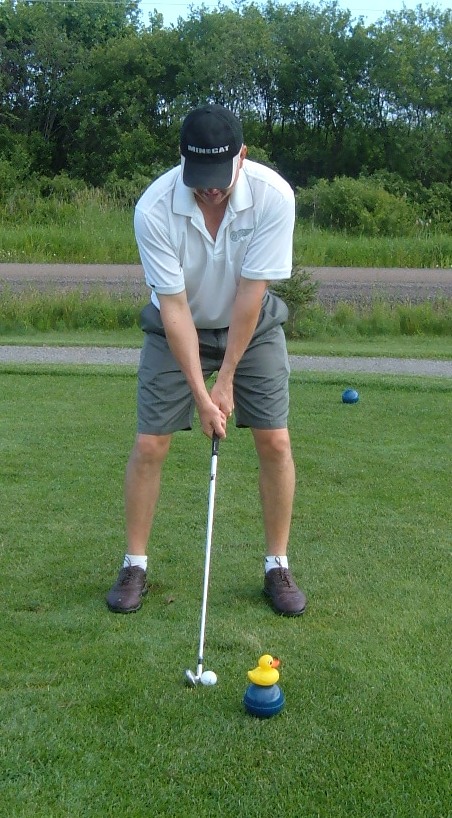
Jim with a DuckGolf is officially here. The crew at Roundel Glen Golf Course spent many long days cleaning up the winter mess and their efforts are greatly appreciated by all the anxious golfers! With the hope of an awesome season ahead, it is time to focus on the fundamentals and execute my plan of being a scratch golfer.

This year, I am going about things a bit differently. I am not actually developing my plan until mid-May. I know many of you are shaking your heads thinking that I will be wasting a precious month, but rest assured there is a method to my madness.

My plan is to work on my fundamentals first, then see where I need to focus my practice time to generate the most ‘bang for my buck’. So after much introspection, this is my initial approach to the 2015 golf season:

Chipping. This year I believe that chipping will be the key to a lower handicap. My GIR stat is not bad (I hope to improve this), however on the days that I am not striking the ball well, chipping is what is going to keep my scores low. On the days that I am doing well, the odd missed green will not have as great an impact on my score. So, chipping is first.

Mid-Irons. Most experts would suggest that putting should be next. Personally, my GIR stat is more important. If I do not give myself the opportunity for birdie more times than not, then being a great putter does not really matter. The distance I will focus on is from 175 – 125 yards.

Putting. Once on the green, putting will help me close the deal. Being a strong putter is critical to low scores. My self-assessment is that I am a strong putter already and that focusing on chipping and mid-irons is a better use of my time so early in the season.

3-wood. I hit my 3-wood on most par 5s and several times off the tee. It is an important club for my game because it helps with my course management. In the past, it was my go-to club, but recently I have relied on it less. Regardless, my 3-wood will be next in line as I practice this spring.

Long-Irons. I do not hit many long irons. My course management is such that hitting long irons is generally avoided. I will hit a short iron and stay 75 yards back, then hit a long iron to 30 yards from the green. Not always mind you, but hitting into the an area of my game that I use 2 or 3 times a round does not make sense, but I do have to practice hitting long-irons just in case I need to during a round.

Driver. Many of you are gasping right about now! Not to worry. I have left my driver until last because I plan to be fitted for a new driver in early June. Mike at my home course is a Master Club Fitter and we are going work together more this year. My focus for the fitting will be the shaft, thus extensive practice with my old driver does not make any sense early in the season.

There you have it. My initial practice plan is in place. My area of focus and overall plan for 2015 will not be formed until around mid-May. This is a new approach for me, but I think focusing on the fundamentals in each area without the pressure of having to score well will be very beneficial. What do you think?

What is your initial plan to prepare for the 2015 golf season?

I am a grateful golfer! See you on the links!