Painting and Golf

As many of you already know, I like to take everyday, run of the mill, chores and relate them to golf. It helps show how almost anything we try is connected in one form or another. Also, it helps show how being good at one thing is transferable to such a point that it is possible to be good at many things. It is all a matter of how you look at things.

Think of a person right now who you consider to be good at many things. It does not really matter what they are good at, however it is interesting that they appear to be top performers, artists, writers, mothers, fathers, carpenters, or whatever, all at the same time. Is this person special? Do they have super powers? Or are they genetically superior? The short answer to these questions is a resounding NO!
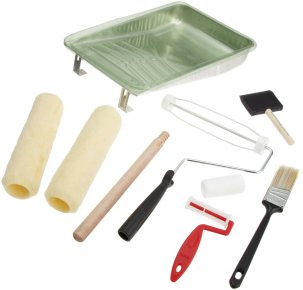
painting suppliesI enjoy painting a wall with a roller. Call me crazy, but I think a newly painted wall looks clean and fresh and I gain a certain level of satisfaction when the wall is finished. During the past weekend, my darling wife and I decided it was time to paint the whole basement. Importantly, four days off work was enough time to complete the job and still get a couple of rounds of golf in!

As I cut, edged, rolled, wiped, fixed, re-rolled and applied a second coat of paint, I was surprised how painting and golf were so much alike. And here is how:

The grip – as I gripped the broom handle attached to the paint roller, I quickly realized that to produce smooth even stokes of paint I needed to hold the handle gently.  Too tight and the roller moved in short choppy movements; too loose and I was dripping paint everywhere. Gripping a golf club produces the same results. Too tight – choppy swing; too loose – no control!

Edging – As I cut delicately around the ceiling and baseboards, patience and a steady stroke produced the best results. Being patient enable me to see potential mistakes, anticipate areas of concern and fix minor blemishes before I compounded them into a painting gaff. In golf, focusing on course management produces the same results. It helps us plan our next shot, avoid the hazards and make small corrections in our game as the round unfolds! Thereby, lowering our score.

Length of my painting stroke – when painting, keeping the roller at a steady, yet constant speed helped to evenly spread the paint. If I needed to cover an area just a little bit further than normal, I would keep the same speed but extend my stroke. In golf, my putting stroke is the same way. The speed of my putter head does not change, but the length of the stroke does depending on the distance from the hole!

I think you get my point! Many everyday skills are transferable. It is a matter of how you look at the task at hand and how to apply the skills we already know. Personally, I use this technique with great success on many new things. No matter what you are trying to accomplish, if you can relate it to golf (or whatever you are good at) positive results are likely to occur.

I am a grateful golfer! See you on the links!

Controlling the Unknown in Golf

Lost and Confused SignpostOn any given day, we as amateur golfers really have no idea what our golf game will produce. Don’t get me wrong, the better golfers have a better understanding of what to expect and most of the time the surprises are limited. But for the amateur who plays infrequently or does not have the time to improve game, the unknown of golf can be a source of excitement or dread.

For those who have ever walked into a casino, the anticipation of winning big and walking out is always on your mind. As you pensively walk around looking for the ‘lucky’ machine, many thoughts of how to ‘beat the house’ surface. Finally, you pick a slot machine and in goes your money. As you pull the arm and watch the tumblers spin, your excitement grows! As the wheels stop spinning, you find yourself talking or yelling at the machine as if you influence the outcome. The machine gives you just enough back, thus providing a sense of control in an uncontrollable situation. The unknown of where the dials will stop continues until you walk away!

Golf is very much like your adventure into the casino. The player who is unprepared or has not played enough to develop a consistent swing creates a world of unknown possibilities in golf. They will repeatedly hit the ball unsuccessfully and wonder what is going on. Like the slot machine, the player will hit just enough good shots as to give the illusion that things are looking up; when actually their good golf shots was ultimately the result of the law of percentages.

Every shot in golf provides a plethora of options and the ability to control all the factors is impossible. We cannot control the wind, the ground, course layout, speed of the greens or the sand in the bunker! These things all play a role in golf and their unknowns are uncontrollable! However, for golfing fanatics they are what makes golf interesting and in some cases exciting. Just ask Brian at All About Golf who recently recorded his second hole in one!

Of course this is not all bad! There are many things in golf we can control that will significantly lower the unknowns and increase the percentage of making consistent, great shots. You can control how you putt, when to chip, driving the ball, and course management to name a few. Golf is a game that needs nurturing for players to reach their true potential!

Controlling the unknowns in golf is possible. It does take effort, that eventually will be rewarded.

Today, I am heading to play Glen Abbey Golf Course, the home of the Canadian Open! I hope I can control some of the unknowns, but regardless, today is going to be an awesome golfing experience!

I am a grateful golfer! See you on the links!
Golfing in the Rain

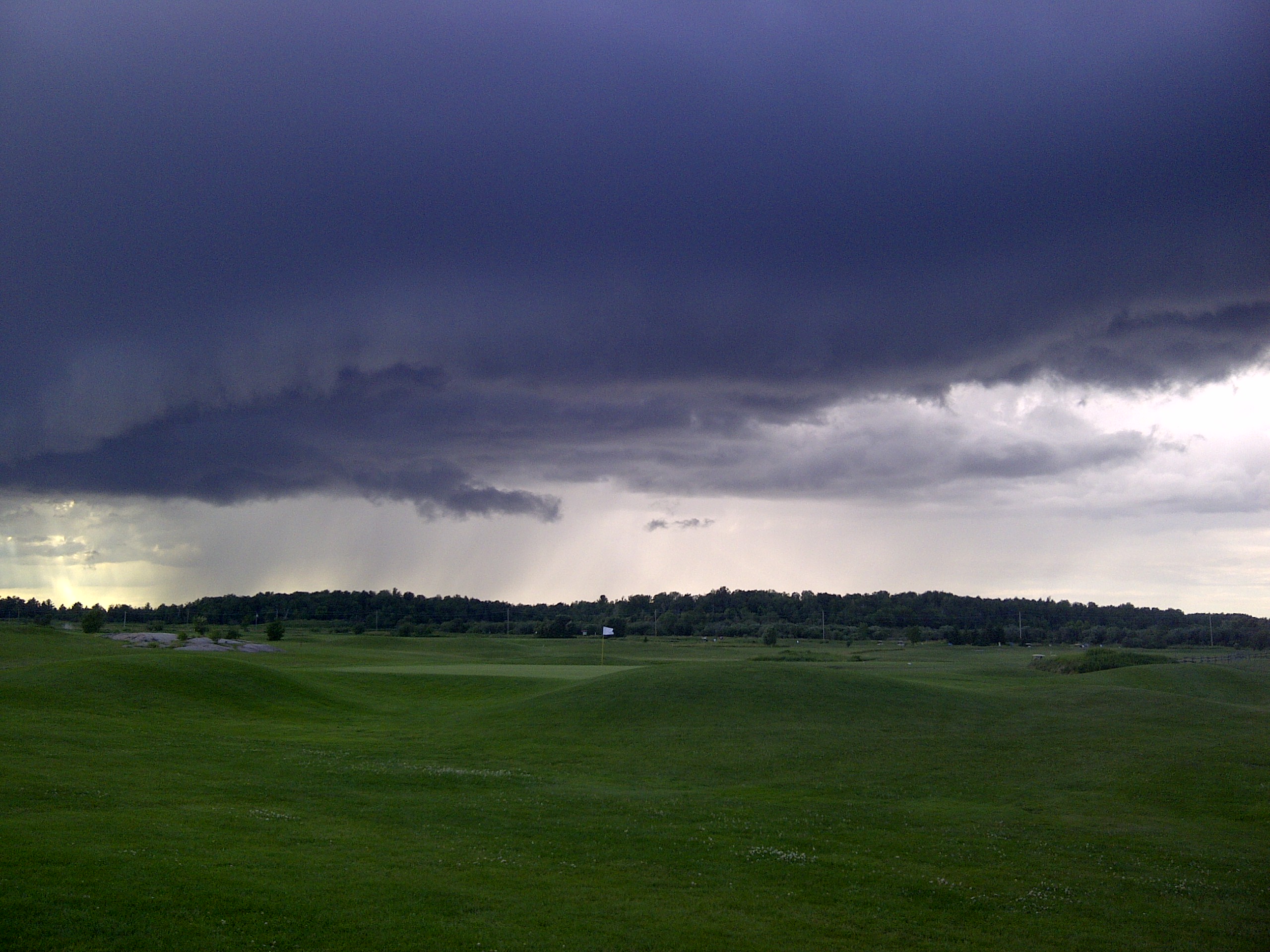
Well my first two days of the golf tournament were postponed. In the last 36 hours our area received about 80 mm or rain.  Our course is under water and it is draining very slowly.  It is unlikely we will be able to play on Friday, so the entire event will be delayed one week.  Of course I am disappointed, but at least the event is not cancelled all together. But, as always, each experience is a learning one; so now we talk about playing golf in the rain.

IMG-20130710-00061Many golfers dislike the rain. Personally, it does not bother me because I believe I have a fool-proof system to keep the important aspects of my equipment and body as dry as possible. The first important point has to do with equipment. I carry the following when I suspect it is going to rain:

  • Plastic cover that actually covers my entire golf bag;
  • a 64 inch umbrella that can be attached to my golf cart (which I push so it does not hurt my shoulder);
  • clear plastic freezer bags to keep my score card dry;
  • spare socks in a clear plastic bag;
  • spare clothes in the car for after the round;
  • two towels so I can hang them under the umbrella; and
  • a hat and rain suit.

All of these things keep me very dry unless it is really pouring, then I just have to suck it up and be grateful I can still golf. When making a shot, expect on the green, by routine is very simple:

  • I point my clubs into the wind because it cuts down on spray;
  • I remove my club while under my umbrella and wipe the grips (if required) with one towel and my hands with the other;
  • I normally do not take a practice swing, so I walk out behind the ball and visualize;
  • step up and hit the ball;
  • walk back under the umbrella, wipe my grips and replace the club; and
  • seal up my plastic cover and move on.

When putting, I use a slightly different routine:

  • I take out my putter and wipe the grips and my hands;
  • I take the umbrella with me – my clubs are covered with plastic;
  • stand behind the ball and read my line;
  • adjust my ball still holding the umbrella;
  • place the umbrella at the one o’clock position with the top facing the wind. It is usually about 6-10 feet away; and
  • make my putt and collect it from the hole. If I miss, I go mark the ball (if required) before retrieving my umbrella.

Playing in the rain will mess with a golfer’s normal routine. However, I have found that by following my routine, the rain does not bother me as much as others. Following a routine is the best way to break 100 or lower your score; following a routine in the rain only helps more. A couple other things to consider when playing in the rain:

  • most shots will need an extra club due to lack of roll and the rain hitting your ball during flight;
  • greens will play slower than normal;
  • if you are wearing a rain suit or outer clothing, your swing will feel different. Focus on contact not swing mechanics and this will help ensure solid ball striking;
  • course management may have to be adjusted due to the rain reducing the distance your ball carries; and
  • the noise of the rain hitting your umbrella, rain suit or the ground may affect your concentration – just ignore.

Golfing in the rain can be difficult, but if you develop a routine, understand the impact of the wet weather, and focus on what you already do well, your score should remain the same.  If not, always remember you could be working!

If you have any suggestions on how to improve my routine, I would love to hear them.

I am a grateful golfer! See you on the links!

Reverse Engineering In Golf

Yesterday, my friend and I left the first tee with a high GAF (Golf Attitude Factor) and strong feeling of wellness. How could we not; after the fourth hole the beauty of our home course was only overshadowed by quiet serenity of playing golf with no one else around. No kidding, we owned the course and calmly played the rest of the round bathed in the beautiful sun, the musical harmony of nature and the refreshing aroma of life rekindled. It really was a great round of golf and more importantly, I learned something new!

Course management is as important to lower scores in golf as mustard is on a hot dog at the ballpark. They really are inseparable and if used together a positive outcome is almost assured. During our many conversations, my friend reminded me of a very important and often overlooked aspect of good golf; that course management always occurred from the green backwards. The Golf Channel has a great article for review of before mentioned points about course management. There are many ways to effectively use course management techniques, but no matter what, the process is still the same.

It is critical to work from the green backwards. For a par 4 let me explain:

Green Backwards

Looking backward – to approach from the right side of the fairway is best.

Every green has its challenges. Most of the time, aiming for the center of the green is the safest and most effective shot, especially for those trying to break 100. For players who want more of a challenge, it is important to consider the location of the pin. Sometimes the pin will be tucked behind a bunker or near the dreaded knoll that makes putting extremely difficult. Pin location will determine whether your previous shot should be on the left or right side of the fairway. Knowing what side of the fairway your second shot needs to be will help set up your tee shot.

Teeing Up the Shoot

Tee up on the left to ensure the best approach to the green.

Now that you know what side of the fairway you need to be on for your next shot, setting up for your tee shot is easier. A general rule I use is that – left side fairway, right side tee box; right side fairway, left side tee box. By setting up on the opposite side of the tee box to where you want your ball to finish helps reduce errors and ensures that even on miss hits the probability of success is higher.

If you are playing a par 5, add one more step using the same logic and process. It may seem like I am suggesting a crisscross pattern down the fairway, but I am suggesting that you choose the path that best suits your game and achieves the result of playing the ball to improve your chances to score low.

On a par 3, I would recommend that the general rule of alignment still works. Obviously, hazards and pin location are very critical for shorter holes, but I think you get the point.

Reverse engineering in golf applies to course management. Working from the hole backwards is the logical way to lower your scores. Course Management from the green to tee will cut mental errors, lower your score, and improve your overall mastery of golf.

As the late great Bobby Jones said, “The secret of golf is to turn three shots into two.” That is course management in a nutshell!

I am a grateful golfer! See you on the links!

 

Par 3 – Are They Suppose To Be Easy?

Most courses have at least four par 3 holes. Some will have five or six, but in general four is the normal number. Playing from the blues (furthest back tee box) most par 3s will play between 160 – 185 yards; challenging but not demoralizing. Personally, I consider par 3s scoring holes. I expect to birdie at least one per round and par the other three. This may sound a be ambitious, but given the general length of most par 3s, not unrealistic. Additionally, most par 3s are spread evenly throughout the course, which is an advantage because they help with the flow of each round.

hole 1

Hole 1 halfway up the fairway.


Hole 3 from Tee Box.

Hole 3 from Tee Box.

Well, my confidence of conquering these short holes has taken a bit of hit as of late. My home course of Roundel Glen has a different course set up that challenges even the most experienced amateur. All but one of the par 3s are long, difficult to approach, and well guarded. Adding to the difficulty, when I play in the morning there is very little roll and the ball does not travel as far because it is cold. In addition to their length, the par 3s are placed in more challenging positions which disrupts the normal flow of a golf course. From the blues this is what it looks like:

  • Hole 1 – Par 3 – 210 yards – 3 hybrid;
  • Hole 3 – Par 3 – 205 yards – 3 hybrid;
  • Hole 10 – Par 3 – 200 yards – 3 or 4 hybrid; and
  • Hole 17 – Par 3 – 173 yards – 6 iron or 5 hybrid.

Roundel Glen’s course layout is actually very good. I like the course, but I need some help. I have racked my brain on ways to play these holes. In the middle of the day, I can easily reach the green with the clubs shown, but in the morning it is very difficult. My woods, even choked down, do not work – I have tried.

At this time, I play these holes by trying to hit as close to the green as possible (and sometimes on) and relying on my short game to eek out a par. Not sure there is any other way to play these holes. If you have any suggestions I am all ears!

I am a grateful golfer! Always willing to accept advice!