There are many transferable skills between sports. As a volleyball coach, my training focus for beginners was on foot work and proper body position when contacting the ball. By reinforcing the fundamentals early produced greater results as the young players developed. Again and again results prove that proper, repetitive movements in sports build the positive foundations required for success.
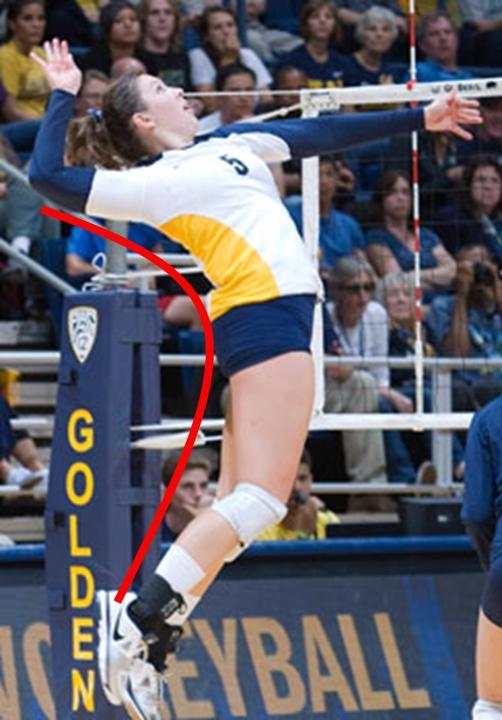 One specific skill in volleyball is call the ‘reverse C’. This specific technique requires a volleyball player to arch their back to add tension to their hitting stoke. This technique is difficult to master, but once they do – the results are amazing. The movement to spike the ball has players arch their back and ‘load’ their hitting arm. At the proper time, the hitting motion starts with uncoiling of their back. As they extend their arm to strike the ball, the momentum of their back uncoiling added to the arm motion generates more power and thus greater arm speed. The result is greater speed of the ball that is hard to dig. The ‘reverse C’ is a valuable skill that generates power.
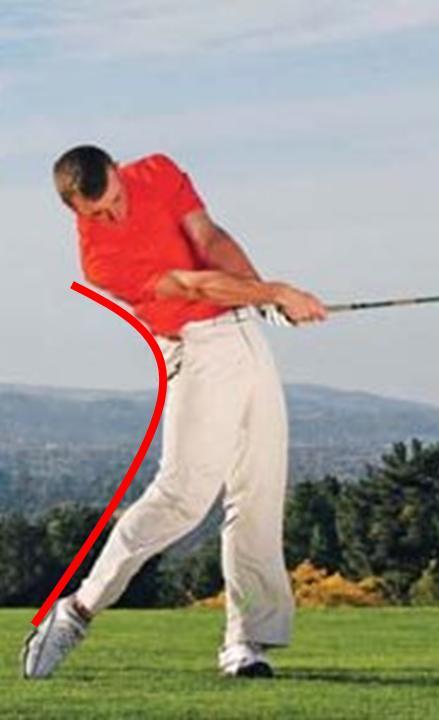 Golf uses a very similar skill. The ‘reverse C’ in golf is used to generate power and improve launch angle. A key part of this fundamental skill is ball position; placing the ball off your lead toe is a great place to start. The ‘reverse C’ is created by sliding your hips towards the target before you start to uncoil the club from the top of the takeaway, this movement helps maintain the proper position when contacting the ball. Additionally, it creates tension by tightening the coil of the shoulder rotation. The result will be greater distance with more consistent contact, improved angle of attack and increase height on the ball during flight. The ‘reverse C’ is a fundamental skill used to hlep break 100 and lower, focus on creating the ‘reverse C’ when contacting the ball. You may be surprised at the results of your efforts.
Many sports skills are transferable. The ‘reverse C’ is definitely one that all élite volleyball players and golfers master. Focusing on core fundamental movements from other sports maybe a new way to improve your game and lower your scores.
I am a grateful golfer! See you on the links!
 The Grateful Golfer