Making Golf Fun for Everyone!

Setting up a golf course for play is more complicated than one would think.  Each day a decision should be made on where to place the pins and the tee box to make the most of any course.  The local pro or grounds keeper should relieve the pressure from the person responsible for moving the pins and tee box and set up the course in advance.  Properly setting up a course will ensure that it fair and enjoyable to play by the average golfer.
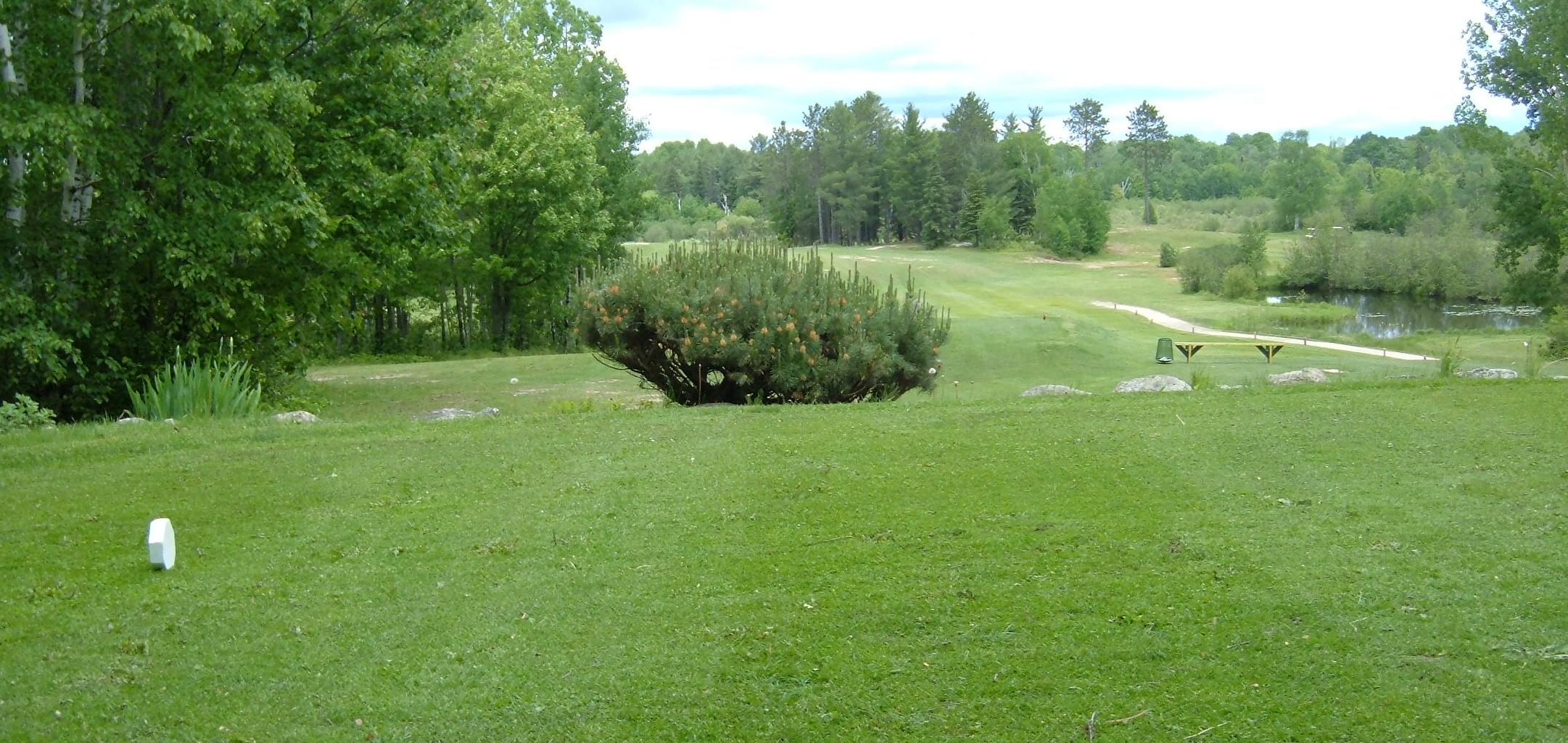
What Not To Do!

A bush 4 feet high directly in the line of the tee markers!

The above image is a perfect example of what not to do.  The tee markers are 8 yards apart with 5 yards set up directly behind a 4-foot bush.  This set up was during a tournament recently run at a local course.  Needless to say, it was frustrating and silly all at the same time.

The R&A has strong guidance on how to make the pin placements and the location of the tee boxes.  “Tee-markers should be placed about six to seven yards apart. If the width of the teeing ground is greater, players are more likely to inadvertently tee up in front of the tee-markers. The front line of the teeing ground should be set up at right angles to the centre of the drive zone.”  “There should be a balanced selection of hole positions for the entire course with respect to left, right, central, front and back positions. For example, beware too many positions on one side or the other of the green with a resulting premium on drawn or faded shots.”

All too often, the tee markers are moved to where there is the most grass.  Moving to where no one has played is a requirement caused by not moving the tee markers for two or more days.  Compounding the problem is par threes because most players take divots during these shorter shots.  Eventually, setting up the tee markers poorly will ruin a tee box.

Additionally, the pins have a tendency to be placed in awkward locations that require a skill level far beyond the weekend looper.  Some may think that having the pin placed on the side of a slope is to test the skill of players, but actually this action just frustrates everyone on the links.  Generally, someone told to move the pins makes this crucial set-up decision.  This is not to suggest the maintenance worker cannot set up the green, but some fore-thought is required to ensure that the course is still fun with a mix of challenge for the average player.

Another aspect of properly moving the pins and tee makers is to ensure the traffic of walkers, carts and maintenance vehicles is balanced over the course.  Having the same traffic tread over the same patch of grass for several days will cause serious damage and degrade the quality of the course.  It is frustrating for any golfer to make a fantastic shot and then quickly realize they are on hard-pan for no reason other than the set-up of the course has not changed is three days.

Ultimately, setting up a course is challenging.  It is a critical task not taken lightly. Most weekend golfers do not need to be challenged on every shot; properly setting up a course will ensure that it is fair and enjoyable can be played by the average golfer.  If you are running a tournament, take the time to talk to your local pro for advice.  If you explain your overall goal; fun, challenge or a mixture of both; there is a very good chance they will meet your expectations.  Then everyone is a winner.

Golf is a fantastic sport.  Millions of people play everyday.  Properly setting up the course will only multiply their fun and willingness to come back!

I am a grateful golfer!  See you on the links!

Focused Club Selection

What the heck!  You are playing the game of your life; you are in the middle of the fairway 130 yards from the par 5 – 18th green.  If you shoot par, you beat your best score ever…if you birdie the hole you won the lottery!  Then the thought hits you, 130 yards….you are in between a hard 9 or easy 8 iron.  What to do?

Thoughts go through your head like choking down on the 8 iron or hitting a normal 9 iron and rely on our short game to your goal.  Well, I suggest that most players would hit the hard 9.  There are less chances of error and if you come up short, it will not be by much.  If you hit the 8 too smooth, you will be over the green or worse.

Okay, let’s back up.  The problem of being in between clubs is not uncommon.  Additionally, it is completely preventable.  I would say that the problem started on the tee or as a minimum, the second shot was not played with a focus on club selection.

As you approach every tee box and start setting up for the hole; you should play the hole in your head before you even swing a club.  You know how far you can hit a ball with each club.  So use that knowledge to set the hole up and reduce your chances of being in between clubs.  Using a 3 wood instead of a driver off the tee or a 3 hybrid instead of 3 wood off the deck would make about a 10 to 20 yard difference in your overall distance; thus you are no longer in between clubs!

Focused club selection on the tee will help lower your score and improve your overall game.

What do you think?  Will it work?  See you on the links.

Course Management: Reality or Myth?

Course ManagementPlay the shot that makes the next shot easy. – Tommy Armour

No truer words have ever been spoken.  I am a huge supporter of course management.  I believe that choosing the smart shot over bashing your way around the course is how amateurs break 100, 90, 80 or 70.  Course management is something that takes practice and is unique to everyone.  No two players can manage their round of golf in the same way.  No really, course management is unique to each player.

GolfLink.com states that “Golf course management for a player means understanding how to play the best round possible by using your strengths as a player against the challenges the golf course has to offer.”  This article provides further details on course management, but the main point is that each player must play to their strengths.  If you cannot reach the green on your next shot, hit the ball to your best distance.  For me that is 115 yards.  I would rather hit a full pitching wedge than a three-quarter sand wedge from 75 yards.

“Good course management requires planning ahead” by Joan A. King at Positive Mental Imagery is another outstanding article.  She outlines many excellent tips on how to successfully manage a round of golf.  I especially enjoy how she focuses on the mental aspect of staying focused and being positive throughout the round.  As Jack Nicklaus says:  “Sometimes the biggest problem is in your head. You’ve got to believe you can play a shot instead of wondering where your next bad shot is coming from.”  Staying positive during your round will lower your score.

“A video from the Whittle Golf Tips Series takes a look at some course management. It shows how the seven out of ten rule can be used to make smart decisions in competition and produce the best results.”  This is a great rule.  Play the shot you can hit 7 out of 10 times and find success instantly.

Course management is something that takes time to learn and is unique to everyone.  Playing a round of golf without focusing on your strengths only leads to disaster.  I am confident that everyone can be successful on the links; it just takes focus and the willingness to try new things.  See you on the links!

Hitting the Fairway

Golfing is an interesting sport!  Everyone has the ability to play the game and although only a few reach the elite level.  One of the basic aspects of the game that leads to great scoring is hitting the fairway off the tee.

Today I played with my usual partner who is on the verge of breaking 90 all the time!  Through our discussions we determined that the only real difference in our games is that I hit the fairway 8 times out of 10.  He unfortunately does not.  Thinking more about our conversation, I realized that hitting the fairway is the first step to scoring well.

So the real question is how do I improve my fairway percentage?  Interestingly, it has to do with club selection.  For example, on  short 350 yard par 4, instead of hitting a driver, I suggest that you use your 3 or 5 wood or even your 3 iron.  Generally, golfers are more accurate with these clubs and you will only be 10 to 20 yards shorter than normal.  The real benefit is your next shot.  It is from the short grass and without having to go around a tree.  Another example is a 525 yard par 5.  Use your 3 or 5 wood twice and your third shot at the green will be within 100 yards and again from the short grass!

So next time you are on the tee, think if the driver is the best club.  Try something new, maybe you will find a better way to manage the course.  Enjoy the weekend and I hope to see you on the links!  I am a grateful golfer.