Golf Tip: Using Your Dominant Eye

Loyalist Country Club (12)

Eye Dominance and Putting – Important?

As kids, he have all made a circle with our thumb and index finger to encircle a distant object. Then we opened and closed our eyes and notice that the object flips in and out of the circle. Little did we know that the movement of our circle was an indication of which eye was considered dominant. I have found that as I age, my dominant eye is becoming more and more dominant; as a result of this physical change, in need to adjust my golf game.

Before we move forward, it is important to determine which is your dominate eye. Look at something on the wall across the room. With your index finger and thumb make a circle. Place the object in the circle – be sure you can clearly see the object in the circle. Close your left eye – did the object move? Close our right eye – did the object move? Whichever eye was open with no movement is your dominant eye. I have determined that I am left-eye dominate.

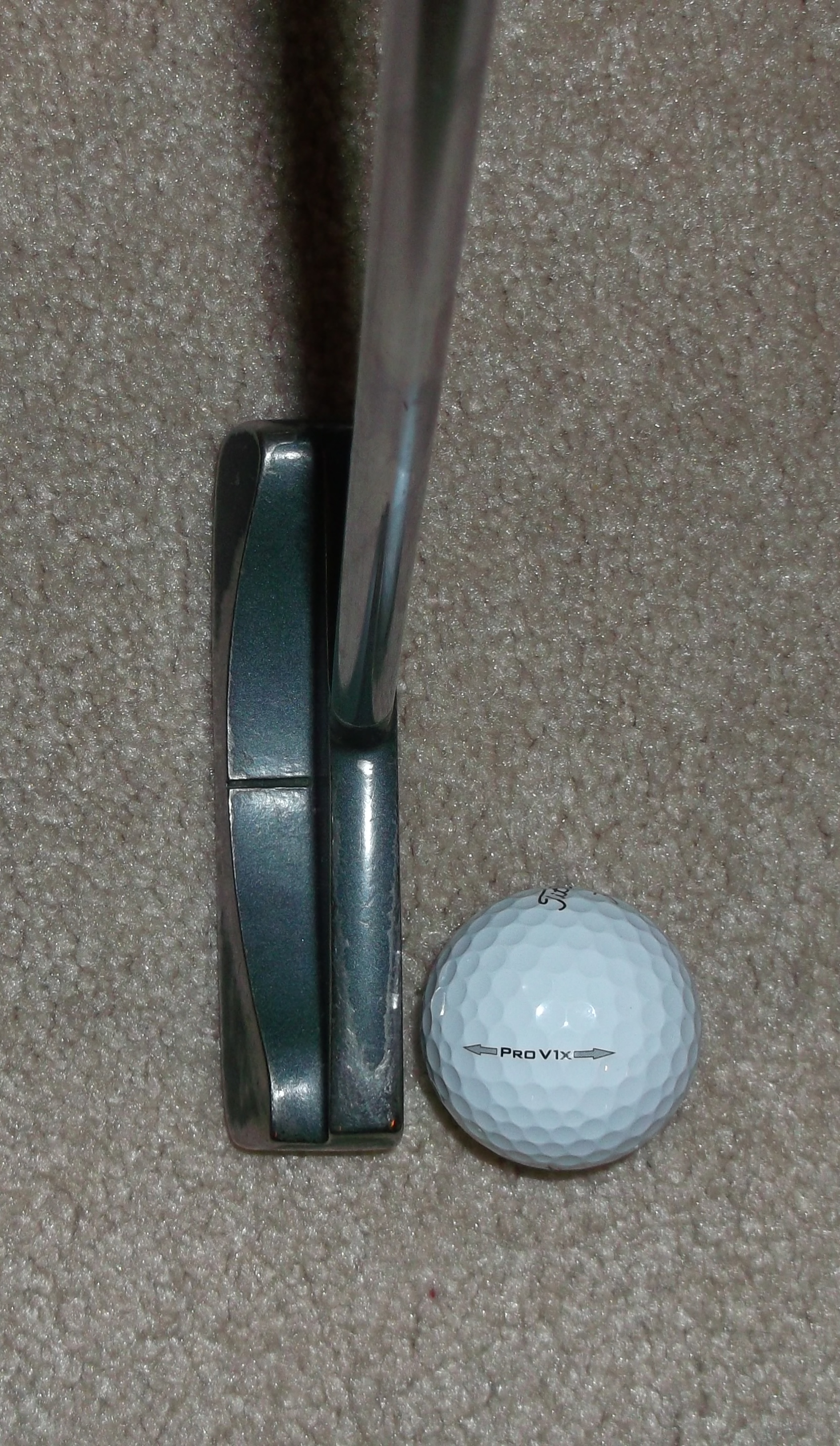
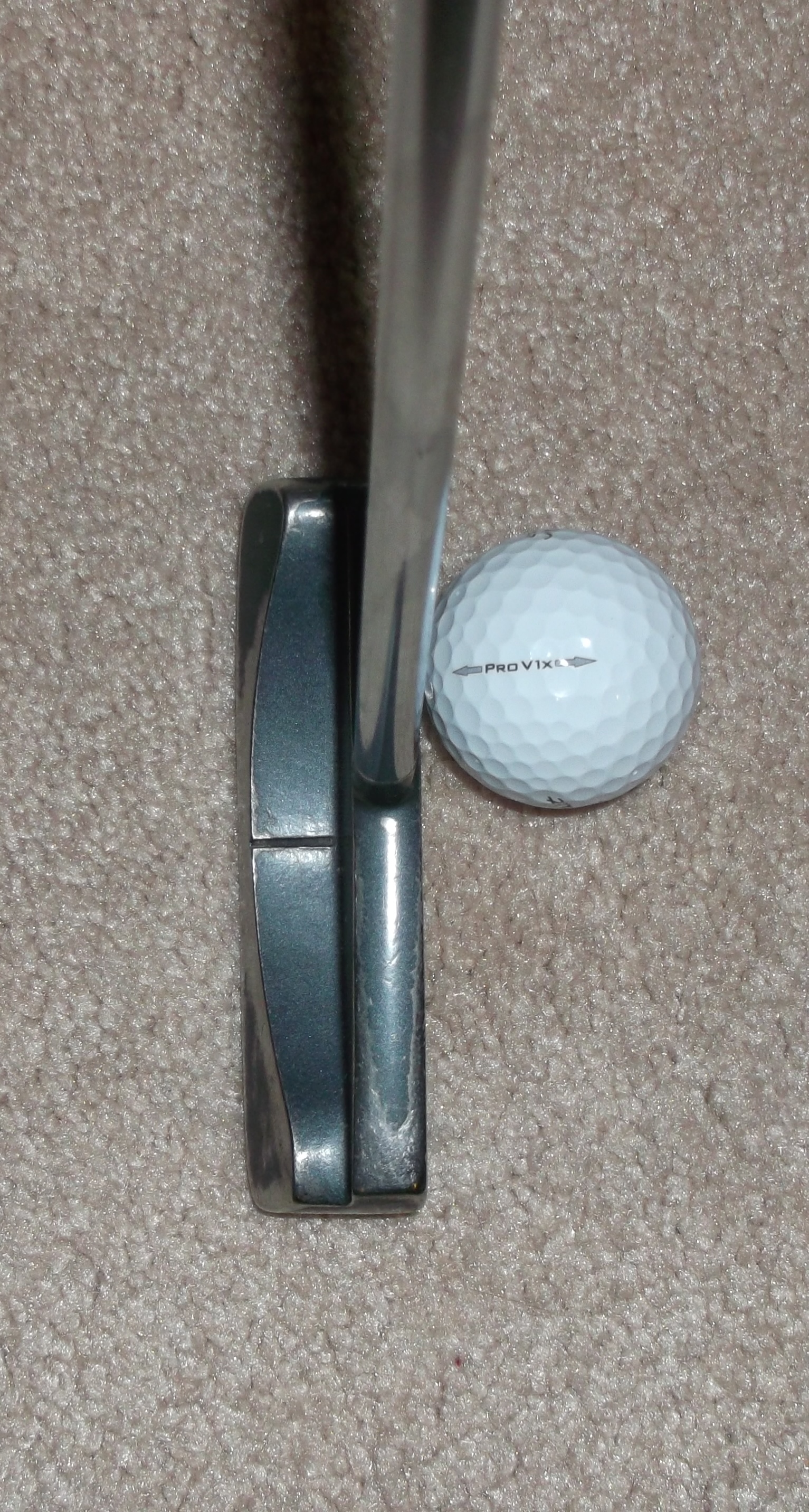
As a left-eye dominant player who plays right, my alignment must take into account how my eye’s view my golf shots. My primary rule is that my dominate eye must be over or slightly behind the ball during all strokes.

Here is what I mean:

When putting, I putt best when my ball in line with my dominant eye; this means my ball is slightly ahead of center in my stance. I find that if my ball slides back to the middle or behind center, I end up pushing the ball because I am not able to square my putter head through contact. Also, I have a tendency to leave my putts short if the ball is not aligned with my left eye. By placing my dominate eye over the ball during putting, I have great success on the greens.

When chipping, my dominate eye must be slightly ahead of my ball, but not far enough back where my right eye is directly over or in front of the ball. By placing the ball slightly behind my dominate eye, my weight distribution fits my stroke, I do not pull the ball to the left of my intended line and I make crisp contact on instead of hitting it thin or fat.

My dominate eye has the greatest effect on my driver. I must have my dominate eye in line with the ball during my set up. In my case, the ball appears to be back in my stance more, but in fact, it is not. Having the ball on either side of my dominate eye will cause a push or pull. The biggest error I constantly work on is not having the ball too far forward in my stance (forward of my dominate eye); the result of my poor alignment causes me to hit the ball left.

Understanding the effects of eye dominance is important to your golf game. It took many trial and error trips to the range and putting green before I figured out how my eyes were causing fundamental challenges in my swing. Had I known about eye dominance earlier, it would have reduced my range tips and frustration on the links.

I am a grateful golfer! See you on the links!

The Sweet Spot on Your Putter

Every club has a sweet spot! It is that one place on the club face where the ball reacts as intended by travelling straight and long. Most golfers understand this simple concept when they talk about their driver, irons or wedges. But most amateurs do not think the same way when they use their putter.

When making a putt, the intent is to make solid, square contact between the putter head and the ball. To find the sweet spot on your putter, look at the back and you will see a dot or a line indicating the centre or sweet spot of your putter. Sometimes there is a line on top of the putter head that can be used as a guide during your putting stroke.

Putt Centre

Centre

Hitting the all in the centre of your club face is very important. By doing so, the ball will bounce off the putter consistently every time. Also, it helps with judging the speed of the ball because the same stroke will produce the same distance every time. By hitting the ball off-centre of the putter face, the ball will not travel as far as it normally would. This contact inconsistency sometimes leads players to think the green is slow, but in fact it is the fault of the putting stroke.

Putt Toe

Toe

Unintentionally hitting the ball off the toe of the club causes the club face to open. The result is the ball will travel right of line (for right-handed players). Additionally, the ball will not travel as far as discussed above. Now, sometimes players, including myself, will intentionally hit the ball off the toe of their putter. This is usually done when the greens are very fast, you have a slick down hill putt or a hard breaking putt from right to left. For me, when I intentionally hit the ball off the toe, I ever so slightly grip tighter with my left hand to make sure the putter face remains square during contact.

Putt Heel

Heel

Unintentionally hitting the ball off the heel causes the club face to close. As a result the ball will start left of its intended line (for right-handed players). The ball will not travel as far either. I never intentionally hit the ball off the heel, but logic would suggest the results would be opposite than hitting it off the toe. Maybe one of the readers can help us out with their explanation of intentionally hitting the ball of the heel of their putter.

I try to intentionally hit the ball in the centre of my putter most of the time. To practice hitting the sweet spot, I use two tees on either side of the putter head. The tees are just wide enough so the putter can travel through when making my stroke. It is important to pay attention to the placement of the ball in between the two tees. You want to make sure you are placing the ball in line with the putter sweet spot.

Lastly, the three putter drills provided in the video below are new. I have not seen them before and think they would great for us house bound players waiting for the snow to melt. My favorite drill is the first one. Which is yours?

I am a grateful golfer! See you on the links.


Putting for Success

This year’s goal to be a scratch golfer is going very well. I maintained a good fitness program, educated myself on the finer points of breaking 100. 90, and 80, and I am starting to implement some new techniques to help build consistency and confidence in my golf swing.

My first major change is how I line up putts. Many golfers already use this technique, but until recently, I was a “feel” putter. Additionally, I would use a mark on the green about 1-2 feet in front of my ball as my alignment point for my putting line. Having a fair amount of success, I never felt the need to change – until this year.

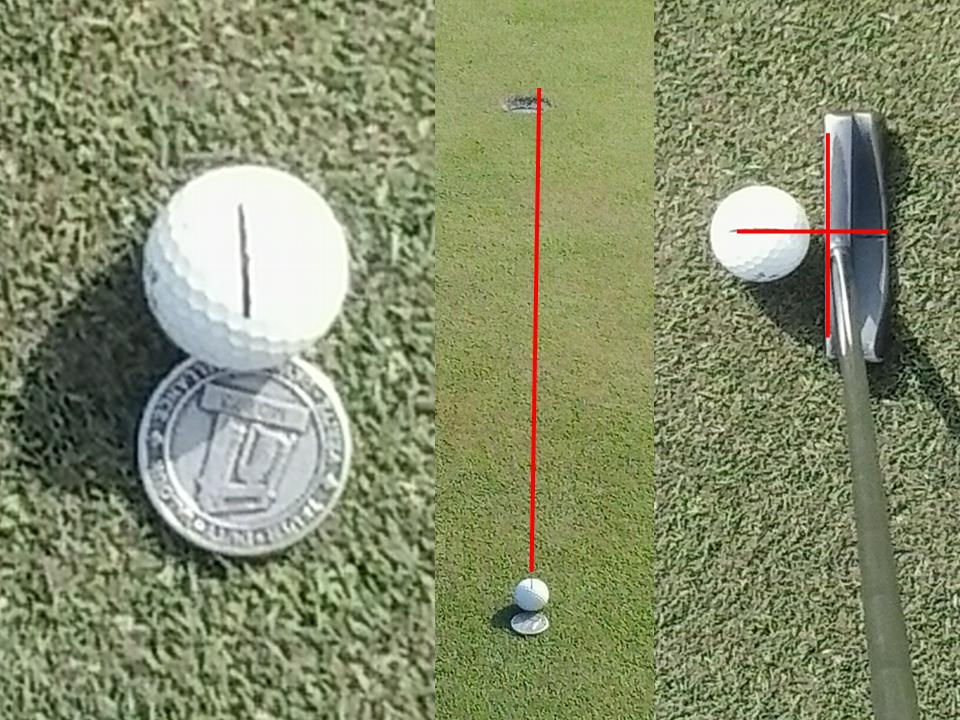
So, after a fair bit of research, I decided to use “the line on line” putting technique. I drew a black line on my ball and decided to use that as my alignment guide.  I would read the green; pick my putting line; then match up the line on the ball with my putting line. It does take a bit of practice to align everything, but once you have the technique down, the process simplifies putting tremendously.

Putting for success

With both lines in sync, I was able to focus on squaring my putter (putter face perpendicular to the line on the ball) and making solid contact with my back 6 forward 12 putting rule. Additionally, I am able to concentrate on speed and as a result I sink more putts and my misses’ end up closer to the hole.  Overall, I am already saving strokes and as a result my season is starting off on a high note.

The main point I learned from this new technique is that my earlier putting style resulted in a closed putter head on alignment. I realized that I was setting up with a closed putter head all because the visual queues to my new alignment style caused me think. After figuring out the disconnect, I realized why I struggled with putting the past couple years.

Now that this epiphany has resulted in a positive change, I can hardly wait to see what my next round brings. Identifying a need for change through analysis was not easy, but once I decided that I required a different approach to my putting the process took care of itself. You can make changes to lower your score as well, the first step is to choose.

I am a grateful golfer! See you on the links!