Is There a Difference in Grips?

Recently we discussed the importance of grips.  So now what?  Which grip should I choose?  What brand?  What type?  Is there really a difference in grips?  These are all very important questions that every golfer has asked at one time or another.

Lampkin out lines why people want to regrip their clubs.  They suggest that GOLFERS TYPICALLY REGRIP FOR 4 REASONS:

  • To fit their grips to their particular hand size
  • To achieve the desired feel for their playing preference and climate conditions
  • To simply replace their favorite grips that have become worn
  • To upgrade to a more premium and longer lasting grip

How does someone determine if their grips are worn?  Lampkin gives suggestions on what are some of the tell-tale signs of wear?  These signs are:

  • Smooth, hard surfaces
  • Cracks
  • Shiny patches
  • Wear spots, especially where the thumbs make contact
  • Faded or bare spots on grips that have been painted or have logos
  • Insufficient tack

Golf Pride has great videos and tools to choose the proper grip, size and type of grip.  There are lots of tools to help determine the right grip for you; ultimately, it is a matter of what feels best.  It really is the only way to decide what will work best for your swing and intended results.

Golf.com suggests that there are three things to keep in mind when choosing a grip:  material, diameter and style.  They make an excellent suggestion to choose your favorite club and experiment by regripping and practicing with it.  This is inexpensive and will allow you to find the right grip for your game.

TourWrap_StandardBlack2G - Image from: http://www.golfpride.com/Grips/Default.aspx?cat=noncord&grip=tourwrapI have used many grips through the years.  I have used full cord, half cord, chamois,  rubber, ribbed and wrap type grips.  Presently, I use a mid-sized tour wrap golf pride grip.  I do not wear a glove and use this grip because of the feel and comfort.  The only draw back is that I should change the grips twice a year, but have resisted and only replace them once a year.

Grips are important and ensuring your equipment is in top-notched shape will go a long way to improving your overall game.  See you on the links!

Grips – Are They Really Important?

Image from:  http://www.pga.com/golf-equipment/golf-pride/selecting-right-golf-gripsIf you talk to any serious golfer about their grips, you will find that they believe proper grips are important to their performance.  For years I never changed my grips….I mean never.  The grips would be old, worn, dried up, and cracked.  I never thought that it was important and I changed my grips when I changed my clubs.  Man, what a mistake!

Golfsmith.com suggests that: “Independent studies show that golfers who play 18 holes per week should change their grips at least once per year. Similar studies show that golfers who have been playing with worn grips show immediate improvement in their scores after regripping – some as much as 3-4 strokes difference.”

EZ Golf Grips suggest that “Some professional golfers may regrip every month or so.  That is a little strong for us amateurs, but it points out that they recognize that any worn spots on their grips could cost a stroke…and that means a loss of cash for them.”

Golf Canada Magazine article by David Hearn stated that changing you grips every 20 rounds or so is the way to go.  Wear and tear does cause challenges in your swing.

At PGA.com, the discussion goes further from when to change your grips; to which grip to choose for which club.  It is very interesting and does open many other questions.

Ultimately the choice is yours, but I suggest that if you golf twice a week or more, changing your clubs at least once a year is important.  Besides if you do not have proper equipment, how are you going to GRIP IT AND RIP IT!

How often do you change your golf grips?

Course Management: Reality or Myth?

Course ManagementPlay the shot that makes the next shot easy. – Tommy Armour

No truer words have ever been spoken.  I am a huge supporter of course management.  I believe that choosing the smart shot over bashing your way around the course is how amateurs break 100, 90, 80 or 70.  Course management is something that takes practice and is unique to everyone.  No two players can manage their round of golf in the same way.  No really, course management is unique to each player.

GolfLink.com states that “Golf course management for a player means understanding how to play the best round possible by using your strengths as a player against the challenges the golf course has to offer.”  This article provides further details on course management, but the main point is that each player must play to their strengths.  If you cannot reach the green on your next shot, hit the ball to your best distance.  For me that is 115 yards.  I would rather hit a full pitching wedge than a three-quarter sand wedge from 75 yards.

“Good course management requires planning ahead” by Joan A. King at Positive Mental Imagery is another outstanding article.  She outlines many excellent tips on how to successfully manage a round of golf.  I especially enjoy how she focuses on the mental aspect of staying focused and being positive throughout the round.  As Jack Nicklaus says:  “Sometimes the biggest problem is in your head. You’ve got to believe you can play a shot instead of wondering where your next bad shot is coming from.”  Staying positive during your round will lower your score.

“A video from the Whittle Golf Tips Series takes a look at some course management. It shows how the seven out of ten rule can be used to make smart decisions in competition and produce the best results.”  This is a great rule.  Play the shot you can hit 7 out of 10 times and find success instantly.

Course management is something that takes time to learn and is unique to everyone.  Playing a round of golf without focusing on your strengths only leads to disaster.  I am confident that everyone can be successful on the links; it just takes focus and the willingness to try new things.  See you on the links!

Iron or Hybrid?

In recent years, hybrid clubs have hit the market, which in turn has sparked a hot debate.  The question most asked is which is better.  I would suggest that the average amateur golfer would benefit from hybrids in their bag verses long irons.  Hybrids are more for giving and have a tendency to hit the ball further.

At PGA.com value guide a comparison of long irons and hybrids are made.  They conclude that hybrids have three advantages over long irons:  club head design, sole design, and shaft and length.  These are three pretty important design points and clearly hybrids come out as the winner.

Laird Small, Dir. of the Pebble Beach Golf Academy explains why hybrids are superior to long irons for the average golfer.  He talks about making better contact and how the club interacts with the ball.  Overall, hybrids are the way to go.

As you can see, hybrids are here to stay.   I have replaced my 3-4-5 irons with hybrids and found that I hit the ball further, straighter and with more confidence.  It has made a difference of two strokes per round on my overall score.  As a single digit handicapper, that is outstanding!

Do you use hybrids?  Tell me what a difference it has made in your game.  See you on the links.  I am a grateful golfer!

How High Do You Tee Your Ball?

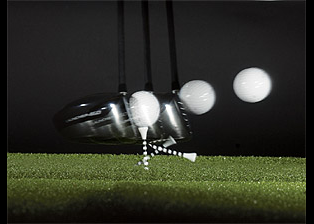
http://i.cdn.turner.com/dr/golf/www/release/sites/default/files/imagecache/article_med_image/article_images/CSmomentofimpact_299_1.jpg

Image from Sports Illustrated Golf.com

I have played with the concept to how high to tee my ball for years.  I have a tendency to tee the ball low with fairly good results.  This year, however, I struggled to get any real distance off the tee.  It appears that I have lost 20 yards with my driver and it has caused me some challenges on the long courses.  Of course, this is not something that any of us can afford.  So I decided to do a little research and this is what I found.

Sports Illustrated Golf.com conducted an outstanding experiment on how high to tee your ball.  It is a quick read and everyone should take a look. It gives advice on using an iron or hybrid. Quoted from SI Golf.com:  “Within each of the three handicap levels, carry distance for mid- and high-tee heights was significantly longer than the low-tee height, largely an effect of the higher tees promoting higher launch angles and less spin. The high tee height provided the most distance, giving the players an average of 12 yards more carry per drive than the low tee height.”  Overall, I would rate this article a 10.

Videojug has a video Golf: How High To Tee Up With Different Clubs that gives an excellent visual overview of where to tee the ball and why.  It supports the Sports Illustrated article.

Brent Kelly at About.com Golf says the same as the others, but at a different location.  Most agree that teeing the ball high will increase your distance.

Well, I am off to the range.  I have never teed the ball up that high.  I have always placed my tee low to medium.  I guess it is never too late to teach and old dog new tricks!  I will practice this new revelation and get back with the results!

How high do you tee the ball?