How to Follow a Successful Golfing Plan

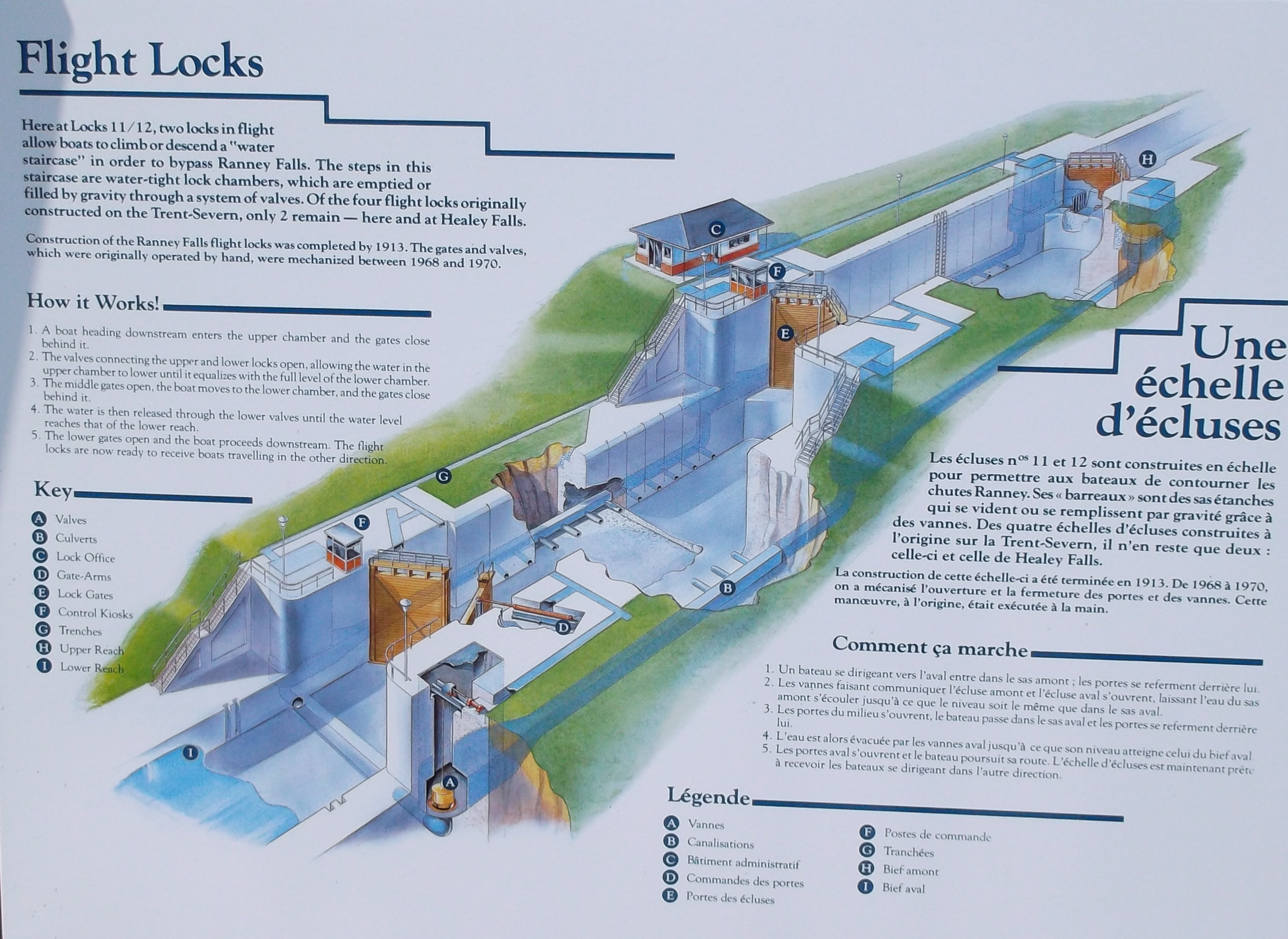
Plackard for LocksToday was an awesome day for touring the countryside. The weather was fantastic, the company equally great and it was time to relax and enjoy the beautiful surroundings. During one of our stops, we watched a boat work its way methodically through the locks – one step at a time.

We were fortunate enough to arrive at the Lock 13 at the exact time when a boat was being worked through. What caught my attention was that before starting the next step of four, the previous step had to be completely finished. There were no cutting corners, no jumping to the end; just a methodical process to safely move a boat down 25 feet from one section of the Trent-Severn Waterway to another.

This gravity fed process is very ingenious and is very applicable to golf. The lock system started with an idea, planning, execution and now maintenance to keep operating effectively and efficiently. How to Follow a Success Golfing Plan has the exact same four steps.

Idea – The idea step is sometimes the hardest. As with the lock system, something simple, focused, and duplicate-able is important. If you need to change something or create a whole new skill, start with the basics. There are many great ideas out there and some research will be required. The most important part of this step is to decide what to change; the to actually make  the change.  Now you are ready for step two.

Planning – This is better known as the how-to step. This is when you come up the plan on specifically what you are going to change. I want to emphasize that keeping it simple is critical to success. Start with one or two areas and plan the drills, tips or approaches you are going to use. Once completed, on to step three.

Execution – This step is as important as the first two. It is time to put your plan into action. Choosing how, when, where, and what is critical.  Should you play more than practice? Should you track your success? Regardless, taking action is the way to go. Execute your plan until you have achieved your goals and once satisfied it is time to move to step four.

Maintenance – this is often the most overlooked step to how to follow a successful golf plan. Maintenance generally looks like your execution step, but on a smaller scale. Your successes achieved during the execution step need to be fostered.  It is important to keep building on the aspects you have fixed and not to revert to old habits at the first sign of trouble.

The actual time it takes to break old habits and create new ones is unknown. “But there are some steps you can take to increase your chances of success in the endeavour, including:

  • Take small steps. Don’t try to do everything at once.
  • Only try to change one habit at a time.
  • Write down the habit you want to change, and write down specific plans for achieving that goal.
  • Repeat the behaviour you’re aiming for as often as you can. The more a behaviour is repeated, the more likely it is that it will become “instinctive.””(How Stuff Works)

Sound familiar? How to Follow a Successful Golfing Plan is really nothing new, but the process can be difficult. If have the desire to make the change, then following the above process may just be what you are looking for!

If the desire is big enough, anything is possible!

I am a grateful golfer! See you on the links!


Too Focused on Stats!

Stats Chart

Which is the Most Important Stat?

Golf stats are an interesting thing. They provide information about virtually every topic and many players, analysts, and pundits rely on stats to make their point! This is all good for the viewing public who may need to be entertained between golf shots on TV or while reading their favourite article, but do stats have any real value to the average hacker trying to improve their score?

Recently, I received a random email (not from the author) from that someone suggesting that stats could be used to break 80. Ever the skeptic, I read through the paragraph and wondered what others thought. Here is the what the author Mike Tappett from mikeplaysgolf said:

“All golfers I’ve coached do this one thing and do it religiously. Keep track of how many fairways hit, greens hit in regulation and putts you take per round. This exercise alone will tell you the weaker part of your game. The average player who shoots in the mid and high 70’s consistently will average about 8-12 fairways, 9-11 greens in regulation and between 27-30 putts per round.”

On the surface, I can see the value of keeping stats, however without an action play, keeping stats is well – meaningless. personally, I have never kept stats. I have never felt the need or requirement, but this year is different. I am trying new things and keeping an open mind to anything that will improve my game. As I drive towards being a scratch golfer, I do not want to overlook anything!

So my question are: Do keep stats? If so, do you use them to focus you practice? If not, why? I am all ears!

I am a grateful golfer! See you on the links!

3-6-9 Chipping Drill

Today was practice day.  I stole 30 minutes to quickly practice my chipping. As many of you know, I use the 3-6-9 chipping drill to sharpen my skills and focus my practice time. I always practice with the intent of learning or honing something. Today was no different.

Lately, my chipping is chunky! For some reason, my club is striking the round about an inch behind the ball. This failure to execute results in my wedge pouncing off the ground (when dry) or digging in (when wet). Regardless, the ball comes up extremely short and as a result it is costing me unwanted strokes. So, today’s practice round was time devoted to figuring out why.

After about six balls, the answer was obvious; my lower body was too active, which resulted in my flexing my knees during short chips. This in-turn, caused my club to hit the ground behind the ball and as a result….chunk!

Recognizing this error, I immediately adjust my chipping style and poof….problem fixed. After about 5 minutes, I was seeing definite improvement in my chipping.

In the first image, I was 25 yards from the flag using my 52 degree wedge. The result was very good with 4 out of 6 balls were within 6 feet and 3 of those were within 3 feet. (the stars are where the tees are)

52 Degree Chips

The second image, I was 25 yards from the flag using my 60 degree wedge. The result was okay with 2 out of 6 balls were within 6 feet and 1 of those were within 3 feet.  All balls were within 9 feet.

56 Degree Chips

I found that the 52 degree wedge was easier to control because of the lower ball flight. It had less bounce on the green and released further and consistently. With the 60 degree wedge, I could not control the direction of the bounce when the ball hit the green. Additionally, I had to be more aggressive hitting the ball to reach the hole which made it more difficult to control.

Additionally, I realized four other things that I will take forward and practice the next time I hit the links.  They are:

  • Keep more weight on my front foot;
  • Keep my hands ahead of the ball on contact;
  • Keep my right elbow (trail elbow) tucked near my side; and
  • Most importantly for me – quiet lower body when chipping within 25 yards.

The 3-6-9 chipping drill enable me go gauge my success immediately on every chip. This made adjusting very easy. Ultimately, my goal is to be within 3 feet every time or at least within 6 feet. These are make-able putts more often than not.

Practice chipping, or any golf skill for that matter, is the practical aspect of playing golf. Research is great, watching videos is fine and listening to the experts important; however if we do not take the theoretical aspects of golf and covert it to the practical aspects then we are really limiting our potential to lower our scores! In case you are wondering, my GAF was high today!

I am a grateful golfer! See you on the links!

Golf Attitude Factor – GAF

GAF is a new golfing term I developed today on the golf course! My Golf Attitude Factor was on a sliding scale today! I started out as a 10 – dropped to a 3 – and finished as a 6! For those who are staring at the screen with a puzzled look, please let me explain!

Unfortunately, I have not swung a club in a week because of work! I hate it when life gets in the way – especially work! However, all amateurs must bare that cross! So, this morning as I approached the first tee box I was a 10 on the GAF and was looking forward to an excellent time on the links. I was playing with my usual group and their light-hearted approach to golf always make me smile!

As my game progressed, my GAF dropped to a 3! I actually chipped over the a green today….twice! I drove the ball fairly well, but my short game was reminiscent of 20 years ago, but that is life when I do not play for a week or so. My scoring was the worst to date and I was frustrated on every shot….and I mean every shot! Until….

Fixing a SwingOn the 13 hole, I stopped; yes just stopped; I changed my thoughts and changed my game. (Norman Vincent Peale) How this happened was actually very easy and as I look at it after the fact, obvious. My first step was to putt everything out! I know, most of you are saying that I should be doing that anyway, but when frustration kicks in, I have a tendency to stop following my proven successful routine!

Routine is my saviour on the golf course. I score my best when I follow my routine without exception. To help make sure my success, I have to do the following things:

After realizing that my game was not what was expected, I focused on what makes my game better – and hopefully great. After focusing on success, but GAF raised from 3 to 6!

6 is a good GAF considering how I played today. I was happy with my game, thoroughly enjoyed the company, and finished strong. In the future, I am going use the GAF to keep me focused and understand that my steady state should be at least a seven!

I am a grateful golfer! See you on the links!


National Golf Day

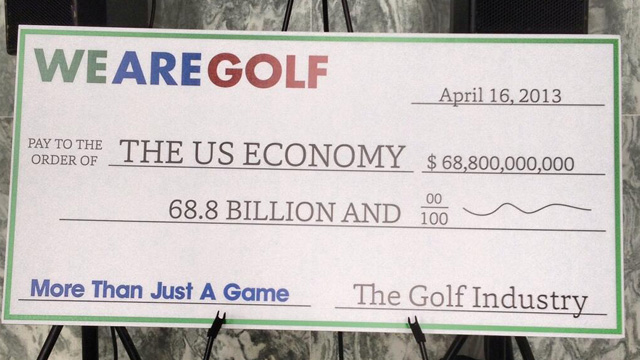
Today is National Golf Day! Who knew! Well, it is National Golf Day in the US. It is all about how the golf industry affects the US economy and it is not a far stretch to see how the golf industry effects all economies.

Supported by Jack Nicklaus, how could National Golf Day not be a success!

Interestingly, We Are Golf spearheads the initiative and today is the seventh year in a row that the golf industry lobbied the US Congress. What a great idea! In case you wonder what kind of impact the US golf industry has……

nationalgolfday

Yes, that is BILLION! National Golf Day is also about charities. We Are Golf tells us that “Golf is a key driver of charitable giving in the U.S – $3.9 billion a year to be exact. Philanthropic contributions, including those from professional tournaments, are a huge part of the industry, with the majority of funds going to causes outside of the sport. Beneficiaries include health, youth, education, environmental and cultural groups nationally, regionally and locally.

According to a 2011 study conducted by the National Golf Foundation, golf as a fundraising vehicle includes an estimated:

  • 12,000 golf facilities (75 percent of U.S. total)
  • 143,000 events
  • 12 million participants
  • $26,300 average per function”

I for one did not realize it was National Golf Day! For all my friends in the US, I hope you hit the links today!

I am a grateful golfer! See you on the links!