Volleyball and Golf

There are many transferable skills between sports.  As a volleyball coach, my training focus for beginners was on foot work and proper body position when contacting the ball. By reinforcing the fundamentals early produced greater results as the young players developed.  Again and again results prove that proper, repetitive movements in sports build the positive foundations required for success.
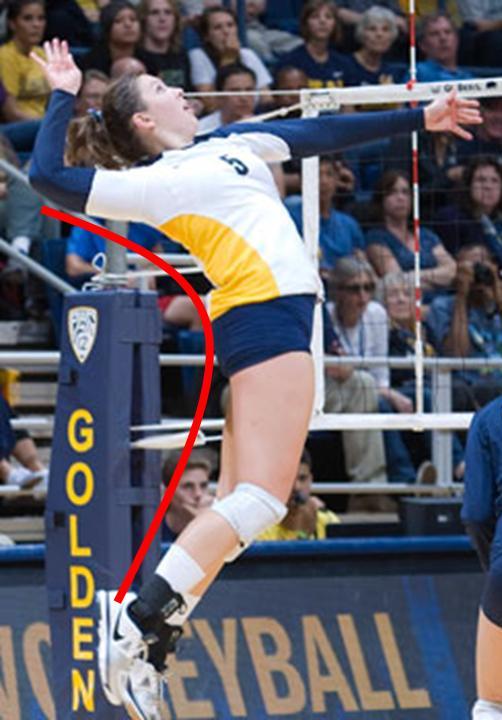
Reverse C in VolleyballOne specific skill in volleyball is call the ‘reverse C’.  This specific technique requires a volleyball player to arch their back to add tension to their hitting stoke.  This technique is difficult to master, but once they do – the results are amazing.  The movement to spike the ball has players arch their back and ‘load’ their hitting arm. At the proper time, the hitting motion starts with uncoiling of their back.  As they extend their arm to strike the ball, the momentum of their back uncoiling added to the arm motion generates more power and thus greater arm speed. The result is greater speed of the ball that is hard to dig.  The ‘reverse C’ is a valuable skill that generates power.
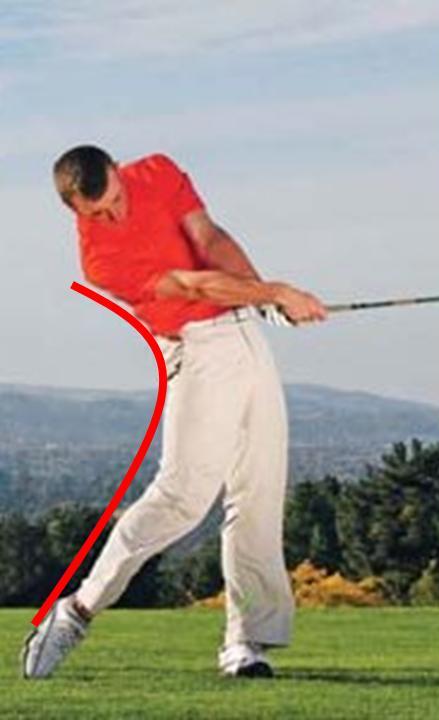
Reverse C in GolfGolf uses a very similar skill.  The ‘reverse C’ in golf is used to generate power and improve launch angle.  A key part of this fundamental skill is ball position; placing the ball off your lead toe is a great place to start.  The ‘reverse C’ is created by sliding your hips towards the target before you start to uncoil the club from the top of the takeaway, this movement helps maintain the proper position when contacting the ball.  Additionally, it creates tension by tightening the coil of the shoulder rotation. The result will be greater distance with more consistent contact, improved angle of attack and increase height on the ball during flight. The ‘reverse C’ is a fundamental skill used to hlep break 100 and lower, focus on creating the ‘reverse C’ when contacting the ball.  You may be surprised at the results of your efforts.

Many sports skills are transferable.  The ‘reverse C’ is definitely one that all élite volleyball players and golfers master.  Focusing on core fundamental movements from other sports maybe a new way to improve your game and lower your scores.

I am a grateful golfer!  See you on the links!

 

How to Build a Golf……

Playing with Golf with My Buddy

What keeps you coming back to golf?

This is a very philosophical question.  Immediately when asked, most experts will say the swing.  Pundits point to mechanics immediately.  Most of the top sources outline a no fail way to build a golf swing and lower your score.  They also suggest that if you have a good golf swing, you automatically will have fun playing golf.  This hypothesis is not very sound or practical.

Experiences (history) are great teachers.  Think back through your life.  What do you see? When you first started something, anything at all, did you immediately jump into the mechanics of that something?  What was the first thing that attracted you to that activity? Remember the statement when we were growing up, ‘you will play and like it!’  ‘You will sing and like it!’  You will and on and on and on! Continue reading →

Golf Videos to Inspire and Make You Laugh

Golfing is tough. It is not an easy sport to play and even more challenging to write about. Finding new and interesting topics is challenging, but maybe it is time to change it up a little and change the medium.  Here are three videos I found on the net that provides an explanation about golf that you may find useful.  Enjoy!

Some lessons from NBC Learn:

Something fun :

Some awesome recovery shots from the PGA Tour:

Hope you enjoyed them, I sure did!

I am a grateful golfer!  See you on the links!
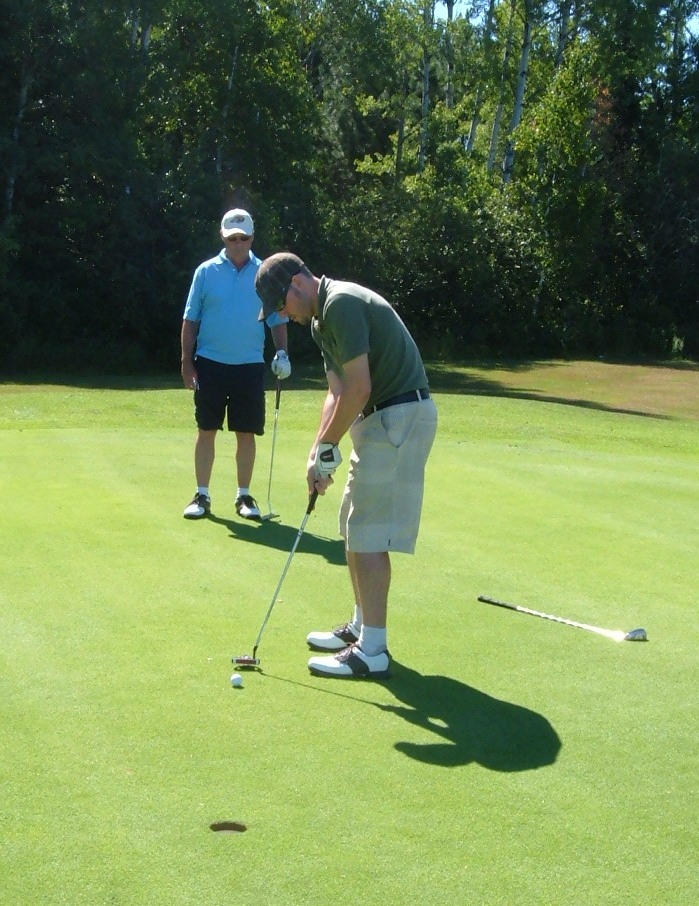
Putt for Dough

“If you say you can or you can’t you are right either way”- Henry Ford

Confidence While Putting!In earlier posts, I outlined 5 steps on the mechanics of a great putter.  As every amateur knows putting is extremely important when trying to break 100, 90, 80 or 70.  All things being equal, if your putting is on, your score is low.  So how can the average golfer elevate their putting so that a great day is a normal day on the green?

George Beardsley suggests that speed is most important on long putts and line is the most important on short putts. He also provides a couple of drills to help with your putting that might be worth a look.

The Putting Doctor, Joseph P. Bermel Jr, suggests that pre-shot routine and alignment are the most important aspects of putting.  He also says visualization and practice are strong enablers for great putting.

Peter Sanders reported from Jack Nicklaus that “regardless of the distance of the putting opportunity, the correct distance is the most important factor in success.”  It reduces three putts and increases the chances of a one putt.  Averaging no more that two putts per hole is ideal.

Well that about covers a wide range of what the pundits and experts say about putting. Further research could uncover another 100 revelations.  Each of the experts is correct, but it may not be best for you!  It is difficult to determine what exactly is required to fix a putting stroke; after much trail and error a solution may be found.

What is the most important point of putting?  On those great days when the hole looks like a manhole; the greens are easy to ready; the greens all run true and are consistent; your stroke is smooth and in control all the time – what is the key?

CONFIDENCE!

Confidence in your ability to hit the ball on-line, with the right speed and far enough to sink the ball.  The first trick to gaining confidence is removing all doubt.  The word ‘can’t’ never enters into your head ever when playing golf.  Start today.  Think positive about your putting, focus on the what works, practice the things that are challenging and work on your putting mechanics.

No matter what – be confident that you are a great putter!  If you do – great things are going to happen!

I am a grateful golfer!  See you on the links!

Quiet Hands to Break 100

The touch is a much debated topic in golf.  Some amateurs confuse touch with quiet hands.  Although ‘how’ a player uses their hands during chipping and putting is extremely important, it is a topic for another day.

Listening to the golf experts, it is obvious that quiet hands are the key to lowering your golf score. The challenge for most amateurs is to figure out what “quiet hands” mean, to what part of the swing it applies, and more importantly how can they get some! Continue reading →