Mark Crossfield is a golf guru. He offers many common sense tips that amateurs can understand and emulate. His recent video is one that I never clued in on until he started talking about our weight shift with the driver. After watching the video, it makes perfect sense and I am surprised I never thought of it before. I guess you can teach an old dog new tricks.
Continue readingDrills
When Is The Best Time To Start In Golf
Golf is a unique sport that allows every player to set their own time schedule for success. It allows us to stay in one spot for an indefinite period of time if we are happy with our game. Of course the factors to making that decision are unique to each player and only they can determine if their golf game is meeting their expectations. Ideally, at least for my game, I try to limit the peaks and valleys of erratic play through making small incremental changes to my game. Once I have identified an area of concern I take active and intentional steps to improve that area in the hopes that it will lower my golf scores. I have found this process to be very successful and think that it is a proven methodology of most golfers. Let me explain further.
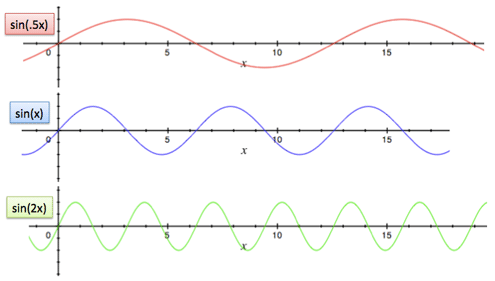
The set of sign waves on the left are a great visual for my process. Consider the top of the wave to be success and the bottom of the wave to be failure during the execution phase of chipping. (I randomly used chipping, but you can insert any skill that you want to improve.
The green sine wave indicates a chipping game that is unpredictable. It is a challenge to determine if I was going to be successful or not. This approach to lower golf scores did not work for me. The frequency of failure was something that continued plague how well I played and I needed to reduce the frequency of miss shots.
By practicing my short game, I was able to reduce the frequency of erratic play (the blue sine wave). I still did not achieve the solid play I wanted so I used different drills and practiced more challenging chipping scenarios. As I continue to improve, I was able to move the x axis upward where to improve my successful hits, but still had too many poor shots for my liking. So, more focused practicing was required.
After training, trial and error, and improving my skills, I was able to transition to the red sine wave where mishits were rarer and more steady, consistent play became prevalent. The x axis was at lowered and I was hitting better shots more often. The frequency of good to better shots was up and overall, my short game improved. Now, I am confident with my short game and feel that my journey was successful. So, what does all of this really mean?
The best time to start working on your golf game is now. The desire needs to be large enough to drive and sustain our progress through all the stages of improving a skill. In my case, improving my chipping is a continuing journey. I am currently playing in the red sine wave, but do drop to the blue from time to time. Then it is immediately back to the practice range and focused drills. Fixing any skill in golf starts with the first step and working our way to sustain solid, consistent play in the red sine wave is always the goal. To get there, now is a good time to start.
I am a grateful golfer! See you on the links!
Loosening Up Your Core To Play Better Golf
If you do not loosen up your body before playing golf there is a chance that you will not feel comfortable over the ball for 3 or 4 holes. This is definitely the case for my game when I am running late and arrive at the course just a few minutes before teeing off. Even when I am early enough to loosen up my muscles, I sometimes go through the motion and really forget which muscles need to be activated before hitting my golf ball. My half effort of limbering up does cause challenges and can easily be rectified. Additionally, when stretching I sometimes forget to engage my core and lower half of my body which again causes challenges when playing the first few holes of my round. Short of focusing better, I found a video that will help improve my pre-game routine.
Continue readingHitting Your Landing Point On A Chip
If we followed the advice of many teaching professionals, chipping would be very easy. Just hit your landing point and all would be great. Your ball would release to the distance you planned (or go in the hole) and all would be right in your golfing world. Sounds pretty easy, right! Unfortunately, it is never as easy as we think because of the plethora of variables that goes into every chip. The challenge golfers face is taking all the stressors of each chip and manifest a shot that lands on exact spot we selected during our pre-shot routine. Experience shows that this feat is a challenge in the best conditions; so what can we do to improve our chances of success?
Continue readingHitting A 3 Wood With Success
Hitting a 3 wood off the fairway is a challenge for many golfers. We either hit the ball thing or hit the ground before the ball. From time to time, I will experience these hitting errors, but I learned many years ago how to successfully make solid contact with 3 wood. If I miss this shot now, then my error is on the thin side producing a very low ball flight. I know what the error is for my game, but I thought I would turn to a professional to properly explain the challenge and how to fix it.
Continue reading The Grateful Golfer