Golf Etiquette on the Green

Golf etiquette is one of my core reasons for playing. I like the gentlemanly aspect of interacting with other players at a mature level. It brings civility to the game of kings, unmatched in the sporting world. Name another sport where the playing relationship is rooted in the core values of honesty, integrity and fair play. We monitor our own actions, call our own penalties, and conduct ourselves in such a way as to ensure everyone enjoys their round of golf. Etiquette, especially on the green, is a guiding principle.

Understanding etiquette is not as simple as it sounds. The PGA has outlined some etiquette guidelines that everyone should read. However, for most beginners, etiquette generally falls into the category of “You don’t know what you don’t know”! Etiquette has never been explained to them and as such, they do not understand that they are doing anything wrong. Below are a few pictures to help address this knowledge gap!

Flag in Sight Line

When placing the pin down, be aware of the ball location and do not place the pin in the sight line of a player.
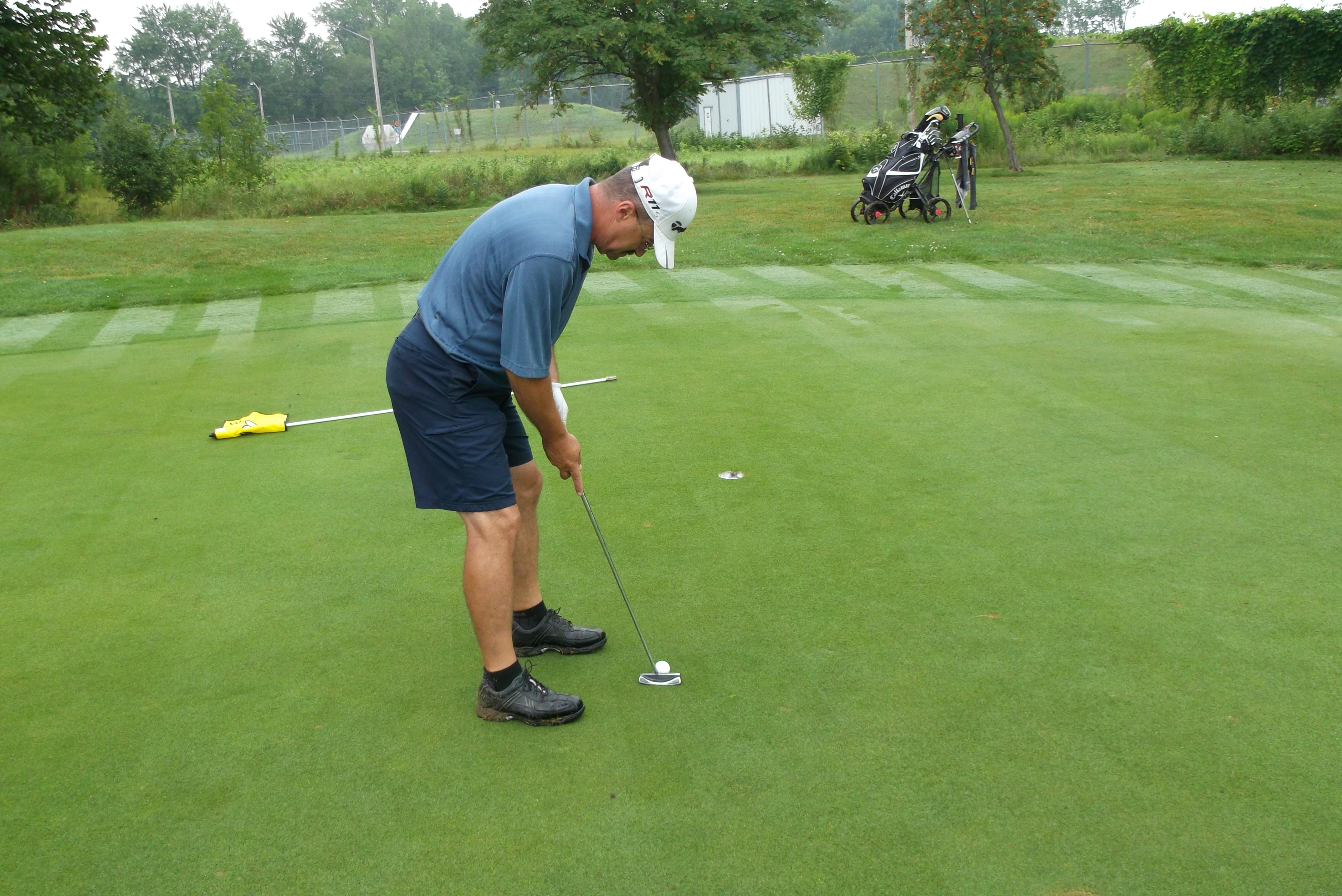
Flag in Sight Line2

The pin was placed away from the player, but is still in the sight line. 
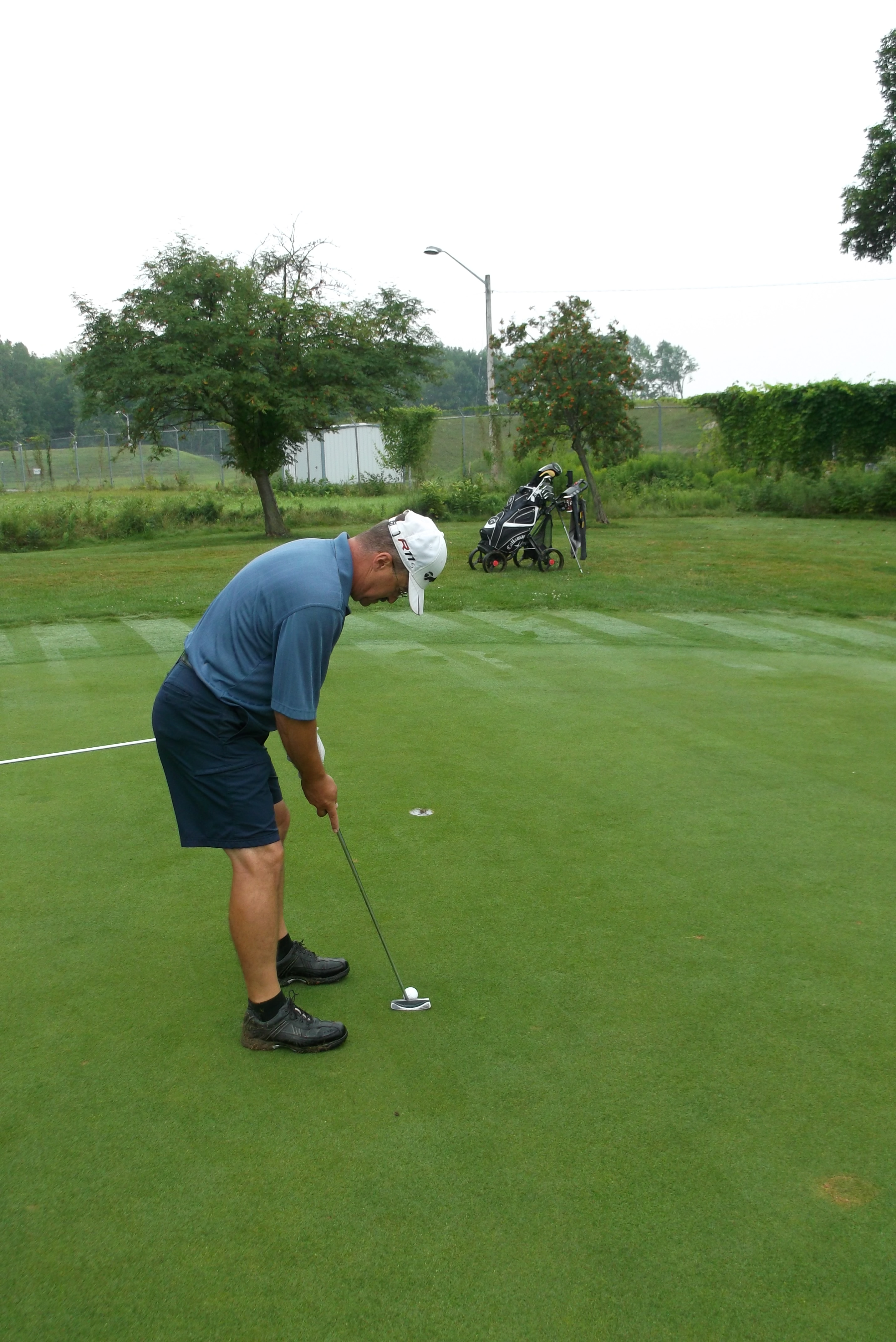
Cart in Sight Line

Avoid placing your clubs in the sight line of a player. 
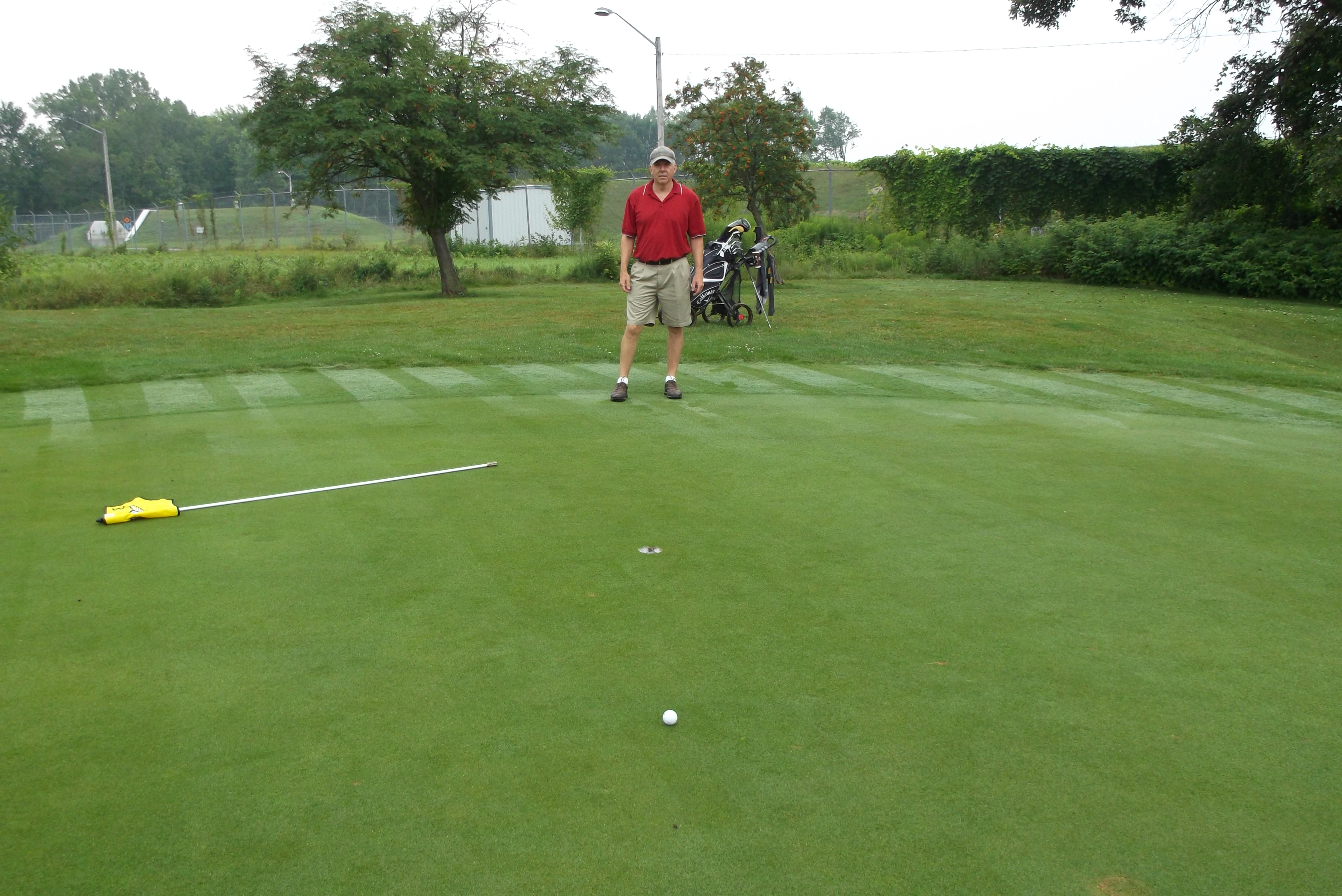
Person in Sight Line

Avoid standing in the sight line of a player. If you want to watch as their ball rolls to the pin, stand-off to the side and move to a better viewing location after contact.
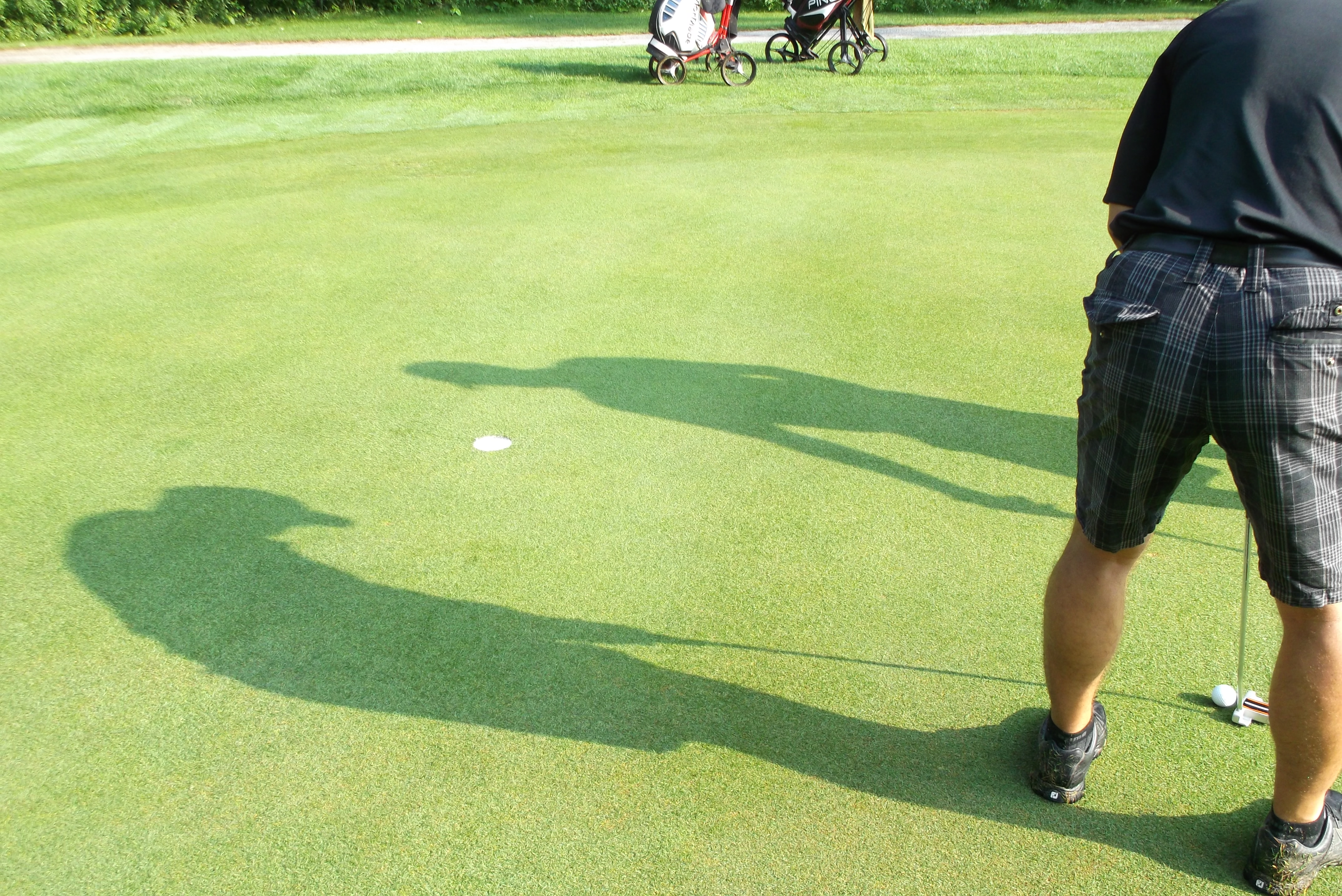
Shadows in Sight Line

Avoid having your shadow in the player’s sight line. This is a potential problem early in the morning or late in the evening.
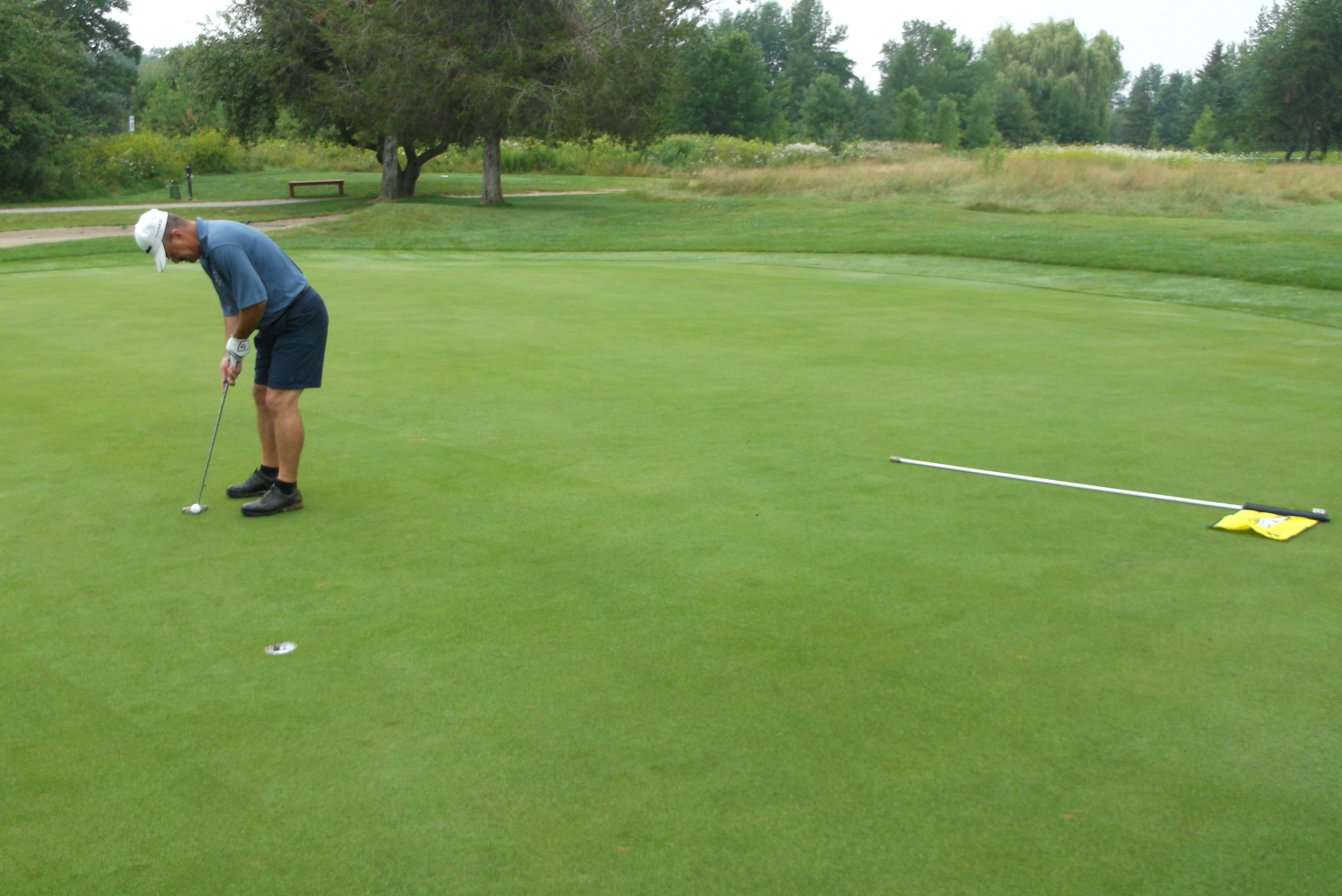
Proper Location of Flag

This is a good example of the proper placement of the pin. Behind the player, out of their sight line to the hole.

These are just a few examples of golf etiquette on the green. As the weeks unfold, I will bring you more examples from the cheap seats of the do’s and don’ts that make each round of golf enjoyable!

If you have any etiquette examples or stories to share, please do not hold back!

Thanks to my friend Jean for helping with the photo shoot. I am a grateful golfer! See you on the links!

 

Course Management From 150 Yards

150 yards out

Hole 1 – Loyalist Golf and Country Club

The first hole at the Loyalist Golf and Country Club poses many challenges. The tee shot vexes most golfers with a  210 yard uphill shot to the crest of a hill. Due to the elevation, it plays more like 230 yards. If struck properly, the average player’s ball will be at the 150 yard marker or closer with a good view of the green (see above). The next shot is very important and this is where your course management skills are really tested!

My assessment of the hole matched the course description, with the exception of the wind direction. It was playing right to left and slightly in my face. Loyalist Golf Club’s view on their first hole is as follows:

Your Loyalist experience starts with a straightaway par that normally plays downwind. Your tee shot must avoid two large bunkers to the left side of the fairway. Careful club selection is necessary as you play your approach into an elevated, two-level green. A good chance at birdie to start.

When approaching a shot such as this, it is important to see all potential aspects of the hole that will affect your shot. Or in other words, focus on course management. The following is what I saw and used to determine my club selection:

  • The green is slightly above my ball  location because I cannot see the bottom of the flag stick. Impact: playing longer than 150 yards.
  • The green slopes right to left. Impact: The ball will likely move to the left after contacting the green.
  • Wind is blowing right to left and slightly in our face. Impact: The ball will be pushed right to left. Yardage will play longer.
  • Deep Grass on the right with large mounds. Impact: Must fly the ball to the green. Avoid going right.
  • Bunkers on the left. Impact: Stay to the right.
  • Mound at back helps protect from going long. Impact: Can be more aggressive with my approach shot.
  • Flag is up front (red flag). Impact: Sucker pin placement. Most shots will end up short if shot directly at the pin.
  • Sharp drop-off in the front of the green. Impact: A short shot will result in the ball being 10 feet below the green for the next shot.
  • Points you cannot see, but must be considered: lie of ball on the fairway (in a hole, divot, or on the flat surface), is ball above or below my feet, is the ground soft or hard and the exact yardage using my GARMIN Approach6.

These are the things that should be considered when making an approach shot from 150 yards on the first hole at Loyalist Golf Course.

After considering all the variables (took about 15 seconds) I decided to hit my 7-1ron. It is my 150 yard club, which was the yardage to the back of the green. I estimated that the ball would travel about 145 yards. I aimed just left of the pin despite the wind and slope of the green. I made good contact; the ball landed on the front part of the green and to the left of the pin. The ball only traveled 140 yards, 5 yards less than I estimated. I was left with a 30 foot putt. After a two putt, I walked away with a par.

If I was to replay the shot, I would select a 6 iron to reduce the margin of error on a possible miss hit. Also, the mounds in the back would provide the protection required if I hit the ball a bit long.

So, the variables to consider can be numerous and the time to do so short. I have learned through the years to start the analysis of the variables before I reach my ball. This helps speed up play and keeps me focused between shots.

What would you do different if you were to play this shot? All suggestions are greatly appreciated.

I am a grateful golfer. See you on the links!


Chipping to Lower Your Golf Score

Chipping to lower your golf score is the goal of all golfers! For most amateurs chipping the ball during a round of golf, having a tap in putt helps lower their score very quickly. Recently, one of my normal playing partners shot 78 by getting up and down 6 times out of 7 during his round of golf. Although capable of shooting in the 70s most of the time, he has been plagued with challenging putts as a result of not chipping the ball close to the hole when given the opportunity. His challenge is one that most amateurs face every time they hit the links!

Previously, posts on club selection, chipping drills, and course management have outlined some of the concepts of chipping the ball close to lower your golf score. These are great points, but do not really discuss the mechanics of chipping. The “how to” chip is fundamental to beginner and intermediate players because saving strokes around the green is important to breaking 100, 90, or 80.

Derek Hooper has a fantastic video on chipping. Additionally, he is a great resource for other golfing techniques because he explains the golfing process in a manner that is clear and easy to follow.

The video discusses how to consistently chip close. However, three points during the video need to emphasized.  For consistent, successful chipping, pay attention too:

Keeping Your Head Still – Most miss hits are caused by extra movement in the upper body. As amateurs, we have the tendency to try and help the ball to the hole. The extra movement in the upper body will change the contact position of the club on the ball (resulting in topping or sculling the ball), hitting the ball fat (club hits the ground before the ball) or scooping the ball (sometimes known as a chilli dip). Keeping your head still will prevent additional upper body movement, thereby increasing the effectiveness of your chipping.

Weight Distributed on the Lead Foot – Having 80% of your weight on your lead foot is critical to solid chipping. The important aspect of this weight distribution is to keep your knees bent slightly and to have your weight distributed over the whole lead foot. Sometimes, amateurs will lean so the weight is on either the inside or outside of their foot. To build a strong foundation, keep the weight evenly distributed on the lead foot.

Keeping your Hands Ahead of the Ball – On contact, the hands need to be ahead of the ball slightly. Also, while following through, avoid breaking your wrists! It is important to let the hands lead the chip because it promotes crisp, solid and repeatable contact. Locked wrists also ensure that the ball is contacted first before the follow through, which allows for spin to be placed on the ball.

It is important to practice chipping. It is more important to practice focused chipping. By following these chipping tips, strokes will be saved during your round. Chipping the ball effectively is a great way to lower your score and have more fun while playing golf!

I am a grateful golfer! See you on the links!
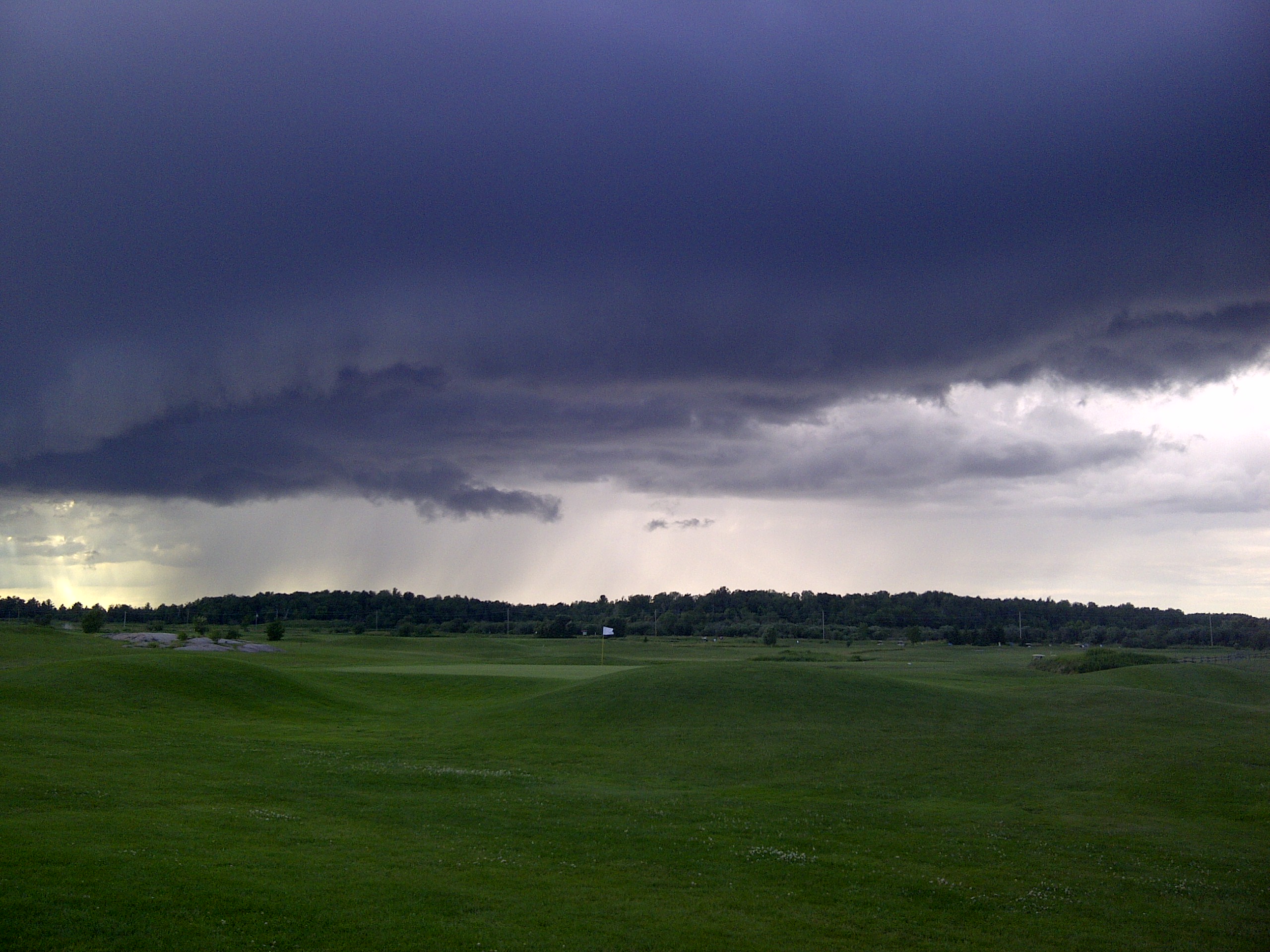


Tricks on the Range

To most golfers, the practice range is a sacred place. It is a place where players like Phil Mickelson, Tiger Woods, Michelle Wie, Vijay Singh or Grateful Golfers regularly hone their skills. A major difference between a professional golfer and an amateur is their intention as the approach the practice range. It is this intention that helps focus their practice to accomplish their goals.

After hours on the practice range, there is no question they have developed some tricks to help make the most out of their practice time. Here are some sites to check out:

Each of these offer good advice on developing a routine and a great starting place for anyone trying to improve their game through focused practice.

Through the years, I have used many of the above suggestions and the following tricks that helped fix my woes.

When fixing a slice or a hook, I stand on the far side of the range. As a right-handed player with a slice problem, I stand on the far left side. This may seem strange, but it forces me use a different swing plane and aiming point.  I am so focused on not hitting the ball out of bounds, that it helped me straighten my slice.

It is important to use aiming sticks. At the very least, use two clubs. These training aides help align your swing and your aiming point. I use them to determine my ball position in relation to my stance, determine my swing plan by the relation of my divot to the aiming sticks, and my alignment of my feet in comparison to how I am aimed. Check out toursticks.com for a complete guide on how to use alignment sticks.

Flag AlignementMy last tip deals with using the flag sticks out in the range.  On my course, it is possible to line up all the sticks until they are one behind each other. I use this visual aid to help identify a poor swing, whether I am fading or drawing the ball that day and to help with my aiming points. If I am on a different range, I will try to line up at least two flags and use them as my aiming point!

There are plenty of tips and tricks to use on the practice range. Today I have mentioned just a few that worked for me.

Golf is all about sharing, so do you have any tips or tricks to use on the practice range?

I am grateful golfer!  See you on the links.

Golfing in the Rain

Well my first two days of the golf tournament were postponed. In the last 36 hours our area received about 80 mm or rain.  Our course is under water and it is draining very slowly.  It is unlikely we will be able to play on Friday, so the entire event will be delayed one week.  Of course I am disappointed, but at least the event is not cancelled all together. But, as always, each experience is a learning one; so now we talk about playing golf in the rain.

IMG-20130710-00061Many golfers dislike the rain. Personally, it does not bother me because I believe I have a fool-proof system to keep the important aspects of my equipment and body as dry as possible. The first important point has to do with equipment. I carry the following when I suspect it is going to rain:

  • Plastic cover that actually covers my entire golf bag;
  • a 64 inch umbrella that can be attached to my golf cart (which I push so it does not hurt my shoulder);
  • clear plastic freezer bags to keep my score card dry;
  • spare socks in a clear plastic bag;
  • spare clothes in the car for after the round;
  • two towels so I can hang them under the umbrella; and
  • a hat and rain suit.

All of these things keep me very dry unless it is really pouring, then I just have to suck it up and be grateful I can still golf. When making a shot, expect on the green, by routine is very simple:

  • I point my clubs into the wind because it cuts down on spray;
  • I remove my club while under my umbrella and wipe the grips (if required) with one towel and my hands with the other;
  • I normally do not take a practice swing, so I walk out behind the ball and visualize;
  • step up and hit the ball;
  • walk back under the umbrella, wipe my grips and replace the club; and
  • seal up my plastic cover and move on.

When putting, I use a slightly different routine:

  • I take out my putter and wipe the grips and my hands;
  • I take the umbrella with me – my clubs are covered with plastic;
  • stand behind the ball and read my line;
  • adjust my ball still holding the umbrella;
  • place the umbrella at the one o’clock position with the top facing the wind. It is usually about 6-10 feet away; and
  • make my putt and collect it from the hole. If I miss, I go mark the ball (if required) before retrieving my umbrella.

Playing in the rain will mess with a golfer’s normal routine. However, I have found that by following my routine, the rain does not bother me as much as others. Following a routine is the best way to break 100 or lower your score; following a routine in the rain only helps more. A couple other things to consider when playing in the rain:

  • most shots will need an extra club due to lack of roll and the rain hitting your ball during flight;
  • greens will play slower than normal;
  • if you are wearing a rain suit or outer clothing, your swing will feel different. Focus on contact not swing mechanics and this will help ensure solid ball striking;
  • course management may have to be adjusted due to the rain reducing the distance your ball carries; and
  • the noise of the rain hitting your umbrella, rain suit or the ground may affect your concentration – just ignore.

Golfing in the rain can be difficult, but if you develop a routine, understand the impact of the wet weather, and focus on what you already do well, your score should remain the same.  If not, always remember you could be working!

If you have any suggestions on how to improve my routine, I would love to hear them.

I am a grateful golfer! See you on the links!