Reverse Engineering In Golf

Yesterday, my friend and I left the first tee with a high GAF (Golf Attitude Factor) and strong feeling of wellness. How could we not; after the fourth hole the beauty of our home course was only overshadowed by quiet serenity of playing golf with no one else around. No kidding, we owned the course and calmly played the rest of the round bathed in the beautiful sun, the musical harmony of nature and the refreshing aroma of life rekindled. It really was a great round of golf and more importantly, I learned something new!

Course management is as important to lower scores in golf as mustard is on a hot dog at the ballpark. They really are inseparable and if used together a positive outcome is almost assured. During our many conversations, my friend reminded me of a very important and often overlooked aspect of good golf; that course management always occurred from the green backwards. The Golf Channel has a great article for review of before mentioned points about course management. There are many ways to effectively use course management techniques, but no matter what, the process is still the same.

It is critical to work from the green backwards. For a par 4 let me explain:

Green Backwards

Looking backward – to approach from the right side of the fairway is best.

Every green has its challenges. Most of the time, aiming for the center of the green is the safest and most effective shot, especially for those trying to break 100. For players who want more of a challenge, it is important to consider the location of the pin. Sometimes the pin will be tucked behind a bunker or near the dreaded knoll that makes putting extremely difficult. Pin location will determine whether your previous shot should be on the left or right side of the fairway. Knowing what side of the fairway your second shot needs to be will help set up your tee shot.

Teeing Up the Shoot

Tee up on the left to ensure the best approach to the green.

Now that you know what side of the fairway you need to be on for your next shot, setting up for your tee shot is easier. A general rule I use is that – left side fairway, right side tee box; right side fairway, left side tee box. By setting up on the opposite side of the tee box to where you want your ball to finish helps reduce errors and ensures that even on miss hits the probability of success is higher.

If you are playing a par 5, add one more step using the same logic and process. It may seem like I am suggesting a crisscross pattern down the fairway, but I am suggesting that you choose the path that best suits your game and achieves the result of playing the ball to improve your chances to score low.

On a par 3, I would recommend that the general rule of alignment still works. Obviously, hazards and pin location are very critical for shorter holes, but I think you get the point.

Reverse engineering in golf applies to course management. Working from the hole backwards is the logical way to lower your scores. Course Management from the green to tee will cut mental errors, lower your score, and improve your overall mastery of golf.

As the late great Bobby Jones said, “The secret of golf is to turn three shots into two.” That is course management in a nutshell!

I am a grateful golfer! See you on the links!
 

How to Follow a Successful Golfing Plan

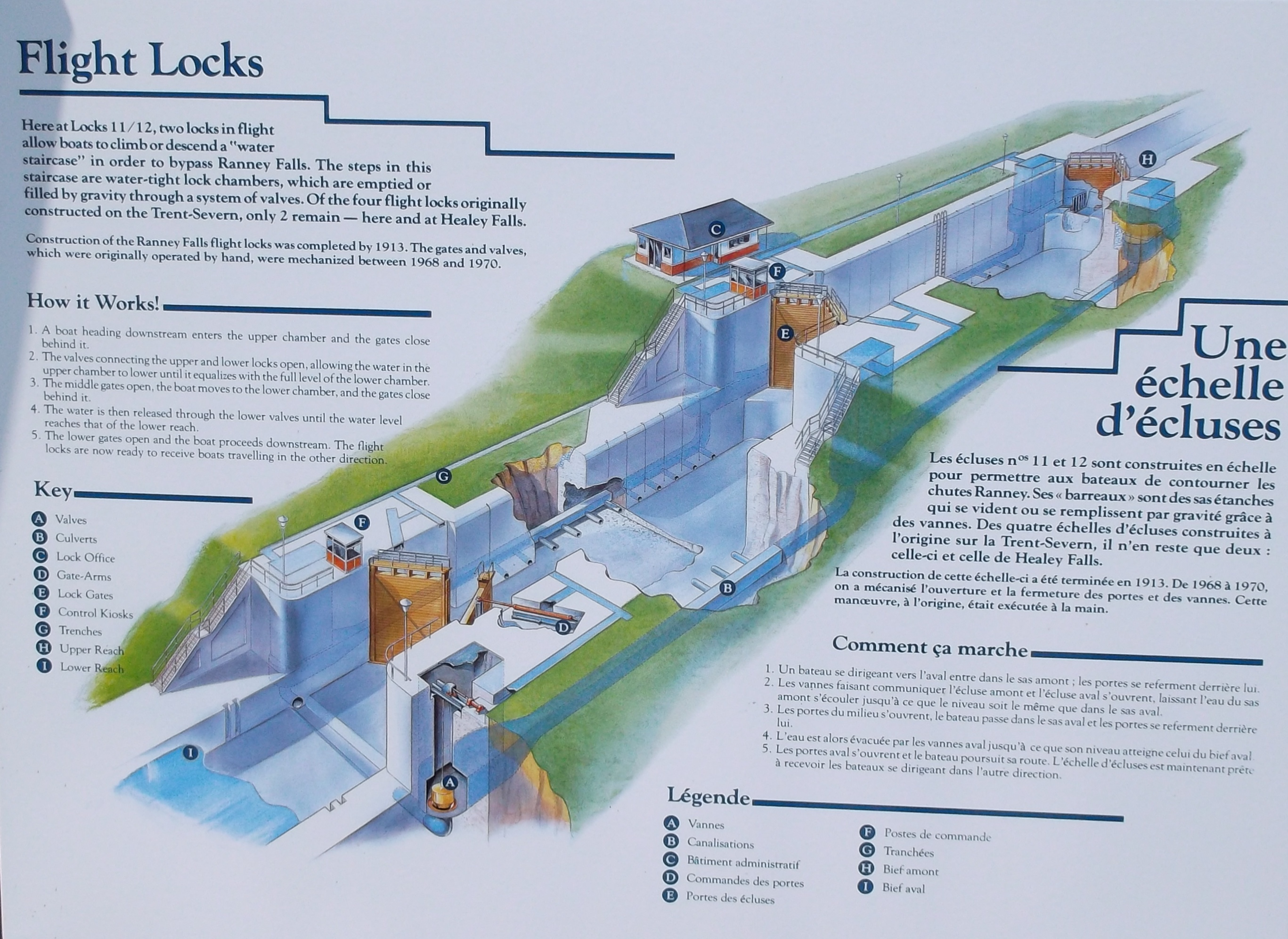
Plackard for LocksToday was an awesome day for touring the countryside. The weather was fantastic, the company equally great and it was time to relax and enjoy the beautiful surroundings. During one of our stops, we watched a boat work its way methodically through the locks – one step at a time.

We were fortunate enough to arrive at the Lock 13 at the exact time when a boat was being worked through. What caught my attention was that before starting the next step of four, the previous step had to be completely finished. There were no cutting corners, no jumping to the end; just a methodical process to safely move a boat down 25 feet from one section of the Trent-Severn Waterway to another.

This gravity fed process is very ingenious and is very applicable to golf. The lock system started with an idea, planning, execution and now maintenance to keep operating effectively and efficiently. How to Follow a Success Golfing Plan has the exact same four steps.

Idea – The idea step is sometimes the hardest. As with the lock system, something simple, focused, and duplicate-able is important. If you need to change something or create a whole new skill, start with the basics. There are many great ideas out there and some research will be required. The most important part of this step is to decide what to change; the to actually make  the change.  Now you are ready for step two.

Planning – This is better known as the how-to step. This is when you come up the plan on specifically what you are going to change. I want to emphasize that keeping it simple is critical to success. Start with one or two areas and plan the drills, tips or approaches you are going to use. Once completed, on to step three.

Execution – This step is as important as the first two. It is time to put your plan into action. Choosing how, when, where, and what is critical.  Should you play more than practice? Should you track your success? Regardless, taking action is the way to go. Execute your plan until you have achieved your goals and once satisfied it is time to move to step four.

Maintenance – this is often the most overlooked step to how to follow a successful golf plan. Maintenance generally looks like your execution step, but on a smaller scale. Your successes achieved during the execution step need to be fostered.  It is important to keep building on the aspects you have fixed and not to revert to old habits at the first sign of trouble.

The actual time it takes to break old habits and create new ones is unknown. “But there are some steps you can take to increase your chances of success in the endeavour, including:

  • Take small steps. Don’t try to do everything at once.
  • Only try to change one habit at a time.
  • Write down the habit you want to change, and write down specific plans for achieving that goal.
  • Repeat the behaviour you’re aiming for as often as you can. The more a behaviour is repeated, the more likely it is that it will become “instinctive.””(How Stuff Works)

Sound familiar? How to Follow a Successful Golfing Plan is really nothing new, but the process can be difficult. If have the desire to make the change, then following the above process may just be what you are looking for!

If the desire is big enough, anything is possible!

I am a grateful golfer! See you on the links!


3-6-9 Chipping Drill

Today was practice day.  I stole 30 minutes to quickly practice my chipping. As many of you know, I use the 3-6-9 chipping drill to sharpen my skills and focus my practice time. I always practice with the intent of learning or honing something. Today was no different.

Lately, my chipping is chunky! For some reason, my club is striking the round about an inch behind the ball. This failure to execute results in my wedge pouncing off the ground (when dry) or digging in (when wet). Regardless, the ball comes up extremely short and as a result it is costing me unwanted strokes. So, today’s practice round was time devoted to figuring out why.

After about six balls, the answer was obvious; my lower body was too active, which resulted in my flexing my knees during short chips. This in-turn, caused my club to hit the ground behind the ball and as a result….chunk!

Recognizing this error, I immediately adjust my chipping style and poof….problem fixed. After about 5 minutes, I was seeing definite improvement in my chipping.

In the first image, I was 25 yards from the flag using my 52 degree wedge. The result was very good with 4 out of 6 balls were within 6 feet and 3 of those were within 3 feet. (the stars are where the tees are)

52 Degree Chips

The second image, I was 25 yards from the flag using my 60 degree wedge. The result was okay with 2 out of 6 balls were within 6 feet and 1 of those were within 3 feet.  All balls were within 9 feet.

56 Degree Chips

I found that the 52 degree wedge was easier to control because of the lower ball flight. It had less bounce on the green and released further and consistently. With the 60 degree wedge, I could not control the direction of the bounce when the ball hit the green. Additionally, I had to be more aggressive hitting the ball to reach the hole which made it more difficult to control.

Additionally, I realized four other things that I will take forward and practice the next time I hit the links.  They are:

  • Keep more weight on my front foot;
  • Keep my hands ahead of the ball on contact;
  • Keep my right elbow (trail elbow) tucked near my side; and
  • Most importantly for me – quiet lower body when chipping within 25 yards.

The 3-6-9 chipping drill enable me go gauge my success immediately on every chip. This made adjusting very easy. Ultimately, my goal is to be within 3 feet every time or at least within 6 feet. These are make-able putts more often than not.

Practice chipping, or any golf skill for that matter, is the practical aspect of playing golf. Research is great, watching videos is fine and listening to the experts important; however if we do not take the theoretical aspects of golf and covert it to the practical aspects then we are really limiting our potential to lower our scores! In case you are wondering, my GAF was high today!

I am a grateful golfer! See you on the links!

Putting for Success

This year’s goal to be a scratch golfer is going very well. I maintained a good fitness program, educated myself on the finer points of breaking 100. 90, and 80, and I am starting to implement some new techniques to help build consistency and confidence in my golf swing.

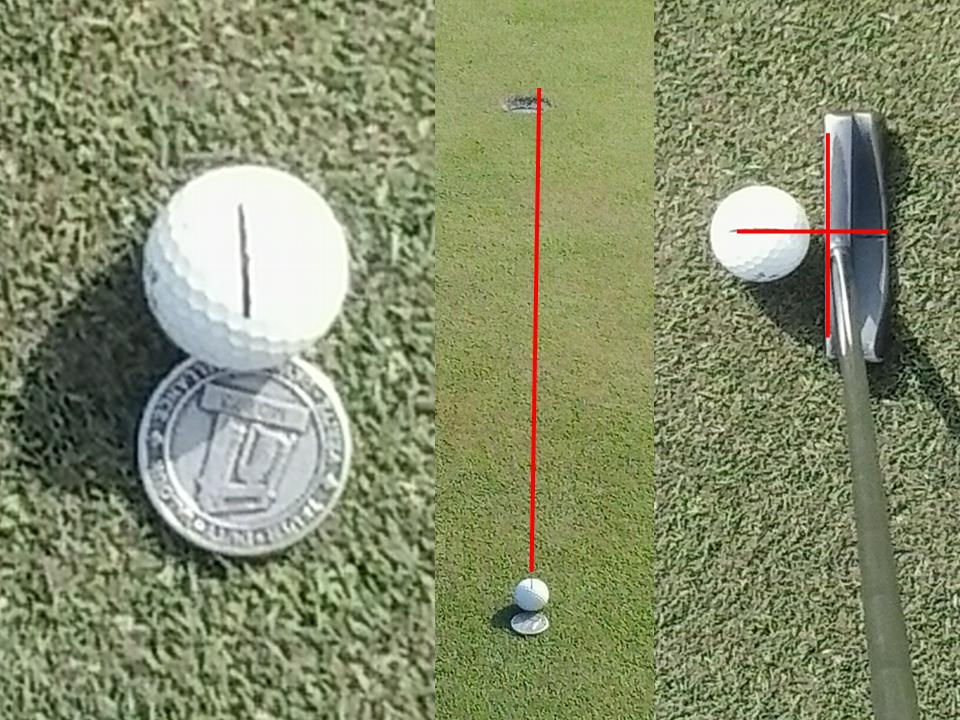
My first major change is how I line up putts. Many golfers already use this technique, but until recently, I was a “feel” putter. Additionally, I would use a mark on the green about 1-2 feet in front of my ball as my alignment point for my putting line. Having a fair amount of success, I never felt the need to change – until this year.

So, after a fair bit of research, I decided to use “the line on line” putting technique. I drew a black line on my ball and decided to use that as my alignment guide.  I would read the green; pick my putting line; then match up the line on the ball with my putting line. It does take a bit of practice to align everything, but once you have the technique down, the process simplifies putting tremendously.

Putting for success

With both lines in sync, I was able to focus on squaring my putter (putter face perpendicular to the line on the ball) and making solid contact with my back 6 forward 12 putting rule. Additionally, I am able to concentrate on speed and as a result I sink more putts and my misses’ end up closer to the hole.  Overall, I am already saving strokes and as a result my season is starting off on a high note.

The main point I learned from this new technique is that my earlier putting style resulted in a closed putter head on alignment. I realized that I was setting up with a closed putter head all because the visual queues to my new alignment style caused me think. After figuring out the disconnect, I realized why I struggled with putting the past couple years.

Now that this epiphany has resulted in a positive change, I can hardly wait to see what my next round brings. Identifying a need for change through analysis was not easy, but once I decided that I required a different approach to my putting the process took care of itself. You can make changes to lower your score as well, the first step is to choose.

I am a grateful golfer! See you on the links!
Chipping to Break 100

Golf is a crazy game! On Tuesday I shot 78 with bogies on the last three holes – with two 3 putts! Thursday, I shot 76 with 2 birdies and two pars on the last 4 holes! I felt exactly the same, played almost the same way and scored two strokes better. As I think back to my round, and I know most of you analyse your last round of golf, I was wondered what the difference was between the two rounds. My conclusion is that It all came down to chipping.

I have talked about practicing my 3-6-9 chipping drill before and suggest that it will help anyone break 100. The most important aspect of the drill is just to practice and develop a solid go-to stroke that will help build consistency. As I played today, I realized that chipping is as important as putting to score low.

I could go on about how to hold your hands or how to grip the club or where to align or, or, or. As your skill develops, there will be time for improving and refining your chipping touch. The trick to breaking 100 is to build a consistent chipping technique. The video below outlines a repeatable process that will benefit all players trying to break 100.

The clock drill is very good for using the same swing for multiple shots. It helps develop consistency and improves your chance of lowering your score. Give it a try; let me know how it works.

I am a grateful golfer!  See you on the links!