Focused Golf – A Whole Approach

Staying focused for 18 holes of golf is challenging. Remaining in the now, experiencing every moment and concentrating for long periods of time tests the mental fortitude of any athlete. Golf is doubly challenging because of the short periods of focused concentration mixed with long periods of walking. Losing focus during a round is extremely easy because of the multitude of distractions on a golf course. Whether it is birds chirping, a deer walking in the fairway, a train going by, an aircraft flying over head or that annoying playing partner, the demands on any players attention seems endless.

Staying focused while golfing!

Staying focused while golfing!

Staying focused for 18 holes of golf is possible. A quick search reveals that many experts have suggestions and methods to hone your focus. They are all good resources and are a great place to start if a player is trying to understand how focus affects their golf game. After years of trying various methods to improve my focus, I developed a 3 steps process that incorporates a whole approach to focused golf.

Staying focused for 18 holes of golf is achievable. To stay in ‘the zone’ for 4 hours is a skill that all golfers have to develop to lower their golf score. This, like many other aspects of golf, is a process. It is a methodology that requires attention, tuning, and execution. The primary tenant for my method is based on positive intent. During each step, it is important to actively decided to focus on all aspects of playing golf better. To play your best and stay focused for 18 holes, I recommend using my proven 3 step approach which will provide the results all golfers want – lower golf scores!

Adopting my 3 step approach will improve your focus and concentration while on the links. This approach is simple, easy to learn, and adjustable. Do not be surprised when you realize that not all my techniques are focused just on swinging a golf club. It is a whole approach to focused golf. If you are feeling adventurous, give it a try; the results might be surprising!

Step 1: Preparation before playing

Start hydrating at least 2 hours before playing. Drink small sips of water every 10 – 15 minutes. Hydrating prior to a match will make sure every player has the energy to complete the round without feeling fatigued in the home stretch.

Visualizing your round. It takes about 10-15 minutes of focused visualization of swinging the club properly. Visualizing the ball going into the hole. And visualizing writing par on your scorecard. Visualizing is an important step to staying focused for 18 holes of golf.

Hit the range and putting green for at least 20 minutes before teeing off on the first hole. Warming up your body before you ‘grip it and rip it’ is a great idea because it allows you to focus on non-swing related aspects of playing golf.

Step 2: Playing 18 holes of Golf

Stay hydrated during the entire round. Continue taking sips of water at every tee. The hotter the weather, the more water you will need to drink.

Eat snacks every 3 holes. Having a piece of fruit, some nuts, or a half of a sandwich will suffice. Eating will keep your physical energy strong and as a direct result, keep you mentally strong for 4 hours.

Have a pre-shot routine. A pre-shot routine will signal your mind that it is time to focus on the shot at hand. A solid pre-shot routine will eliminate all distractions, supports the logic of selecting the right shot, and reduces the pressure of thinking of your shot mechanics.

Enjoy the time between shots. Staying positive throughout your game is critical. Not all shots will be as expected and how we react to these tough times will help shape the rest of the round. Personally, I like to chat a bit with my playing partners, hum a song that lifts my spirits and relishing my beautiful surroundings helps keep me focused on the moment.

Step 3: After your round

When the last ball is holed out on the 18th green, shake hands with your playing partners. Remove your hat (if you have one on) and look them in the eyes. By focusing on them one last time will help prepare you for playing against strangers.

Visualize the round you just played. Go over your round and focus on the positive aspects of your game. If you made an awesome sand save, try to focus on how you swung the club, the sound of the club hitting the sand, where the club contacted the sand and where the ball finished.

Start to focus on your next round. Focusing on the next round will slowly build up the positive energy and mentally strengthen your golf game. This is a mild form of visualization.

Staying focused on 18 holes of golf is more than just playing golf! A whole approach to playing a round will improve your focus during the 4 hours of pressure golf. Being physically prepared is as important as being mentally prepared if you want to lower your golf score. I used the above method extensively this year and I found my focus during my rounds significantly improved. As well, it helped me reach one of my goals of playing to my lowest handicap ever – 2.8.

I am a grateful golfer! Stay focused and I will see you on the links.


Golf Strategy: 2-Man Scramble Pt2

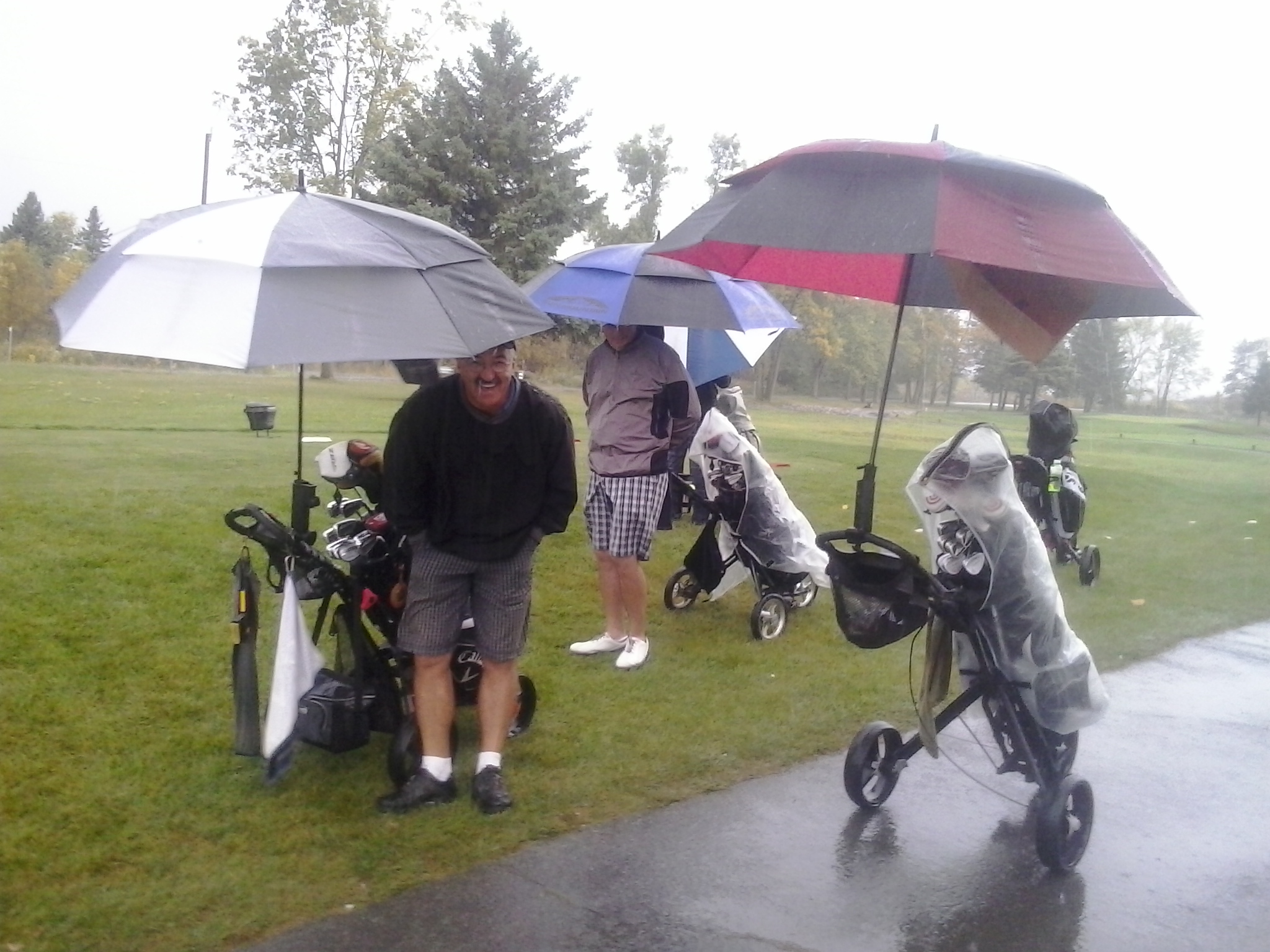
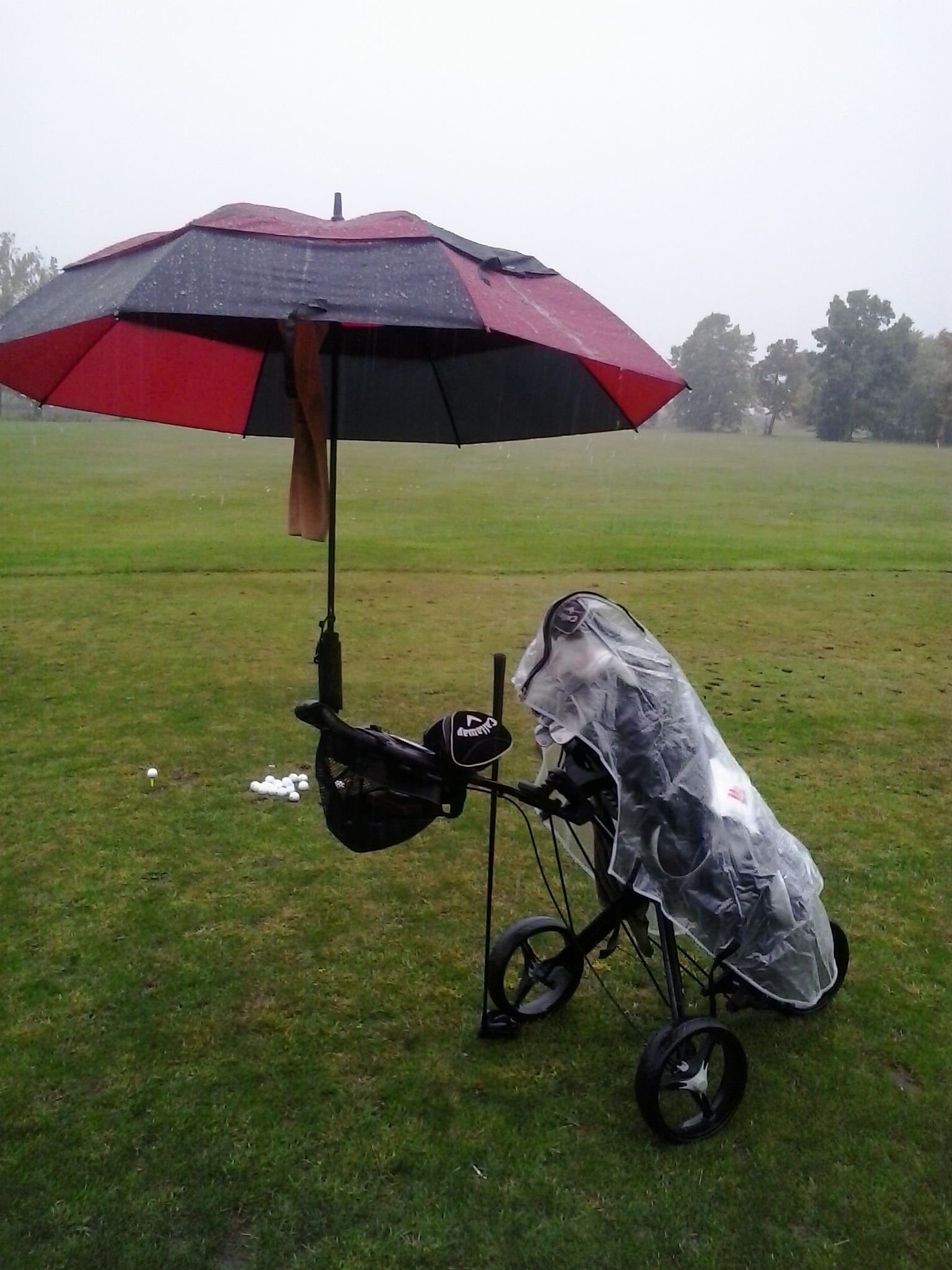
Warming Up in the Rain!

Warming Up in the Rain!

Our strategy for the 2-man scramble worked! Two posts ago, I put up a strategy on how to play the 2-man scramble at my home course Roundel Glen. It started out very wet with rain coming down like there was no tomorrow. Scheduled to tee off at 1030 am, our tee time was pushed until 1115 am to give the storm cell a chance to clear the area. As the rain started to wane, we teed off on the short par 3 first hole.

The weather was a factor for about 30 minutes. After the storm cell blew through, it was windy, but warm. After the third hole all the rain gear was put away. After the sixth hole all the outer clothing was stuffed back into our bags. And by the 10th hole we were looking for sunscreen. Overall, the weather was fantastic for this fun tournament.

The First Tee - Playing in the Rain!

The First Tee – Playing in the Rain!

Our group had three teams because of the odd number players in the tournament. Each team I played with today was completely different. The first team was Dave and Dale. These two gentlemen are in their mid-sixties and were up for the challenge right from the start. Dale did not hit the ball farther than 150-yards and could not see distances very well. However, his drive was always in play on the fairway and he could putt like Jack Nicklaus! Dave hit the ball a long way, was very accurate with the second shot and was a chipping demon. They ended up shooting par with a net score of 69. It was very nice to watch.

The second group was Steve and Paul. These were younger guys in their late 30s. Both could hit the ball a long way, chip well and putt fairly decent. Unfortunately, both players were in sync today. When one hit their ball into the woods, so did the other. When one had a poor chip, usually the other player did as well. So, they had a tough round and did not score as well as Dave and Dale.

Number 9 Green. The Sun is Shining so Brightly!

Number 9 Green. The Sun is Shining so Brightly!

Jean and I started strong. I hit the ball to six feet off the tee on the first hole. Our positive start quickly turned to disappointment quickly as Jean’s putt veered off to the right with about one inch to go. Under close inspection of the hole, the edges were pushed up and made it very difficult to sink any putt. Forgetting our bad luck, Jean and I focused on each shot at hand with very good success. When one person hit a poor shot, the other was there to pick up the pieces. Overall, we played very well and shot a net 66. Good enough for second place!

A couple of other highlights from our round are worth mentioning. On hole number 10, I made a mental error that I had never made before. There is a rule in match play that if you putt your ball out, that is the score that will count, regardless if the rest of your teammates have putted or not. Makes perfect sense to me. However, in other scramble tournaments to speed up play, if a player putts his ball and leaves it within a couple of inches, that player would normally walk up and tap their ball in the hole. The next player would putt from the original spot and if they sink their putt, that is the score that would count. Well, I was the first to putt a 12 foot putt. I left the ball two inches from the hole, so I walked up to my ball and tapped it in for a bogey. Then the light went on about my mental error! Our playing partners said not to worry about it, but fair is fair and Jean did not take his putt. This cost a stroke because I was not paying attention…did I mention we came second, losing by only one stroke!

17th hole. 135 yards long. Hit to two feet for a tap in birdie!

17th hole. 135 yards long. Hit to two feet for a tap in birdie!

The second highlight was on the 18th hole. It is a long par 5 and the wind was blowing stiffly from right to left. Jean hit a monster of a drive to about 215 yards from the green. He confidently pulled out his 3-wood and hit his ball 35 feet from the pin on the right. His second shot was perfectly played considering his ball fought the wind the entire way.  He was first to putt and lipped out for his natural eagle! After watching his putt, I aimed a bit more to the right and stroked a solid putt. To our amazement, it hit the back of the hole and dropped in for eagle! This shot capped off a very strong finish of birdie, birdie, eagle! To make it more exciting, we cut someone off for a skin!

At the end of the day we had 1 eagle, six birdies, 8 pars and 3 bogies. It was a pretty solid round for a 2-man scramble. The important part is we followed our strategy most of the time. We mixed up who teed off first, chipped first and putted first to match our strengths. This worked very well. But more importantly, we focused on having fun and enjoying a great round of golf with our four new friends.

I am a grateful golfer! See you on the links!


Course Management in Golf

Play the shot that makes the next shot easy.

Tommy Armour

Course management is a familiar topic in golf. To manage your golf game is challenging, depressing and rewarding all at the same time. We have all played rounds of golf where nothing seemed to go well and others where mistakes could not be made! Most of the time, the difference between a final score of 75 or a 78 is course management. Like chess, playing golf requires a player to think at least two shots ahead before taking a swing.

Hitting the best club to set up his next shot.

Hitting the best club to set up his next shot.

Focusing on your shot at hand is obviously the first step to course management. Proper execution of this shot is critical to low scores. When I talk about execution, I do not mean contact of the ball (although this is very important also). What I mean is executing the shot that best sets you up for the next shot. Sometimes that means hitting your 3-wood as close to the green as possible on a par 5 or laying up to 100 yards to have a full shot over a hazard. The most interesting aspect of course management is that it is different for every player! The reason for the differences are that each player shapes the ball differently and hits each club different distances. Therefore, their course management has to be different.

Trying to advance the ball too far usually spells trouble!

Trying to advance the ball too far usually spells trouble!

However, before hitting the first shot, determining what the next shot should be will help with club selection, how to play the shot, whether to punch the ball out of the woods, or try to hit the ball 75 yards down the fairway around a tree. Every shot has infinite variables that are hard to list. The most important thing to consider is what you are planning for the next shot. This part of course management is really what sets up how a round of golf is played. Not staying focused on the next shot is where most amateurs run into trouble!

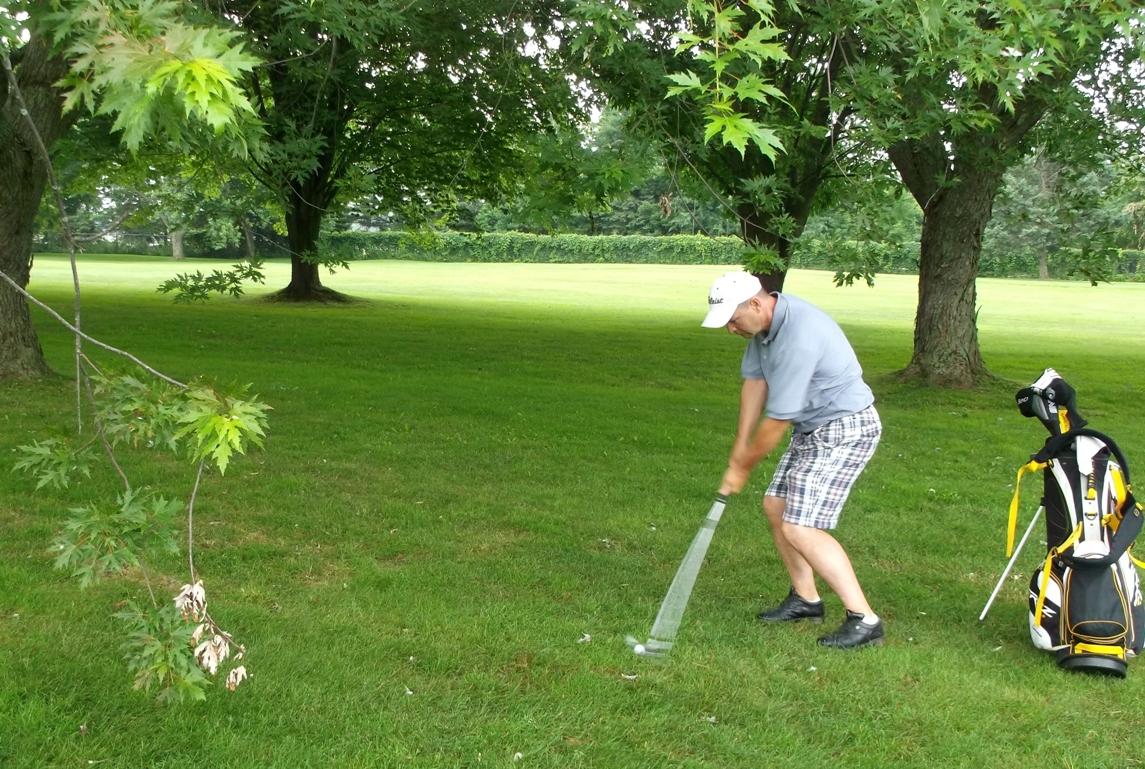
Under a tree

Under a Tree on the 15th Hole. Managing this shot properly will be the difference between par and double bogey!

There are three simple rules I follow to make my next shot easy. I use these rules as the basis to scoring well or at least trying to score well.

  • When in the fairway, always go for the green if in range! Greens In Regulation or GIR is the most important statistic in golf. Personally, I would rather play a short chip or out of the sand then to have a 30 or 40 yard chip to the green.
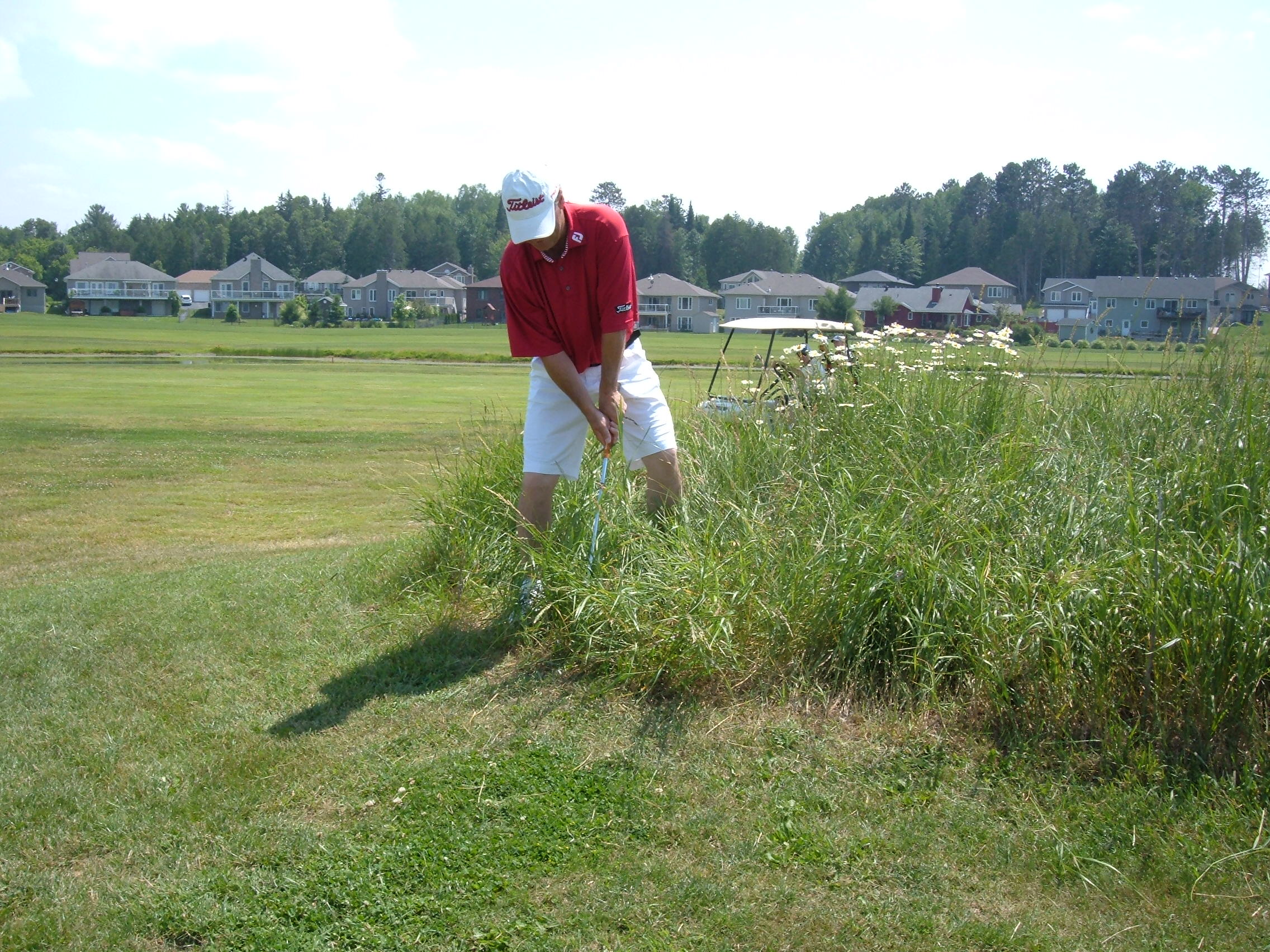
  • When hitting from the rough, I use my hybrids. I cases where players are not using hybrids, then use an iron. I know many players will suggest that if the lie is good then hit a wood, but the higher percentage shot is to hit a hybrid or iron.
  • When playing out of the woods, do not get greedy! The moment I try to squeeze an extra 10 or 15 yards out of a difficult shot, disaster strikes! Taking my medicine is the safe play! This does not mean that I do not try and find the most advantageous exit from the woods, it means that I have to be smart about setting up my next shot!

I am sure there are many other rules that players use to keep their score low. Depending on the competition, others rules will come into play, but for most amateurs trying to break 100, these three rules are plenty.

This is my approach to course management. Do you have anything to add?

I am a grateful golfer! See you on the links!

How Wide Should Your Golf Stance Be?

How wide is your stance in golf? This is a great question for all golfers regardless of their skill level. This important question has rattled around in my head for about a month.

After analyzing my swing (for the first time on video), it was very clear that I had absolutely no lower body movement; I mean none. Additionally, this year I struggled with consistency off the tee, this dramatically increased my frustration while playing my favorite sport . When I mentioned this to my friend Kirk, he said that I have always swung the club this way! Needless to say, I was completely surprised! I maintained a 4 handicap for 10 years and this year it dropped to 2.8! I cannot seem to lower my handicap any further, mostly because of my limited distance and inconsistent play off the tee. Well, now I have my next project as I continue to strive towards being a scratch golfer.

While at the PGA Tour Canada Golf Clinic at Wildfire Invitational this past Wednesday, a young pro noticed my stance woes immediately. He recommended that I widen my stance about two inches with each foot! As I moved my feet out, it felt like I was doing the splits. However, after hitting about 20 balls on the range that day, my new stance started to feel more comfortable.

Curious about my new found knowledge, I started to research the proper distance and location of my feet in my stance. To my surprise, I found that everyone had an opinion and very few were exactly the same. So here is what I found that was consistent among most articles:

  • Everyone’s stance will adjust according to their physical stature. Being short, tall, stout, thin, or average will have a direct impact on the width of your stance.
  • The shoulder width rule (your feet shoulder width apart) is an okay guideline, but flexibility will definitely impact your foot position. The more flexible, the wider your stance.
  • “Basically, what you need to do is find neutral joint alignment.  In other words, find where the center of your ankles, center of your knees, and center of your hips stack up over each other.”
  • “Consequently, the most efficient width of stance should be no wider than shoulder width for most full swing shots, including your driver.  With this width you will more likely maintain a dominant rotary force.  This will lead to greater club head speed and better dynamic stability.”

Here are a couple of videos  that help explain the advantage of a proper stance and how to figure out what is best for you.

After widening my stance, I have suddenly found 10-20 yards off the tee. I am more consistent when hitting my driver just by moving my feet a couple of inches farther apart. Not to suggest this is an easy fix, I still have to hit the range to determine the exact position of my feet, where the ball should be placed in my stance for all my clubs, and build confidence to swing through the ball! I am excited about my new project and will keep you posted as things progress!

I am a grateful golfer! See you on the links!

Breaking 100 Without Quick Fixes

Breaking 100 at anytime is generally the first milestone golfers try to achieve. There are many tips, drills and quick fix programs that guarantee to lower your score with little to no practice….or so they claim. Obviously, there are drills that work very quickly, but others are less effective in the short-haul because they are too advanced for the player.

In earlier articles, I have outlined different ways to break 100 and they are very valuable to any player who dedicates the time to improve. These articles are:

Each post deals with a specific area of the golf game that, if a player focuses their practice time, will gain the greatest results. I am sure you have figured it out by now…. your short game.

Loyalist Country Club (12)

Putting 10000 times!

All players, regardless of skill level, have the ability to play better. Even Rory McIlrory will say he “left a couple” on the course after playing a great round of golf. This is nothing new and only reinforces a player’s desire to play better.

On the flip side, when a player does not play well, they generally focus on the area of weakness from that round. Most of the time, I would suggest, it is their short game. Off to the practice range they go with focused intent to putt and or chip until they regain their smooth stroke.

Focused practice is the real key to breaking 100. The rule of thumb is to attempt something about 10,000 times in order to perfect any skill. Golf is no different. The professional golfer will have practiced all skills more than 10,000 times and as a result earn a living from playing golf. As amateurs, it makes sense that success can be drawn from watching the élite and aping their actions.

To break 100, it is important to engage in focused practice. The process is very straight forward: Perform the stroke; Make a small adjustment if required; Repeat the stroke. When making an adjustment, make sure it is not something that completely changes your original stroke. Repeat 10,000 times. This slow process is the key to successfully mastering your short game.

Breaking 100 without quick fixes is the only real method to lower your score. Time, patience, and the desire to improve are the real keys to good golf! This may not be the answer you are looking for, but experience tells us that in golf ‘practice makes permanent‘.

I am a grateful golfer! See you on the links!