Golf tournaments show what kind of golfer your are and could be. The pressure of playing in a competition will accentuate our strengths and more importantly or weaknesses of our game. The area that I notice the most challenge for amateur golfers competing is on the mental side of the game. They are more concerned with what other players are doing, that they let it overshadow their game. For full disclosure, I have fell into this trap in my early years. As I mature as a player and developed my game, I found that what other players were doing was less a factor as what I am doing on the course. I am not sure there is a simple solution to the mental challenge of ignoring what other players are doing, but I seem to have know I turned the corner to success many years ago.
Continue readingWatching The Club Face Hit The Ball
If I heard the saying “keep your head down/still” once, I heard it a thousand times. Although the saying does not offer a solution to most swing issues, it does point to a foundational swing move that all golfers need to perform to be successful. During a golf swing, there are many planes of movement that require synchronization and to do so, keeping our head still is the key to success. Knowing this, it is still a challenge to keep all parts of our of our swing coordinated enough to hit the ball where intended because we continue to have an overactive head. If only there was a drill to help with the bobble head challenge!
Continue readingHitting The Perfect Tee Shot
What is the perfect tee shot? I have asked this question many times and have not really received a consensus on the results. I think each player has their own view and that is valid, but is there really a perfect tee shot? I have parameters that makes a perfect tee shot and rarely does it have anything to do with distance. It plays a factor in my final assessment, but I think a perfect tee shot is so much more. After hitting thousands of tee shots, I am confident I can identify perfection off the tee when I see it. Can you?
Continue readingWhen Is The Best Time To Start In Golf
Golf is a unique sport that allows every player to set their own time schedule for success. It allows us to stay in one spot for an indefinite period of time if we are happy with our game. Of course the factors to making that decision are unique to each player and only they can determine if their golf game is meeting their expectations. Ideally, at least for my game, I try to limit the peaks and valleys of erratic play through making small incremental changes to my game. Once I have identified an area of concern I take active and intentional steps to improve that area in the hopes that it will lower my golf scores. I have found this process to be very successful and think that it is a proven methodology of most golfers. Let me explain further.
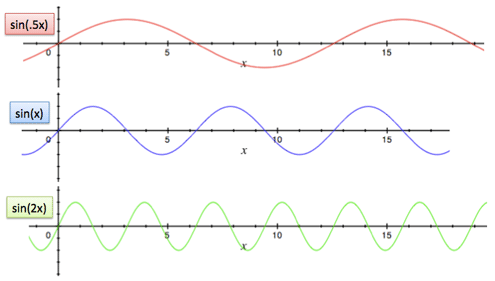
The set of sign waves on the left are a great visual for my process. Consider the top of the wave to be success and the bottom of the wave to be failure during the execution phase of chipping. (I randomly used chipping, but you can insert any skill that you want to improve.
The green sine wave indicates a chipping game that is unpredictable. It is a challenge to determine if I was going to be successful or not. This approach to lower golf scores did not work for me. The frequency of failure was something that continued plague how well I played and I needed to reduce the frequency of miss shots.
By practicing my short game, I was able to reduce the frequency of erratic play (the blue sine wave). I still did not achieve the solid play I wanted so I used different drills and practiced more challenging chipping scenarios. As I continue to improve, I was able to move the x axis upward where to improve my successful hits, but still had too many poor shots for my liking. So, more focused practicing was required.
After training, trial and error, and improving my skills, I was able to transition to the red sine wave where mishits were rarer and more steady, consistent play became prevalent. The x axis was at lowered and I was hitting better shots more often. The frequency of good to better shots was up and overall, my short game improved. Now, I am confident with my short game and feel that my journey was successful. So, what does all of this really mean?
The best time to start working on your golf game is now. The desire needs to be large enough to drive and sustain our progress through all the stages of improving a skill. In my case, improving my chipping is a continuing journey. I am currently playing in the red sine wave, but do drop to the blue from time to time. Then it is immediately back to the practice range and focused drills. Fixing any skill in golf starts with the first step and working our way to sustain solid, consistent play in the red sine wave is always the goal. To get there, now is a good time to start.
I am a grateful golfer! See you on the links!
Happy New Year – 2023
With 2022 behind us, it is time to look forward with hope and anticipation for 2023. The first day of every new year starts the slate clean. This year I hope to hit the links more and play some exciting golf with my new hickory sticks. Regardless, 2023 is going to be awesome.
I will create the year I want and I will be grateful for all the blessings in my life.
I hope you and your special loved ones have a healthy and joyous new year in 2023!
 The Grateful Golfer