The definition of cold varies from local. Additionally, the player themselves will determine what cold actually means and for my purposes, cold is when my hands require mittens to keep warm in between shots. That temperature does vary for day to day. The shot in my game that is affected most by cold weather is chipping around the green because my touch is drastically reduced due to cold hands. Additionally, my equipment does not perform the same and this change needs to be accounted for on all shots. Overall, playing in cold weather is a challenge for all players. Fortunately, there are steps we can take to counter the cold weather in order to shoot our best score on that day.
Continue readingcold temperatures
Different Golf Balls For Different Temperatures
I have talked about how the temperature affects a golf ball in previous posts. There is a difference the results of hitting a ball in warm/hot and cold/frigid temperatures. If you a more detail article of this you can read a previous post I wrote called: Golf Balls and Cold Temperatures. For now, the opposite is true. Instead of worrying about cold temperatures, focus on the heat.
Continue readingSwitching to My Fall Ball
It is that time of year, were I put away my Pro Vs, Forte, and Callaway golf balls for something with less compression. Before you start to scratch your head and question my mental state, I based my decision on experience and facts. it is something I do every year and it does pay dividends. Continue reading
Golf Balls and Cold Temperatures

Playing Golf in Cold Temperatures!
As winter continues to pound most of Canada, the discussions of the weather is never far away. During previous posts, I offered suggestion on how to play in cold weather to help improve your game. One area that I have overlooked is the effect of cold weather on your golf equipment. Specifically, your golf ball; after some research, I realized that this oversight might very well be robbing me of chance to score low in cooler weather!
There are three aspects of cold weather that affect your golf ball that every player should understand. They are not difficult concepts and they are easily rectified. Understanding how cold weather effects compression, ball flight, and feel on the club will ensure you are always ready to shoot your lowest score.
The optimum temperature for a golf ball is 80 degrees. As a ball’s temperature drops, it won’t compress as much off the clubface. For maximum playability, store the balls at room temperature.
Compression of the golf ball is a key fundamental to hitting the long ball.
“The golf ball is compressed and flattened by the force of the impact. The lower compression of the ball results in the ball; travelling farther as the club’s energy creates energy, transferring it to the ball. The ball’s compression handles the high-speed and impact of the club, and allows flexibility so that the ball can recoil and not break apart.”
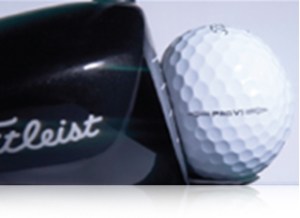 During cold weather, high-compression golf balls are not as effect or efficient because they are more difficult to compress. If you are playing golf in temperatures below 60 degrees F or 15 degrees C, I recommend a lower compression ball or a high-compression ball designed for colder temperatures.
Ball flight is a challenge in cold temperatures. As an ex-aircraft technician, I understand the theory of flight. Although cold temperature helps an aircraft take-off sooner; the same cold temperature shortens the your ball flight. Without going through the science of cold temperatures, it is enough to say that the air is more dense due to the slower movement of molecules. As golfers, we say the air is thicker. This thicker are makes it harder for the ball to travel in the air because it has to push its way through more resistance. The more resistance, the more energy required for your ball to travel the same distance in cold temperatures vs warm temperatures.
The last challenge of cold temperatures is feel. Everyone one of us has hit a golf ball at one time or another and felt a stinging pain in our hands. Immediately, we exclaim “that felt like hitting a rock!” Well, we should not be surprised because the materials that make up a ball are basically plastic and rubber (simplified version). As we all know, both harden when exposed to cold temperatures. Therefore, as we hit the ball and more importantly miss hit a ball in colder temperatures, the feel of hitting a ‘rock’ is amplified. My advice is to swing slightly less aggressively and club up! It will help save your hands and improve your feel!
I found the following at TheSandTrap.com where they quoted the PGA Teaching Manual as a source. As you can see, cold temperatures make club selection more challenging:
The temperature of a golf ball affects its ability to rebound from the clubface. The following chart is the approximate influence of temperature on the ball for a shot that would normally carry 220 yards at 75 degree temperature.
- Yards — Temp
- 226 ——- 105
- 224 ——- 95
- 222 ——- 85
- 220 ——- 75
- 216 ——- 65
- 214 ——- 55
- 205 ——- 45
- 196 ——- 35
It gives the reasoning of rubber being a poor conductor of heat.
I also asked golfers what temperature they would most like to play in and this is what they said:
It is not surprising that just about half the respondents like to play in 80 degree weather. I am sure it has as much to do with the playing temperature as well as the performance of their golf ball.
Golfing in cooler temperatures does pose challenges from most golfers. Understanding the effects temperature plays on your equipment can help mitigate mistakes before you tee up. Selecting the proper golf ball is the first step to shooting your lowest score regardless of the temperature.
Do you change golf balls depending on the temperature?
I am a grateful golfer. See you on the links!
 The Grateful Golfer