Driving the Golf Ball Under Pressure

“Let the big dog eat!” or “Grip it and Rip it!”  How many times have we said that. It usually happens when trying to express the importance of our next tee shot. The driver is the most difficult club to hit in any golfer’s bag. Sometimes it has a mind of its own; other times it is just possessed! Through the years, my fickle driver and I have fought to decide who was the boss on the golf course and I am not afraid to say that I have not always won that battle. The most challenging time for players with an inconsistent driver is when they need to hit the fairway. The pressure grows and grows to a point where negative thoughts control their mind.

When hitting the ball well with my driver, there are some things that I do with boring repetition. It is not rocket science, but I know if I do these fundamental things, pressure is never a factor in my golf swing. Here is what I must do to make sure I hit my driver consistently and accurately under pressure:

  • Proper pre-shot routine. Sometimes I rush my pre-shot routine because I have played my home course over and over. I know exactly which club I need at which tee. When I choose my driver, I sometimes walk to the tee box, tee up my ball and hit. I do not take time to align anything! As a result, I sometimes pull the ball into the rough or push the ball into the woods. Actually, by not following my pre-shot routine, anything can happen!
  • Keep my head down. After I make contact with the ball, I count to one, before I raise my head. This slight delay allows my right shoulder to force my chin up and helps keep my swing sequence correct. Keeping my head down helps me extend my arms along my intended swing path. Lastly, it prevents me from over rotating my hips, thus I generate more power and control.
  • Keeping a positive mindset. Staying confident and focused so that I can hit my driver well (or any club for that matter) is key to playing under pressure. Keeping a positive mindset helps me stay focused on the things I must do to execute a good swing. Additionally, being positive helps guide my mind to using proper course management. If I am positive, I rarely feel any pressure on the golf course.

Here is what Phil Mickelson has to say about driving the ball under pressure:

Hitting the driver while under pressure can be challenging. Try some of my tips and you may be surprised at how little you notice that dreaded pressure. If you have any favorite techniques, please share. We are always looking for new ideas on how to lower our score!

I am grateful golfer! See you on the links.

PGA Tour Canada Golf Clinic for the Canadian Armed Forces

DSCF3576

Earlier this week, I had the honor of attending a golf clinic hosted by the PGA Tour Canada for the Canadian Military. Only a day before they were to compete, eight young golfing phenoms spent 1.5 hours sharing their considerable knowledge with Canadian soldiers. For the fifth time this year, the PGA Tour Canada hosted serving members to teach them how to putt, chip and drive a golf ball. It was a day to remember for most of us golfing enthusiasts!

PGA of Canada Military Golf Clinic

The Wildfire Golf Club is currently hosting a PGA Tour Canada event. Prior to the start on Thursday, Devin Daniels, Wills Smith, Drew Evans, Steve Carney, Adam Cornelson, Greg Machtaler, Peter Campbell and Daniel McCarthy stopped preparing for their professional event to help golfing wannabees improve their game!

Our 1.5 hours was broken into three 30 minute segments. Each segment consisted of putting, iron play and driving. Two of the pros, Drew Evans and Peter Campbell shared their expertise on the putting green. The rest was spread throughout the driving range. The most exciting aspect of the entire event was the close and personal attention each pro gave the player.

I was fortunate to have Drew Evans provide some putting tips. As he watched me putt, he indicated that I had a very good putting stroke. He emphasized the importance of keeping my triangle while putting. When I asked about my view of following through twice as far as the back swing, he indicated that it was a good drill for mid to high handicap players, but for lower handicappers, a smoother even putting stroke is preferred. Lastly, he suggested that I move my hands out from my body about 2 inches to keep my shoulders, wrists and putter head in a straight line…man did that make a positive difference! Thanks Drew I appreciate the help. Here are some other tips by Drew and Peter.

My next station was the driving range. I started with my 7 iron and both Adam Cornelson and Steve Carney liked what I was doing. My follow through was excellent and my contact consistent. The only thing they suggested was that I slow my back swing down to produce a smoother tempo throughout the entire swing. This will have to happen at the range as changing my tempo with my 7 iron will be difficult. I was encouraged to hear that my 7 iron was in pretty good shape.

Moving on to my driver was a slightly different story. I hit my driver 240 yards straight, 7 times out of 10. Of course, being a golfing freak, I asked how to gain 20 more yards. Drew Evans looked at my swing and told me what I already knew…no power was generated from the lower part of my body. To date I have been unable to correct this problem. Drew suggested I widen my stance. At first it felt very uncomfortable, but the results were unmistakable. I immediately gained some distance on my driver with the same consistency.

After hitting about 20 drives, Devin Daniels approached me and suggested I should slow my back swing down. He noticed that when I was trying to hit the ball hard, everything sped up and became out of sync. Additionally, he reminded me that less is more. Something I have said over and over. Swinging at 80% strength is the key to have the ball go farther! Of course it worked and now I have two things to work on at the range.

The entire day was incredible. Everyone who attended the golf clinic was very impressed by the Wildfire Golf Club, the pros knowledge and infinite patience while answering questions and the PGA Tour Canada for continuing to host the Canadian Military! After talking to the PGA Tour Canada staff, I found out that there are opportunities to caddy next year and I think I am going to give it a go!

Thank you PGA Tour Canada for continuing to support the Canadian Armed Forces!

I am a grateful golfer! See you on the links!

Golf Tempo – Important or Not?

My recent roller-coaster ride on the course was a bit of a quandary until this morning. Over the past two weeks my scores have been all over the place.  Shooting as low as 76 and as high as….well really high! It always feels like I have the same swing until I was discussing my challenges with Rick Williams from mindbodygolf and he was questioning the erratic nature of my game. After taking time to actually think about what is going on I believe I have found the solution to my woes.

Glen Abbey (23)Golf Tempo! Immediately everyone starts to visualize their drawback for the club head, the slight pause at the top, and the downward swing to a high follow through.  (I posted my swing on my YouTube channel) As I reviewed my swing, I realized my tempo was a bit quick.  Not sure if that was because of the video; ultimately it makes no difference it was a bit quick.

Zepp labs state that “tempo is the ratio of the measured time in seconds it takes to make a back swing, versus the measured rate of time in seconds it takes to make your – until impact.  This ideal ratio is 3:1.”  Their definition makes complete sense to me. Although I have never measured my swing, I notice the difference in the good shots as they are comfortable, balanced, and in control throughout the entire swing process.

The 3:1 ratio of a golf swing seems to be the accepted norm. Deb Vangellow, LPGA Master Professional, explains that the best way to attain this magical tempo is by use of a  cadence counter/metronome. I recommend using it on the range because of the potential difficulty that changing your tempo might cause. This is something I have never tried, but it seems time to do so with my Regional Golf tournament coming up in 2 weeks.

One other point about tempo that is often overlooked is how fast a player plays. This topic covers walking to their ball, pre-shot routine, how they play on the greens and how quickly a player moves from green to tee.

  • I find that if I walk slightly quicker than my normal saunter it works well for my game. This pace keeps me mentally attuned to what is happening around me, it allows for the proper amount of pre-shot preparation, and ensures I have enough gas in the tank going done the 18th fairway.
  • My pre-shot routine must stay the same. Sometimes, I actually change my routine for no reason. I know, that is crazy, but it happens.
  • On the greens, it is important to look at the break, the grain, the wind, and your line. All of these are important and should not take very long. Usually, the green is not an issue. However, it is important that I putt out everything! Sometimes I get lazy.
  • It is important for good tempo to move from the green to the tee with intent. I am not suggesting that players sprint, but getting ready to play the next hole without taking too much time helps keep the tempo (flow) of the game.

Tempo on the course and during your swing is very important. At this time, tempo appears to be a challenge of mine. Playing well on most holes demonstrates all the pieces are there, I just need to put it all together as a package.

I am off to put my new theory to work!

I am a grateful golfer!  See you on the links.

 

Which Golf Grip is Best for You?

Holding a golf club is one of the most important fundamentals to a great golf swing.  The slightest change to the position of the hands has a tremendous impact on whether the ball finishes in the woods or in the middle of the fairway.  Focusing on how to hold a golf club is the first step to developing a great golf swing.

There are three basic golf swings: the baseball grip, the overlapping grip and the interlocking grip.  Each grip has its own unique advantages and disadvantages.  As each player evolves, many have experimented with each grip to suit their game. Continue reading

How to Build a Golf……

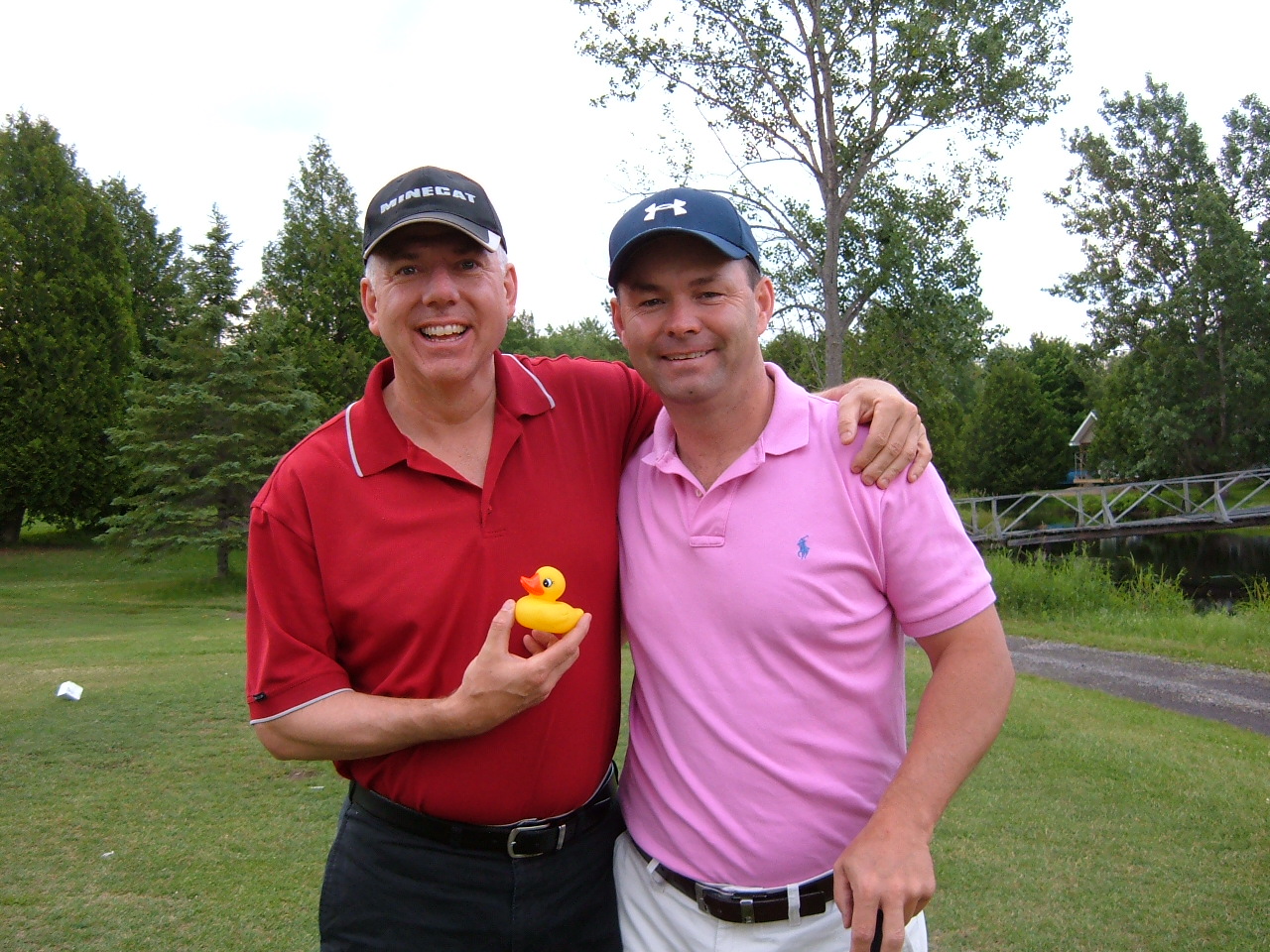
Playing with Golf with My Buddy

What keeps you coming back to golf?

This is a very philosophical question.  Immediately when asked, most experts will say the swing.  Pundits point to mechanics immediately.  Most of the top sources outline a no fail way to build a golf swing and lower your score.  They also suggest that if you have a good golf swing, you automatically will have fun playing golf.  This hypothesis is not very sound or practical.

Experiences (history) are great teachers.  Think back through your life.  What do you see? When you first started something, anything at all, did you immediately jump into the mechanics of that something?  What was the first thing that attracted you to that activity? Remember the statement when we were growing up, ‘you will play and like it!’  ‘You will sing and like it!’  You will and on and on and on! Continue reading