Have you ever had that one challenge that would creep into your game for many unknown reasons? It is the bane of every golfer and when it sneaks into your game, it is hard to identify what this plague is doing to your swing. Well, I am here to confess that my earlier woes were caused by a reoccurring swing fault that creeps into my game from time to time.
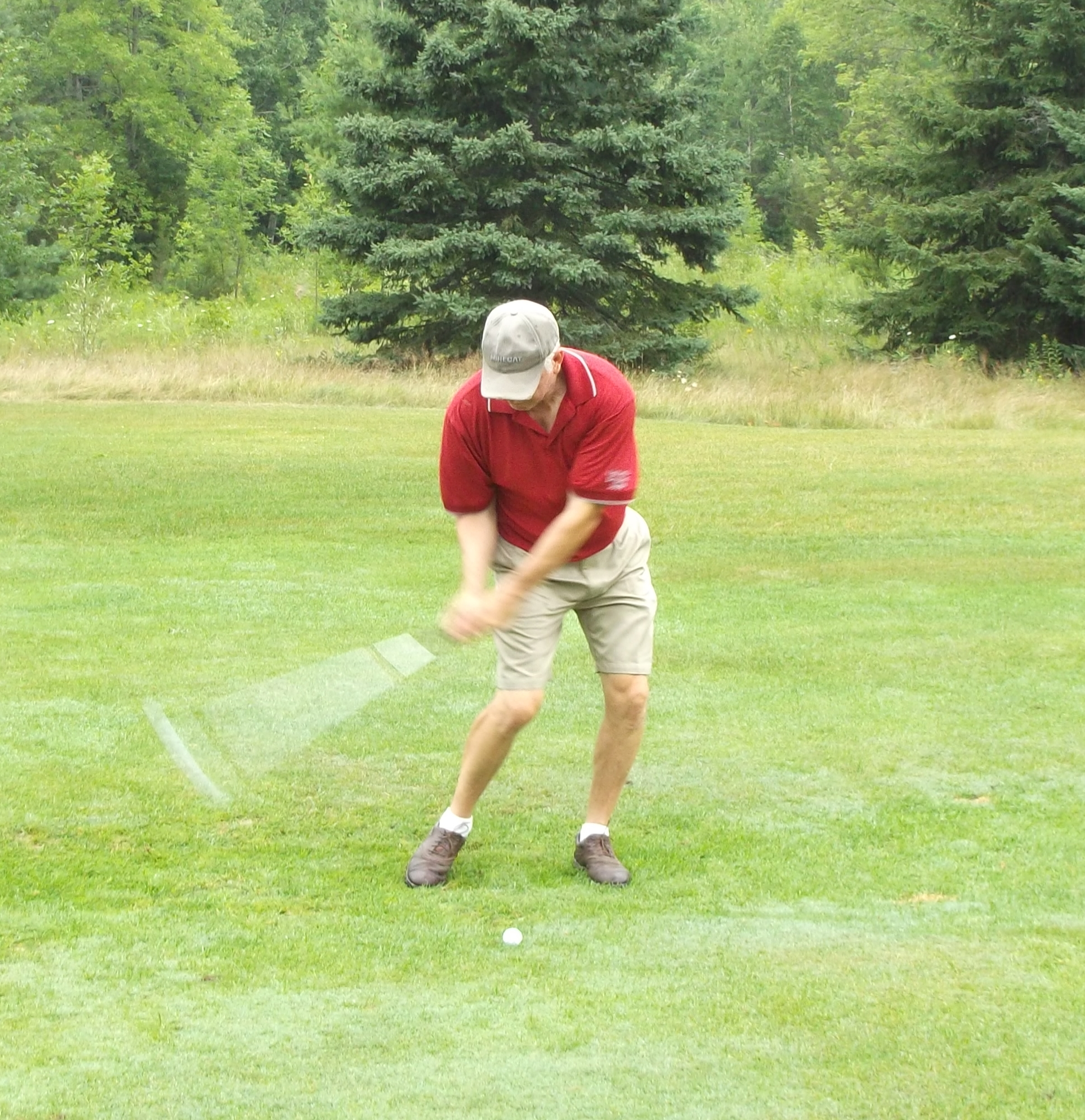
I call it the bobblehead syndrome! Everyone once in a while my head is bouncing around like a bobblehead doll. It is forward of the ball, behind the ball, too high, too low or just out of alignment during contact. Yesterday, I realized that my current challenges were cause by my head moving during contact with the ball. I realized my issue on the second tee and through an epiphany, my game changed.
Suddenly, I was hitting most fairways or only missed the rest by a couple of yards. My contact was crisp, the swing consistent and my confidence grew. In 18 holes, I only had two poor tee shots and only walked away with a bogey. Overall, my 79 was pretty solid and I felt I could have easily shot lower.
I want to thank all those who provided positive advice and support. I will take those as areas of improvement as the year progresses. Having a strong resource, like The Grateful Golfer Community, helps improve my game and fuel my desire to improve. For that I am grateful. Thank you.
It has been about 1 month since the 2015 golfing season has started, so, how is your game coming? We all want to know!
The golf swing is amazing. I have studied the almost every aspect of it and thought that I had some of the answers. As I mature as a golfer, I want to know more about the why, than the how when studying a golf swing. I came across this video that really helps me understand the science of generating power which equates into distance when playing golf.
The scientific principles of note are double pendulum, centrifugal force, and torque. After watching the video below, I had several “oh yeah” moments where I understood how these principles affect my golf swing. The more I study, the more I understand that my education was more about how to swing a club, but not why to do it. By understanding the why, I will be able to dissect my swing to make the minor adjustments required to become a better golfer.
What do you think? Did anything in the video give you that “oh yeah” moment?
The golf grip is the singularly most important choice any amateur golfer makes. The slightest change to the position of the hands has a tremendous impact on whether the ball finishes in the woods or in the middle of the fairway. Focusing on how to hold a golf club is the first step to developing a great golf swing. After choosing how to hold your hands on the club, it is now time to experiment with your hand position to decide if you need to use a strong, weak or neutral grip.
Determining if you naturally hold the club in a strong or weak way is determined by the thumb and index finger of each hand (Vs). A strong grip, the Vs are right of the centre of the shaft. As a visual cue, you can see the knuckles of your left hand. A neutral grip, the Vs are down the center line of the shaft and you can see three knuckles on each hand. A weak grip, the Vs are left of center and you can see the knuckles of your right had. (The above description is for a right-handed player; the opposite is true for a left-handed player) Continue reading →
Who has the best golf swing ever? If you listen to any golf announcer, it seems that the player on the TV screen has the perfect swing. The announcers highlight the perfect form, the smooth back swing, the flawless swing plane, and strong follow through. Could it be as easy as picking any of the top 10 players in the world and emulating their swing to be successful in golf? OK, maybe not every player because Jim Furyk’s swing is well…..ugly; effective, but ugly.
Through the years many great players emerged as having the best swing ever! Names like Peter Thompson, Sam Snead, and Ben Hogan always seem to make the list because of their classic, lower body movements. Here is a quick video to show you five possibilities for the greatest swings ever:
Are these players really the best! Their record definitely supports this claim. Interestingly, Tiger Woods and Phil Mickelson were not mentioned. But, was this an oversight or are their swings not worth copying?
What about Rory McIlroy, Henrik Stenson or Martin Kaymer? They are the players of today who analysts rave about for their smooth consistent motion throughout the entire swing.
Let us not forget Moe Norman. Considered one of the greatest ball strikers of all time. His unorthodox swing gained him world recognition because of his unmatched control of the golf ball. As great a ball striker that he was, he could not handle the rigors of the professional golfing circuit and never really won at the professional ranks.
The list of greatest golf swings could not be complete without Ben Hogan. There is so much written about this icon that it is difficult capture the impact he made on professional golf. With 64 wins on the PGA Tour, his swing cannot be overlooked. Here is how Hogan describes his swing:
It is difficult to decide who has the best swing ever. Here are some interesting comments by well-known professional golfers:
Tiger Woods told golf writer Jaime Diaz in 2004, “Only two players have ever truly owned their swings: Moe Norman and Ben Hogan. ”
His legend preceded him, Nick Price told me. “When I got to watch him, you could see that he had a technique that obviously worked for him, and he had perfected it.”
Reverse every natural instinct and do the opposite of what you are inclined to do, and you will probably come very close to having a perfect golf swing. Ben Hogan.
“Everybody can see that my swing is homegrown. That means everybody has a chance to do it.” Bubba Watson.
All of these professionals are saying the same thing. The best golf swing ever is the one inside of every golfer. No matter who you are, there is a golf swing in you. Will it look like Tiger Woods or Jack Nicklaus, the short answer is NO! If it did you would probably on a professional golf tour right now.
As you approach the 2015 golf season, remember that your golf swing is yours to develop and nurture. It is all yours. Is it possible to change your swing, yes you can. But ultimately, we cannot match Ben Hogan or Jack Nicklaus’ golf swing because we are not Ben Hogan and Jack Nicklaus. So my advice to you is accept what you have right now and perfect it just like Moe Norman.
In case you are wondering, I believe the best golf swing of all time belonged to my dad! He loved golf and worked to perfect his swing. He rarely broke 80, but when I watched him play, it was pure poetry!
Universal golf tips are difficult to find. Depending on the skill level of the player, a golf tip could be too difficult or too simple. Focusing on more than one movement during a golf swing is often overwhelming for amateur golfers. Therefore, it is very difficult to find that one universal tip that fits the needs of every golfer. Well, for two years I have searched for the elusive tip and I think I have found it!
This drill is so simple, I think everyone can do it! It helps meets the criteria of focusing on one aspect of a golf swing and can be performed by any golfer. It takes only 5 minutes a day and can be practiced anywhere! It is called active visualization. I know we have discussed visualization at length (Visualization for Success, A Growth Mindset, and Visualizing a Shot) and I have finally figured out what was missing.
What was missing was the active part! Normally, when visualizing my golf swing, I think my way through the shot. I try to picture my swing in my mind’s eye through my pre-shot to post-shot routine. I try to keep my concentration on the moment and have achieved relative success. However, I found that I am sometimes easily distracted by other thoughts creeping in, noises, or falling asleep! Ok, now that you have stopped laughing…..
Active visualization is nothing new. My idea actually comes from the movie “Seven Days in Utopia“. The seasoned golf coach in Utopia was helping a struggling golf professional. The first step to improvement was to write out his golf swing. It made the player concentrate on how and why he swung a golf club in a particular way. After some reflection, I think this approach is brilliant.
Active visualization does start with writing out your golf swing. If you are having difficulty, there are many sites that will help. However, it is important to focus on your swing. As you go through the step by step process of writing out your swing, you are in fact analysing your mechanics. This is an important step towards understanding your golf game and is critical to improving your overall game. Once you are done writing, read it out loud to yourself several times.
After reading your Pulitzer prize article aloud, you will remember it step by step. Now, close your eyes and recite your swing to yourself. You will be surprised to see images form within your mind’s eye! You will also see your swing in all its glory!
The cool thing about this process is the ability to make changes. After you have written your swing out in detail, it is easy to identify that part of your swing that is causing you the most difficulty. Once identified, change that part until you are satisfied – watching videos of professional golfers may help if you are experiencing challenges. An important aspect of active visualization is being engaged in the entire process. For 5 minutes (once you have written out your script) anyone can visualize their golf swing and as a result build confidence in their game. Visualization does help lower your golf score, active visualization will provide the foundation to a great golf game.
In future articles, I will share what I have written for my active visualization. But, before I do, what do you think? Do you think this will work? Or am I just crazy?