Your Go To Shot in Golf

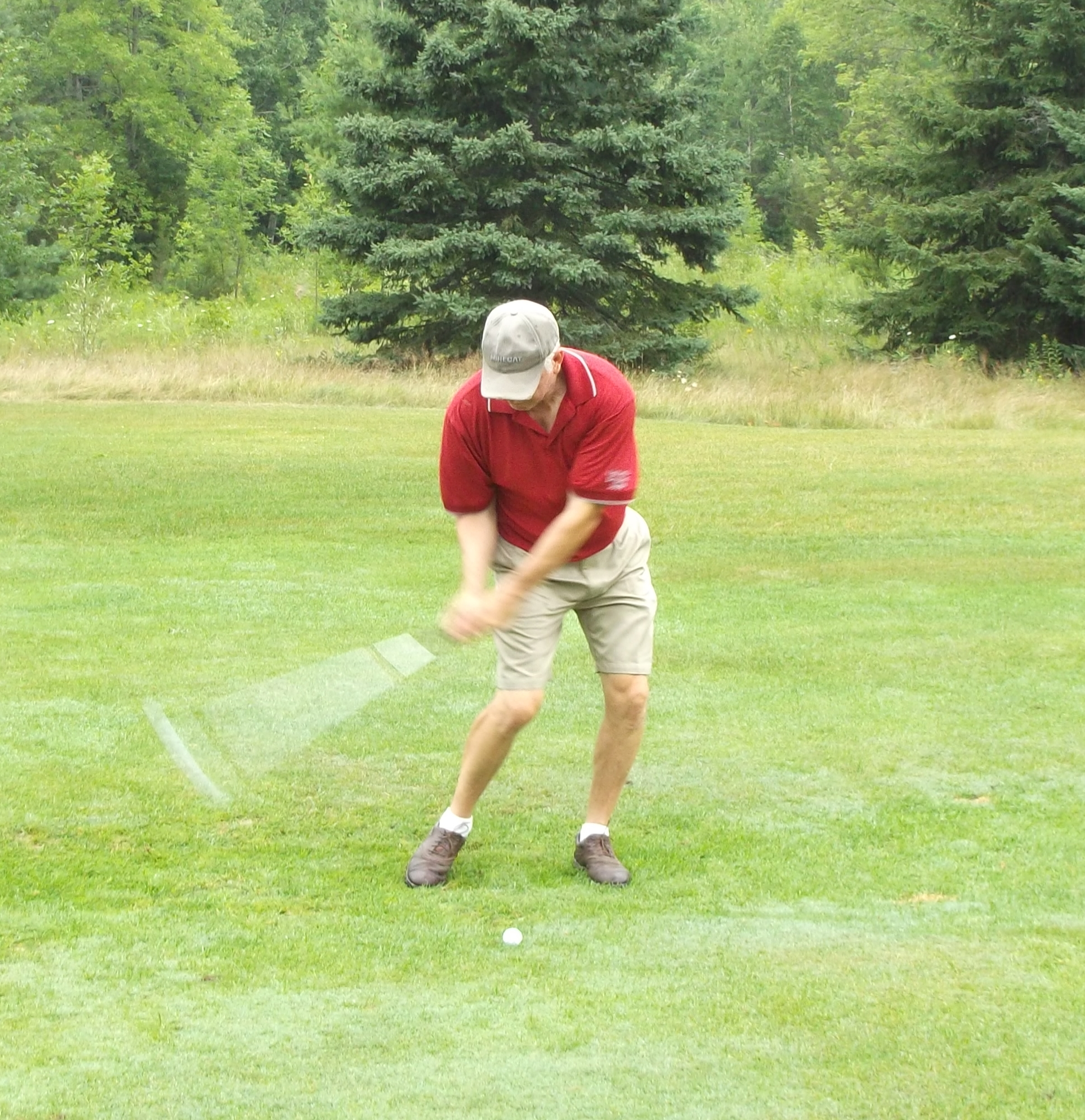
Keeping my head still through the entire swing!

My ‘go to’ 7-iron from 150 yards!

As I watch and read of the woes of Jordan Spieth and Tiger Woods, I empathize as they slash their way around the golf course. For me, it appears as if they have lost their “Je ne sais quoi” that makes them great players! It does not mean that they will never play great again, but for the time being they are struggling and it is tough to watch.

As they river of advice over loads their ability to process the information, it is sometimes difficult to break from the current of poor play. But, as all great golfers do from time to time, they will work on their game and eventually return to their former form.

For most weekend duffers, we do not have the luxury to spend the hours needed to fix all the hitches, clicks or alignment issues we face every time we tee it up. Most of us have accepted this reality and play within our fluid expectations.

To rectify our poor play on the links, most of us have a ‘go to’ shot that helps right our failing game. You know, your favorite club, distance or situation in which you do not think, worry, or adjust….your body and mind just knows how to execute without thinking. Generally, after successfully competing your ‘go to’ shot, you are back on track and your game is back to normalish.

For me, I have two ‘go to’ shots. The first and my most favorite is a 7-iron from 150 yards. It is the perfect distance for a smooth swing that does not require ‘anything’ to be completed with success. I aim for the middle of the green, let my mind to blank, and my body takes over. I focus on remembering how this swing feels and my game seems to correct itself.

My second ‘go to’ shot is my 3-wood. This appears to be an odd selection, but due to my style of game (shorter than most at my handicap) I hit more 3-woods than my playing partners. When I hit my 3-wood flush, I actually feel nothing off the head of the club. My follow through is high and my weight distribution works perfectly. I also focus on the feel and I am able to transfer it to my other clubs.

Either one of these ‘go to’ shots helps to quickly fix my ailing game. I also use these comfort shots on the range before I play to establish my groove. So, when my game is ailing, I revert back to my basics and try to focus on the feel of these two shots and it generally helps improve my game.

Do you have any ‘go to’ shots? If so, how do they help?

I am a grateful golfer! See you on the links!

Golf’s Unarguable Fundamental

Keeping your head Still

Keeping my head still during my golf swing is by far the most important fundamental of hitting the ball well. I have tried all types of tips and tricks, but I always revert back to this basic tenant of a good golf swing.

To add to keeping my head still, I count to one silently before looking for the ball in the air. This little trick ensures my head stays steady and in the proper position throughout my entire swing. If I do not count to one, I generally it the ball off the heel of my club which sometimes results in something very bad!

Keeping your head still is key to great golf. I support it and recommended it! What are your thoughts on the matter?

I am a grateful golfer! See you on the links!

Angle of Attack

The angle of attack in golf is a fuzzy subject for me. I understand it, but have never really been able to explain it very well. Mark Crossfield does a very good job in the video below.

This makes total sense to me. How about you? Is your angle of attack correct or do you need to adjust something? Let us know what you think!

I am a grateful golfer! See you on the links!

Being Engaged in Golf

Scoring in golf is sometimes very challenging. A player can play well and score poorly. Conversely, a player can play poorly, but score well. Regardless of where you fit into this spectrum, being engaged in each shot is very important.

To explain what I mean, golf pro Darren Everett, from National Club Golfer, explains the importance of engaging with your target during all phases of your swing. Everett’s point of being engaged and focused on your target during your pre-swing routine, during contact, and after contact is a simple, yet extremely important lesson for all amateur and professional golfers alike.

Next time I am on the range or the course, I will engage the my target with intent. This important point will help me stay focused and should result in lower scores! We shall see tomorrow.

I am a grateful golfer! See you on the links!

Golf Swing Transition

Transition of the hips is one of the biggest faults in a golf swing. Most amateurs have a tendency to over rotate their hips and as a result, the club comes through on an outward-inward swing plane. This type of rotation generally creates that dreaded slice. In some cases, like myself, I generally pull the ball to the left side of the fairway.

My problem, other than having a bobble head, is in my hips. When swinging at the correct tempo my hips are in sync with the rest of my swing. However, if I swing too fast, thinking that I will hit the ball farther, my hips pop open and my right knee finishes pointing at the ball. This is a known fault of mine and I continually work on correcting it.

I also have difficulty explaining the proper hip / thigh process. So, I found this quick video from the National University Golf Academy. Ted Norby explains the proper process to follow to make consistent, solid contact every time.

Watching the video highlighted my challenge with my right knee. Now that I have a fix, I am off to the range.

What do you think? Is the hip / knee transition as important as Norby highlights?

I am a grateful golfer! See you on the links!