2 Stroke Penalty – Really?

While playing a round of golf in a tournament, Tim, Dave, Chris and Kirk were talking quite a bit. They seemed to get along very well and the round was quite pleasant. As they continued through the round Tim and Dave talked the most. While walking down the 12th hole, Tim asked Dave what club he used on the par 3 – 11th tee. Dave, not thinking anything about it said a 7 iron.

On the tee box of the par 3 – 16th hole, Dave asked Tim what club he just used. Tim said 6 iron and was smiling because he hit it on the green. Dave thought for a second, grabbed a 7 iron and hit the ball on to the green as well.  Both players two putted and were happy with their par. When they said their score, Chris piped up and said, “Ah, no, that will be a 5 for both of you.”

Both Tim and Dave said, “No Way!  A 2 stroke penalty – Really?  For What?

Asking for and giving advice.  Tim and Dave were not convinced and pulled out the rule book right then and there.

First they looked at the definition of advice which is defined by the 2012 RCGA Rules as “Advice’’ is any counsel or suggestion that could influence a player in determining his play, the choice of a club or the method of making a stroke. Information on the Rules, distance or matters of public information, such as the position of hazards or the flagstick on the putting green, is not advice.

The penalty for breaching the rules falls under Rule 8-1. Advice:  During a stipulated round, a player must not:

a. give advice to anyone in the competition playing on the course other than his partner, or b. ask for advice from anyone other than his partner or either of their caddies.

Both players were very disappointed and said they do this all the time.  I would suggest we all have given advice during a practice round and never gave it a second thought.  It is important to know the rules because during a tournament, it could cost you more than 2 strokes.

I am a grateful golfer.  See you on the links!

Focused Club Selection

What the heck!  You are playing the game of your life; you are in the middle of the fairway 130 yards from the par 5 – 18th green.  If you shoot par, you beat your best score ever…if you birdie the hole you won the lottery!  Then the thought hits you, 130 yards….you are in between a hard 9 or easy 8 iron.  What to do?

Thoughts go through your head like choking down on the 8 iron or hitting a normal 9 iron and rely on our short game to your goal.  Well, I suggest that most players would hit the hard 9.  There are less chances of error and if you come up short, it will not be by much.  If you hit the 8 too smooth, you will be over the green or worse.

Okay, let’s back up.  The problem of being in between clubs is not uncommon.  Additionally, it is completely preventable.  I would say that the problem started on the tee or as a minimum, the second shot was not played with a focus on club selection.

As you approach every tee box and start setting up for the hole; you should play the hole in your head before you even swing a club.  You know how far you can hit a ball with each club.  So use that knowledge to set the hole up and reduce your chances of being in between clubs.  Using a 3 wood instead of a driver off the tee or a 3 hybrid instead of 3 wood off the deck would make about a 10 to 20 yard difference in your overall distance; thus you are no longer in between clubs!

Focused club selection on the tee will help lower your score and improve your overall game.

What do you think?  Will it work?  See you on the links.

Chipping In!

Image from:  http://www.channels.com/episodes/show/449090/Hitting-With-a-HybridOne of the most rewarding shots in golf is chipping in.  It not only saves strokes, but provides an adrenalin rush for a couple more shots.  All golfers try to hole the ball on every shot, but are we really doing the right things to accomplish that ever elusive chip in?

Being within 5 yards of the green provides the best opportunity to chip the ball in the hole.  To carry out this feat – the bump and run is the best shot.  Yes, if a bunker is in the way or a sprinkler head or….then a lob shot is best.  However, if you have a straight shot at the green, the percentage shot is the bump and run.

Over the years, I have realized that I can save 5 strokes around (depending on if I hit the green in regulation or not) by focusing on my set-up for a bump and run shot.  Recently, I have made some changes with some excellent results.

First, line the bump and run up like a putt.  Take the time to actually read the green, the slope, grain, and location of the hole.

Second,  decide how hard to hit the ball by choose the landing spot for the ball.  This part is extremely important!  By determining where to land the ball will result in how far the ball will eventually travel and the line it travels on.

Third, select a club.  Normally, I use a 7-iron.  But that will change depending on what hazards I have to navigate around.  The traditional wisdom is to use an 8-iron, but I am anything but traditional.  The point is, pick the club you feel will get the job done.

Fourth, I use a putter grip on the club.  It softens your hands, ensures your wrists remain locked and enables the club head to follow the path of your line.

Fifth, take practice swings.  Take as many as required until you have determined the speed required land the ball on your aiming point.  It is very important that you take these practice swings in the type of grass your ball is in.

Six, I visualize the ball going in the hole.  This step is also very important.  Some will say to visualize a three-foot circle around the hole, but think that approach is not aggressive enough.

Seventh and last, do not be afraid to hit the ball past the hole.  100% of short puts do not go in!  It is easier to hit the ball a little softer on the next stroke than to try to hit it a bit harder.  Additionally, watch the ball go past the hole – it will show you the line coming back if needed.

Well now you know my secret to the bump and run.  I believe it is a very important skill that is easily practiced.  It will save strokes.

If you have any bump and run tips, please pass them on!  See you on the links.

LEST WE FORGET

Lest We ForgetLEST WE FORGET!  Today is a special day to honor the fallen, wounded and serving military men, women and their families.  Their sacrifices have allowed for the freedoms we enjoy today.  It is important to give thanks and be grateful our wonderful lives they protect.

A Pittance of Time by Terry Kelly is something that worth watching!

If you want more information please go to Veterans Affairs Canada.

In Flanders Fields is read at every Remembrance Day Ceremony I have attended.  This and the “Last Post” always move me.

We generally talk about golf, however on this day I am grateful to the men and women in uniform for their sacrifice.  I am a Grateful Golfer.


Buying New Equipment

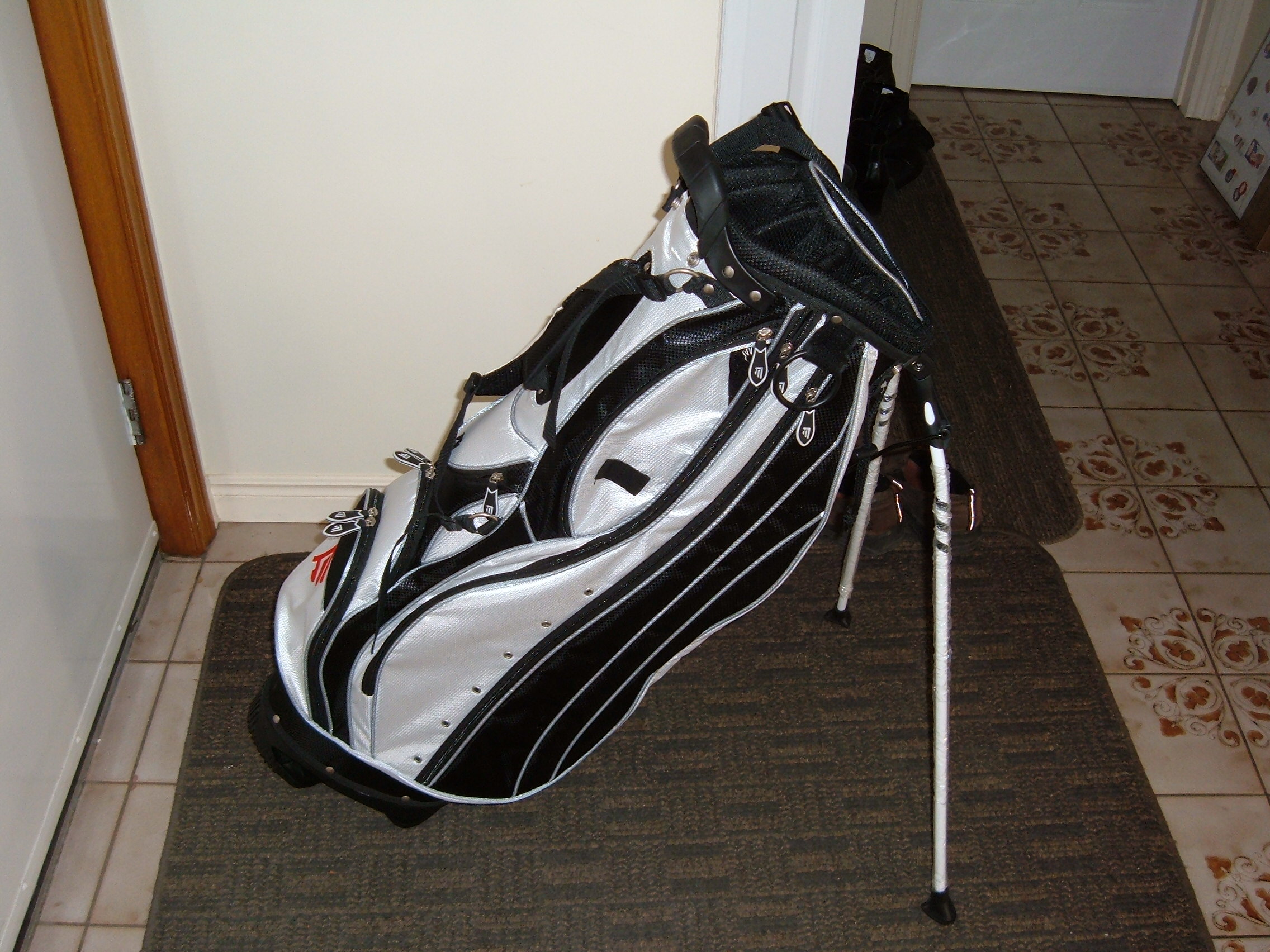
My New Golf Bag

My New Golf Bag!

Buying new golf equipment is very difficult depending on where you live, what you want, the quality of equipment required, and the amount of money you want to spend.  You will notice I said want vice need.  Most of the time, we golfers want to change instead of need to change our equipment, but that is a discussion for another day.

Most golfers are very particular on what type of equipment they want to buy. Should you purchase a R11, volkey wedges, ping putter, callaway iron, foot joy shoes….it goes on and on.  I understand the desire to have very good equipment and for the most part follow the same practice as most golfers.  Overall many of the decisions are made based on what is perceived as a positive step towards improving our game.

Here are a couple of tips that may help….well actually only one tip….never, never, never, pay full price!  I know, it sounds difficult, but actually, with very little effort this can be achieved. So here is my strategy.

Step 1:  Figure out what you want/need.  In this case I have looked for a new carry bay since the beginning of the season.

Step 2:  Research, research, and research.  I read the hype of manufactures to see what they say, however I actually pay attention to the consumer reviews.  This is the most important piece of information you will find.  People are more than willing to tell you what they think.

Step 3:  Wait for it to come on sale.  Check Ebay.  Check Kijiji.  Check Golftown (or other large franchise stores), check the local pro shop (you would be surprised).

Step 4:  If possible haggle over the price.  The local pro shop will lower their price if you make them a reasonable deal.

Step 5:  Purchase the piece of equipment.  In my case, I was very happy with my recent purchase.  I went into Golf Town yesterday.  They were having a demo sale for clubs.  Also, they had 10 carry bags hidden in the back.  I pick up my back for 60% off.  I was very happy.

Step 6:  Probably the most important step – be happy with your purchase.  This is very important!

My process of purchasing golf equipment ensures that you end up with what you want.  It saves money and reduces impulse buying!  I realize it may not be the best way, but it has saved me money over the years and enabled me to purchase move of the things I need!  I am a grateful golfer.

Do you have any special tricks to save money buying clubs?