The Domino Effect

Everyone wants to hit the ball far like Bubba Watson;  Hit your wedge shots like Phil Mickelson;  Putt like Steve Stricker; Have the mental concentration like Jack Nicklaus.  All golfers know they can do better regardless of their success on the links.  The key is to first identify adjustments required to lower scores and improve your mental toughness. Regardless, there is one critical point that all players must remember when making any change – the Domino Effect!

Similar to the Domino Theory of the 1950s, the domino effect is a chain reaction that occurs when a small change causes a similar change nearby, which then causes another similar change, and so on in linear sequence.  Any changes to a golf swing will directly or indirectly cause changes to other areas you are happy with.  The above video shows that it is critical to keep the sight of the big picture and that minor adjustments to all areas of your swing might be required.

As an example, hitting the ball further off the tee or fairway will have a tremendous impact on your overall game.  However, stepping up to the tee and bashing the cover off the ball is really not the answer.  Chances are it might go further, but who wants to keep hitting their second shot out of the woods!  It will take some major and minor adjustments to make sure the maximum effort produces the maximum results.

It is very important to understand that any change to your golf swing will produce a domino effect in your game.  Knowing and understanding this fact will help shape your golf swing into a birdie machine.  Do not forget that changing your swing and improving different areas of your game will also change how you manage your rounds.  Regardless of what you change, be prepared to adjust the unexpected!

I am a grateful golfer!  See you on the links!

Lydia Ko Turns Pro

Image from http://www.lydiako.co.nz/media/gallery/2013-isps-handa-australian-openA sixteen year old LPGA phenom turned pro on 23 October.  After four wins at the professional level, Lydia Ko decided it was time to make her mark.  At 16, see will face tremendous pressure to succeed as she chases her dream as a professional golfer.  As the top ranked amateur golfer in the world for 130 weeks, there is not much more she can accomplish at that level.  So why not turn pro?

After finishing runner-up to Suzann Pettersen in The Evian Championship in France, Ko announced that she would turn pro in 2014.  However on 23 October 2013, Ko stated in a YouTube video featuring New Zealand rugby player Israel Dagg, that she was turning professional immediately and would play her first professional tournament in Florida in mid-November (all details taken from Wikipedia).  The video is definitely worth watching!

On October 2013, the LPGA Tour granted Ko’s request to join the LPGA, waiving the Tour’s requirement of members being at least 18 years old.  It is not surprising that the LPGA granted her request because she is quickly becoming a world-wide sensation; why not capitalize on this rising star.  It is not clear what sparked here decision, however if she made the request to turn pro at the beginning of the current golfing season, she would have  earned more than $1 million….tough decision.

This young Kiwi will have some challenges along the way, but with proper coaching and mentoring from the senior players will definitely help to handle the pressures of a professional athlete.  Phil Mickelson mentioned last week that Ko needs to pay attention to where she lives and the income tax implications.  Great advice to someone whose potential Although is almost limitless.

Many pundits will compare Ko’s decision to that of Michelle Wie who turned pro at 16. Although the endorsement deals for Wie have been beneficial; she has not yet reached the same success on the golf course.  Wie’s potential was also through the roof, but the pressure to win was tremendous.  Hopefully, Ko will not experience the same challenges! Current after two rounds, Wie and Ko are tied for 23rd at the CME Group Titleholder’s Event in Naples Flordia.

Golf is an interesting sport.  At 16, Lydia Ko has accomplished more than most players could only dream.  Her future is bright and hopefully she will achieve all her goals and more!  Besides the journey while pursuing your dreams is really the best part.

I am a grateful golfer!  See you on the links!

Slow But Steady

Turtle1

Golf is a Game of Patience!

Golf is a game of patience. Those willing to be the tortoise generally enjoy the game far greater than those trying to be the hare.  It is sometimes difficult to describe the inner thought process when playing a shot, but watching the pros and elite golfers they all take their time.  Sometimes watching them play equates to watching paint dry, but you will never see Tiger Woods or Phil Mickelson rush through their pre-shot routine or their actual shot.

Golf is a game of patience.  Many golfers have the best equipment, a gadget or two, and change putters routinely. They follow golfing innovations and always seem to have the newest driver in their bag. They are chasing the dream of shooting low, but never seem to play better than they did the year before.  I have often heard “I am 20 yards farther with my new clubs!” or “this new putter makes the ball roll truer!” Unfortunately, they never seem to score better.

Golf is a game of patience.  It is important to work on your game in little increments.  Too many changes at one time has the tendency to cause more harm than good.  Many players ask that if they practice, which part of the game will reap the most benefits.  My response is usually, which club do they use the most when they play?  As they think for a minute, the usually say their putter, followed by their short irons around the green.  I respond “well that answers your question, your short game to reap the most benefit, most of the time.

Golf is a game of patience.  It takes practice and more practice to become an elite golfer. It takes the willingness to put in the time to hone you golfing skills.  This thought is not always popular because playing is way more fun than practicing.  However, it improve your score and really enjoy the finer aspects of golf, practice is required.

Golf is a game of patience.  I am a grateful golfer.  See you on the links!

Are You a Professional Golfer?

Canadian Armed Forces National Golf Tournament

Canadian Armed Forces National Golf Tournament

Have you won more than $750 playing golf at your local club in a skins game?  Do you use golf as a primary method to make a living?  Are you receiving financial gain from golfing? Are you the local golfing sensation whose likeness is used to promote a local charity golf event? Do you compete at the elite level regularly?  If you answer yes to any of these questions, you may be considered a professional golfer!

Determining whether a player should be a card carrying professional is important.  It is safe to say that it is easy to distinguish between a professional and an amateur. Or is it?

Lyndia Ko is a perfect example of a 16-year old phenom amateur who has won four (2 LPGA and 2 International) professional tournaments.  How does she maintain her amateur status and still compete in at the elite level?  The last amateur to win a PGA event was Phil Mickelson in 1991.  He turned pro 1992 and has won 42 professional tournaments, including five majors.  Did winning this PGA event push “Lefty” towards an amateur career sooner than expected?

By definition, an “amateur golfer”, regardless of whether he plays competitively or recreationally, is one who plays golf for the challenge it presents, not as a profession and not for financial gain. (R&AUSGA)  Is it really that simple?

One major distinction about being a professional golfer is “golf skill or reputation“. Generally, an amateur golfer is only considered to have golf skill if he:

  1. has had competitive success at regional or national level or has been selected to represent his national, regional, state or county golf union or association; or
  2. competes at an elite level.

Golf reputation can only be gained through golf skill and such reputation is deemed to continue for five years after that player’s golf skill has fallen below the standard set by the Governing Body.  This statement is very important to most amateurs.  Basically, local heroes with fantastic reputations would not be considered professional golfers.  It takes much more than having a scratch handicap.

Other aspects of maintaining your amateur status are important. A recent change to the hole-in-one prizes is significant.  Traditionally, if you won more that $750 for a hole-in-one during a fun tournament, you lost your amateur status. Fortunately that has changed because Kurt Kramarenko of Dimondale would be a professional golfer today after winning ten thousand dollars in a charity golf tournament on 13 September 2013.  It may have been a life time dream, but one awesome shot does not make a professional golfer.

Another major change important distinction on a player’s status deals with subsistence expenses. An amateur golfer can receive subsistence expenses to assist with general living costs provided the expenses are approved by and paid through the player’s national golf union or association.  (R&AUSGA)  This new rule allows amateurs to keep their status while in school, compete at the elite level and prepare for a professional career.

What about the local player who travels within a three-hour radius of his house and consistently wins prizes in tournaments?  What if this local player participates directly or indirectly in a “sweepstake” or “calcutta” auction and receives money from the person who purchased their team? Or, he likes to enter tournaments that offer cash prizes because he has enough golf stuff; does this effect their amateur status? The short answer is yes. Every time a player wins money during a tournament, even non-optional skins games, the prize money goes towards the $750 limit regarding their amateur status.  A prize such as golf equipment does not appear to count towards the $750 limit.

In 2012, the USGA and R&A joined forces to make one set of governing rules to clarify the difference between professional and amateur status.  This was a good move for the overall health of golf.  Bloomburg.com suggests that golf is a 69 billion dollar industry. Amateur versus professional status is important.  The following R&A video outlines the new changes and the importance of understanding if a player is considered a professional golfer.

New Amateur Status 2012-2015

So, are you a professional golfer?  Most likely, the answer is no.  However, for some, it is a great dream.  As the golf industry continues to grow, more pressure will grow on the governing bodies to ensure an even and fair playing field. There is so much at stake that making poor decisions early in an amateur career could have detrimental, long-term results.  Being a professional golfer may not be the life-long dream of most players, but for some it typifies expertise in a sport they love.

I am a grateful golfer!  See you on the links!

The Open Champion – Phil Mickelson

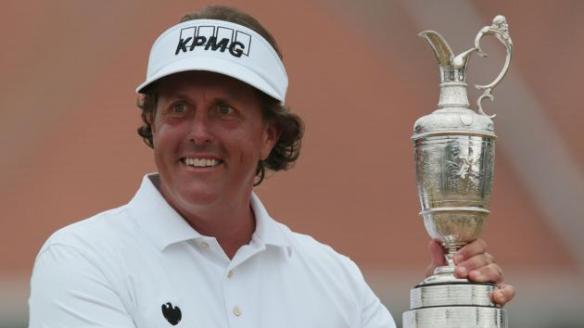
Phil-Mickelson-surges-to-first-British-Open-title-with-5-under-66

USA’s Phil Mickelson holds the Claret Jug after winning the Open Championship at Muirfield on the fourth day of the 2013 Open Championship in Muirfield, Scotland on July 21 , 2013.Mickelson won with a score of three under par. UPI/Hugo Philpott

Congratulations to Phil Mickelson for winning the 2013 Open Championship.  It is the first time he has won this prestigious tournament and he did it with style.  Mickelson is one of the top players in the world and was inducted into the World Golf Hall of Fame….and rightly so!

It is no secret that Phil Mickelson is my favorite golfers.  He embodies all the positive aspects of golf and yet is not afraid to speak his mind on issues of importance. His performance at The Open was solid and consistent.  He really did not do anything spectacular until the last six holes of the final day.  And what an awesome last sic holes! He hung around and hung around; pressing where required and playing safe when needed. There is a lesson in his win for all golfers.

Breaking 100

Practice your short game.  Mickelson practices 25 yards and closer all the time.  That is where real strokes are saved.  He is considered one of the best wedge players of all time; so to break 100 work on your short game!

Breaking 90

After practicing your short game, practice your putting!  Mickelson is a great putter.  He is no Steve Stricker, but Mickelson seems to sink the important putts when required; much like his putt on the final hole at Muirfield….simple spectacular!

Breaking 80

After conquering your wedges and putting, the next step is the range from 150 to 75 yards. This distance will determine your greens in regulation stat.  I believe this is the most important stat in golf.  If a player can be putting for birdie eight times out of ten….their scores drop considerably.

Phil Mickelson played great during the Open this year.  His steady approach shots, chipping and putting clearly demonstrated where most players should focus their practice time to lower their score.

Phil Mickelson’s quote “A great shot is one that you pull off and a smart shot is the one you hit when you don’t have the guts try it!”  I love this quote!

However, as amateurs to break 100 or 90 or 80, it is better to play more smart shots than great shots!

I am a grateful golfer! See you on the links!