Practice Golf The Way You Play

3-6-9 Chipping Drill

3-6-9 Chipping Drill

Focused practice is nothing new at The Grateful Golfer blog. This extremely important topic has cropped up and never seems to lose its importance or relevancy to playing great golf. As I think of the many tips on this topic, I started to wonder if these perils of wisdom actually help the average player.

I am strong believer in the 3-6-9 drill for putting and chipping. I believe they offer the biggest return on your most precious investment: time. This and other drills will make us a better player and lower your golf scores, if we practice. However, after some thought, there is one aspect of focused putting that seems to be overlooked by most amateurs and teachers. Continue reading

Want Low Scores in Golf?

We all want low scores in golf! There are very few players I know who does not want to play better every time they hit the links. Regardless of skill level, most golfers face the real challenge of using our time wisely to develop positive habits that will consistently improve our golf game and produce low scores.

What do you practice the most, thinking it will produce lower golf scores? When you first arrive at the course do you grab a bucket of balls and off the range you go; do you grab your wedge and hit a couple of balls before sprinting to the first tee; or do you grab your putter, hit  couple 15 foot putts to get the feel back, then off to the range or first tee? I routinely see these and other less productive habits at my local course, and unfortunately, I am guilty of some of them from time to time. So what to do?

Lately, I have asked the golfing masses a series of questions about various golfing issues. Most of the time, the answers are in line with my approach to golf. Yet, now and then I am reminded about how to succeed at golf. As a result of a recent question, I was reminded of a lesson I never get tired of learning:

As you can see over 70% of the respondents have an awesome short game when they shoot low scores. I am not surprised because I have always said that to score low, it is important to have a consistent, focused and confident short game.

As I look back at the latter half of 2015, I remember practicing my short game less and hitting the range more. Do not get me wrong, range work is important, but practicing my short game is critical to low scores. I guess I was talking the talk, but forgetting to walk the walk! So I want to thank those who took the time to answer my question and reminded me to focus in 2016 to shoot low golf scores!

I am a grateful golfer! See you on the links!


Golf Tip: Putting to Lower Scores

Putting is the cornerstone of low golf scores. There is no golfer, amateur or professional, who has not questioned, dissected, or overhauled their putting stroke. As a golfing fanatic, who is always trying to expand my golf knowledge, I like to ask golf questions to, well, anyone who will listen.

A couple of years ago, I penned a 5 part series on how to putt. It dealt with several different parts of golfing and I think they are still valid. If you are interested, click here to start at Part 1.

So, here was my question from a couple of days ago:

I have to say I was a bit surprised by the results. I have always been taught to roll the ball 8 inches past the hole. Putting 8 inches past the hole will make sure, more often than not, that the ball will drop, but not so fast as to stay out if the center of gravity of the ball is on the inside of the lip of the cup.

Putting is a tough skill to master in golf!

Putting is a tough skill to master in golf!

There are many different views on putting. The 17-inch rule by Dave Pelz has guided many amateur golfers through the years. Personally, I find hitting the ball almost 2 feet past the hole a bit too aggressive for my game.

Other pundits recommend that just dropping the ball in the cup is the way to go. I find that by trying to hit the ball so it just drops in, my putt generally ends up short. There is nothing wrong with this approach, but the yips become more of an issue when I am putting tentatively.

The consensus from my Twitter question suggests that dropping the ball in the hole is what works for most of the respondents. Ultimately, it is up to the player and what they find most comfortable. personally, I am sticking to putting the ball 8-inches past the hole.

I would be interested in what your preference is: past the hole or just in?

I am a grateful golfer! See you on the links!

Chip, Pitch or Putt for Lower Golf Scores

Choosing the right club at the right time is critical to lower golf scores. It haunts all golfers because club selection is the holy grail of knowledge only gained through years of practice and playing lots and lots of golf. (the second part of gaining knowledge is my favorite)
IMG_20140506_165520

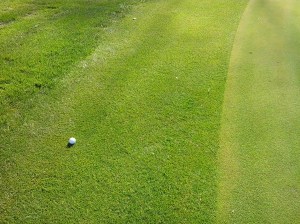
Chip, Pitch or Putt, what is your call?

A while back, I wrote an article about a situation where the ball was on the fringe and I was left with a choice to chip or putt.  There was many opinions and for the most part, choosing between putting or chipping was about 50/50.

Recently, I asked the same question without the picture and the response was different. I am not sure whether it was because the picture was not present, but the 25% increase for players wanting to putt was not really surprising.

Apart from the qualifying remarks such as: is the ball above the hole, is there a mound between the ball and the hole, what time of day is it, is the green freshly cut or how am I playing, most amateurs seem to agree that putting the ball when possible is the best option.

I generally agree, however it is important to have other shots in your bag for those times when either chipping, pitching or putting is required. My years of experience have taught me that relying on just one type of shot is not conducive to consistent low scores.

As someone who likes to always move forward, I like trying new methods to lower my score. My constant pursuit for improvement does not always meet my overall expectations.

Have you ever heard the saying ‘3 steps forward, 2 steps back’? That is what happened to me when I decided to putt more from the fringe. I focused all my attention on the flat stick and as a result, my chipping and pitching started to atrophy.

Although I had developed a new skill by putting more often, I lost my touch with my chipping and putting irons. Fortunately, with a little practice, my “feel” returned and now I have 3 solid types of shots when the ball is on the fringe. I am happy now at the end of the journey, but during the transition, I found it frustrating and sometimes wondered if I was on the right path.

Generally, when the a player is developing a new skill, there is a point of frustration when the new skill is not meeting expectations and their old skills are starting to rust. It is usually at this time when players stop learning the new skill and revert back to their old ways. As a result, the player concludes that the new skill is not worth the effort.

Golf is a challenging sport. It provides the opportunity for a player to be as good as they want. I believe that being a great golfer, we amateurs must find our own path to success. What works for me, may not work for you. I also believe that being a grateful golfer we need to keep trying to improve and be thankful for the journey to lower golf scores.

How do you handle learning a new skill? How much practice time do you devote to it?

I am a grateful golfer! See you on the links!

Winning the Two Man Scramble

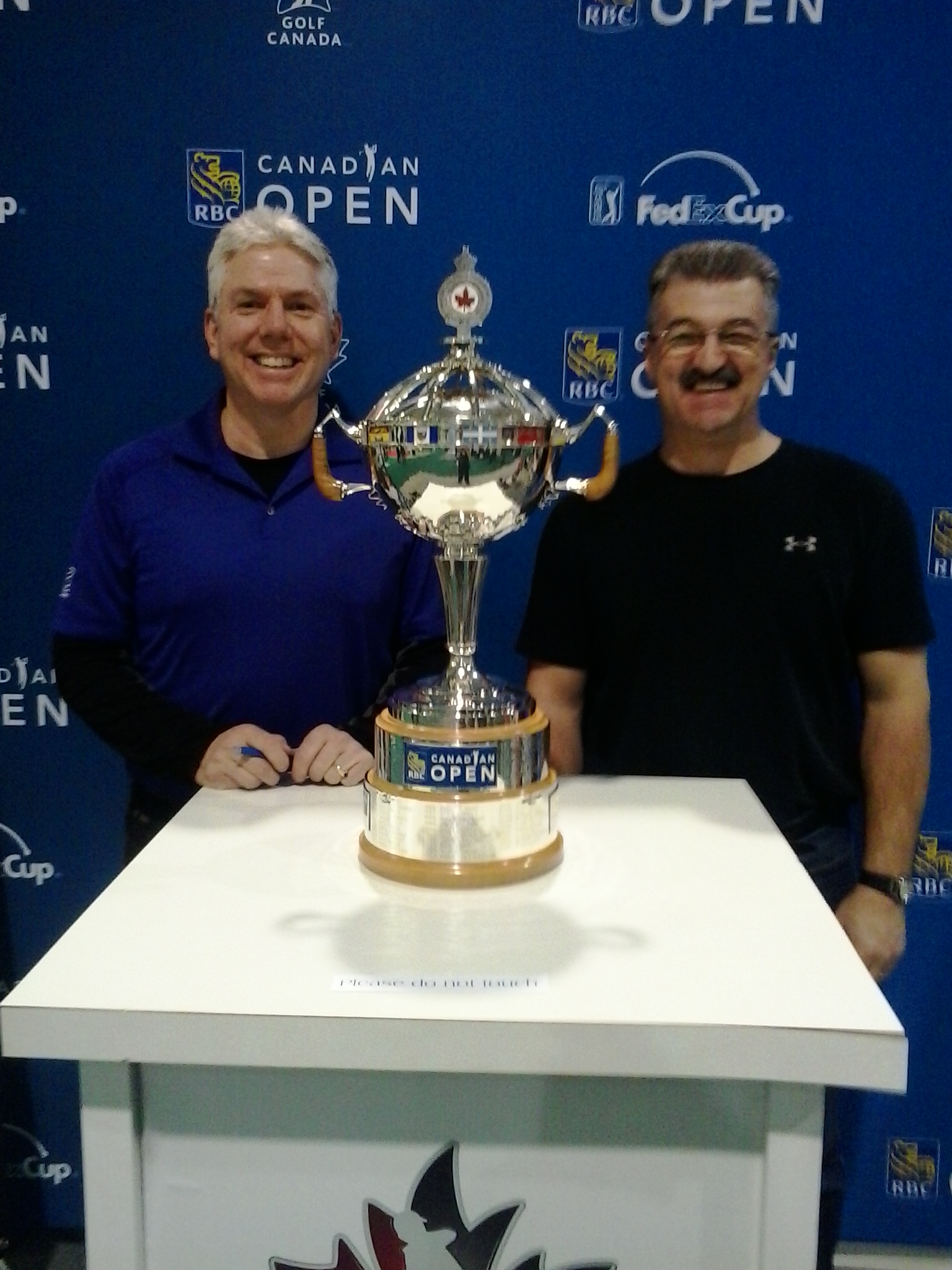
Cdn Open Trophy Jim Jean

Jim and Jean posing with Canadian Open Trophy at the Toronto Golf Show in April 2015.

Yesterday, Jean and I tied for first in the 2-man scramble golf tournament at Roundel Glen Golf Course. There were 21 teams (42 players total) who competed in this event in attempts to walk away with the first prize and more importantly bragging rights! This is the second year in a row that Jean and I competed in this fun event and the second time we walked away with prizes! We improved our standing of second place last year and look to be clear winners next year!

Our goal this year was to shoot lower than our last year’s score of 66. I am happy to report we shot an eight under, 64 before subtracting our handicap of 1 stroke. Overall, we shot a handicapped score of 63. This beats our last year’s handicap by 3 strokes. We played very well and only left three strokes on the course.

We started the round with 3 straight birdies and lipped out for birdie on the 4th hole. It was the strong start we were looking for and it set us up for success for the rest of the round. After a birdie on the 9th hole, we finish the front 9 with a score of 32. The back nine was really no different. With four birdies we shot a 32 again for a score of 64.

Our round may sound a bit routine given our handicap, however it was anything but routine. We made hit 15 of 18 greens. We made 8 of 15 putts for birdie, we were up and down 3 for 3 from off the green (hit the pin on one chip), we lipped out 3 times, and were never in trouble at all during the round. This is atypical for us; today our games were very complimentary and as a result we played very well.

Jean’s short game was on fire. He was closest on most approach shots and his putting was the best I had seen in quite some time. He was straight off the tee and as a result, I was able press some shots by cutting corners and shortening our approach shots. In a 2-man scramble, it is critical the lead player hit the ball in play and today Jean was that guy!

We had plenty of fun today. We want to thank Mike Clare, the GM of Roundel Glen Golf Course and host of this fun event, for organizing a great time for all. The chicken wings, pizza, and libations were a great touch and much appreciated by all!

I am a grateful golfer! See you on the links!