Hole In One!
Periodically, I like to reminisce about all the awesome experiences I witnessed on the golf course. I was a walked down memory lane, I wondered which golf shot was the best! There were many to choose from and most of them were not mine! In my view, part of being a grateful golfer is to find happiness in the successes of others. One of my favorite experiences on the golf course occurred about 15 years ago.
I was fortunate to be golfing with my Mom, wife, and daughter because it was one of the few times we were all together on the course. We chose an executive course so it would fit all our games. And this is when the one of my most grateful golf shots occurred.
It was a beautiful summer day; the birds were chirping; and the course was in good shape. My Mom was the first on the tee of a 125 yard, downhill, hole with a sand trap guarding the left side of the hole. She grabbed her 11 wood (yes, 11 wood) and effortlessly made solid contact. The ball flight was pure and it tracked exactly where she aimed.
Suddenly, the world entered a Matrix slow-motion scene. In anticipation, we watch the ball land just short of the green, pop up and roll towards the hole! It was a magical moment as the ball ever so slowly trickled towards the cup.
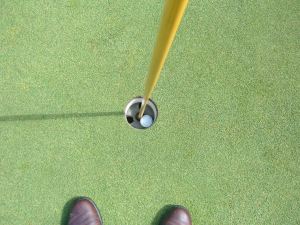
If this shot was made on the 16th hole of the Waste Management Phoenix Open, the crowds would be yelling for the ball to get into the hole! Well, in an instant the ball disappeared! It was gone! In a shocked moment, the 4 four of us started to cheer. It was a moment of gratefulness for us all.
Yet, this exciting experience is only half the my grateful moment. The next to the tee marches my 10 year-old daughter. She grabs her driver and pounds her tee in the ground with her golf ball. Satisfied with the height, she went through her pre-shot routine and was ready to match her Nana’s fantastic shot.
As she drew her club back, I realized very quickly she intended crush the cover off her ball! Her backswing emulated John Daly’s over-swing perfectly! Launching into a perfectly timed….well, actually she topped the ball; it skipped a couple of times before dropping over the edge of the elevated tee box. Expecting to see her ball at the bottom of the hill, it suddenly rocketed into view and headed towards the green.
As the scene from “Tin Cup” where Don Johnson hit his 7-iron down the road, my daughter’s ball continued to bounce off every tufted of grass as it made its 125 yard journey towards to hole. Patiently, we watched her ball make the green and then we suddenly realized that it was on the same track as her Nana’s! While holding our breath, we watch the ball bounce off the pin and come to rest 6 inches from the hole! But wait, there is more!
The real delightful moment about this entire scene was may daughter’s reaction. My daughter was extremely disappointment that her ball did not drop in the hole like her Nana’s! We tried to explain the: “it is difficult to get a hole-in-one”, but she was not buying it! As she made her way to play her ball and make her first birdie, she mumbled about being disappointed! We all consoled my daughter and moved on!
Over the years, I have become more grateful for witnessing those golf shots. I can still close my eyes and see the whole scene unfolding as if it were yesterday. It is one of my most cherished moments the golf course! Being grateful for the success of others is an important tenant of being in part of The Grateful Golfer Community!
Do you have a cherished memory of someone else’s success on the links? If so, share it so we can all be grateful!

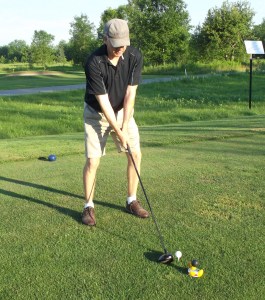 In my earlier golfing career, my biggest challenge in my game was staying in play off the tee. I have always hit the ball straight, yet my game continued to be hindered by poor tee shots. This frustrating challenge actually prevented me from maintaining a single digit handicap. Not knowing what to do, I ask the Club Pro, Gary Corriveau at