Pursuant to yesterdays article, I placed lines on my golf balls and practiced in my basement to evaluate if this technique matches the hype. I drew three sets of lines and tried each with 10 putts to a distance of six feet. I chose this distance because it facilitated a controlled putting stroke with the intent of hitting the ball square. I have several findings I thing worth mentioning because of positive and negative results.
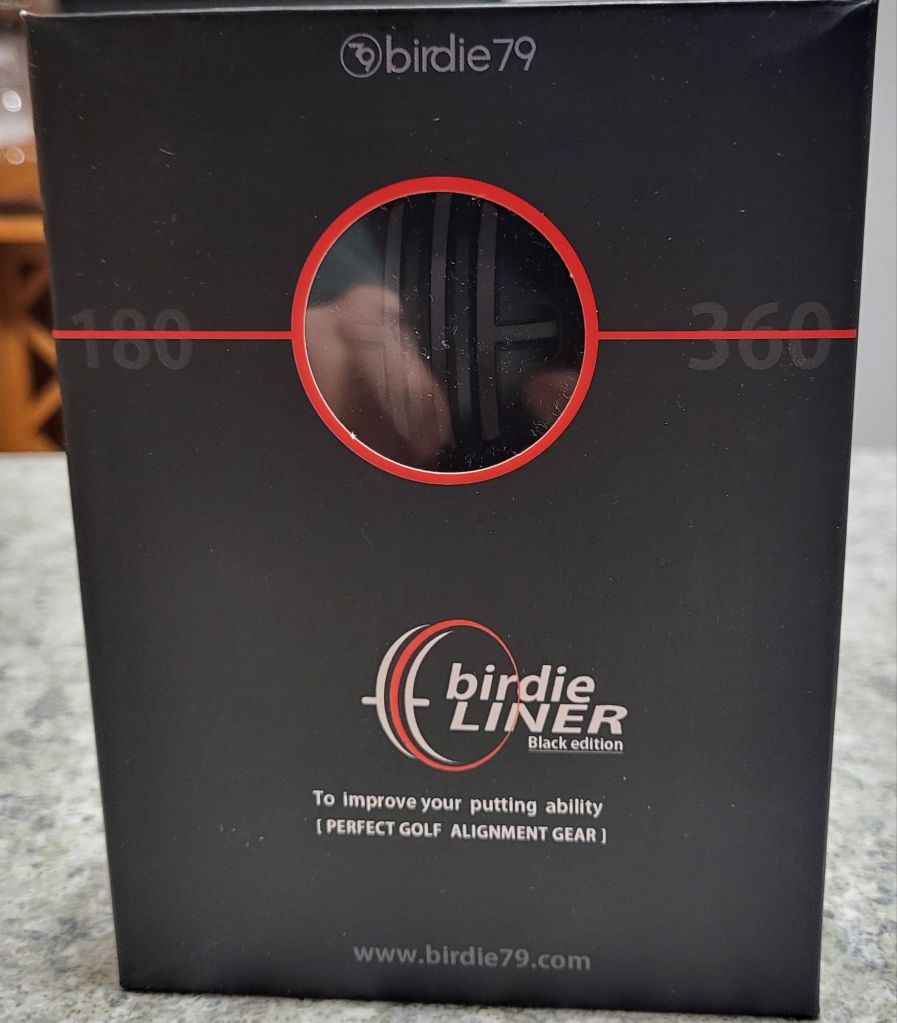
First, to draw the lines I used the BIRDIE79 Premium Quality360-Degree Birdie Liner Drawing Alignment Tool Kit- 360-Degree Triple 3-Line Golf Ball Marker Stencil with Gift Box Including 3 Color Marker Pens. I purchased it from Amazon with the intent of evaluating if drawing aim lines are really as valuable of many suggest. This product was selected at random after a bit or looking. I found this product was very easy to use with great results. **On a side note, I have no affiliation with this company or product.**
When drawing the lines, I took my time to think of the multiple variations I needed to conduct my trial. The intent was to test which lines worked in the various scenarios that addressed squaring the club face, hitting the ball square, and producing feedback on the roll of the ball. As an amateur golfer, I figured these three goals would allow for the best and unbiased results.
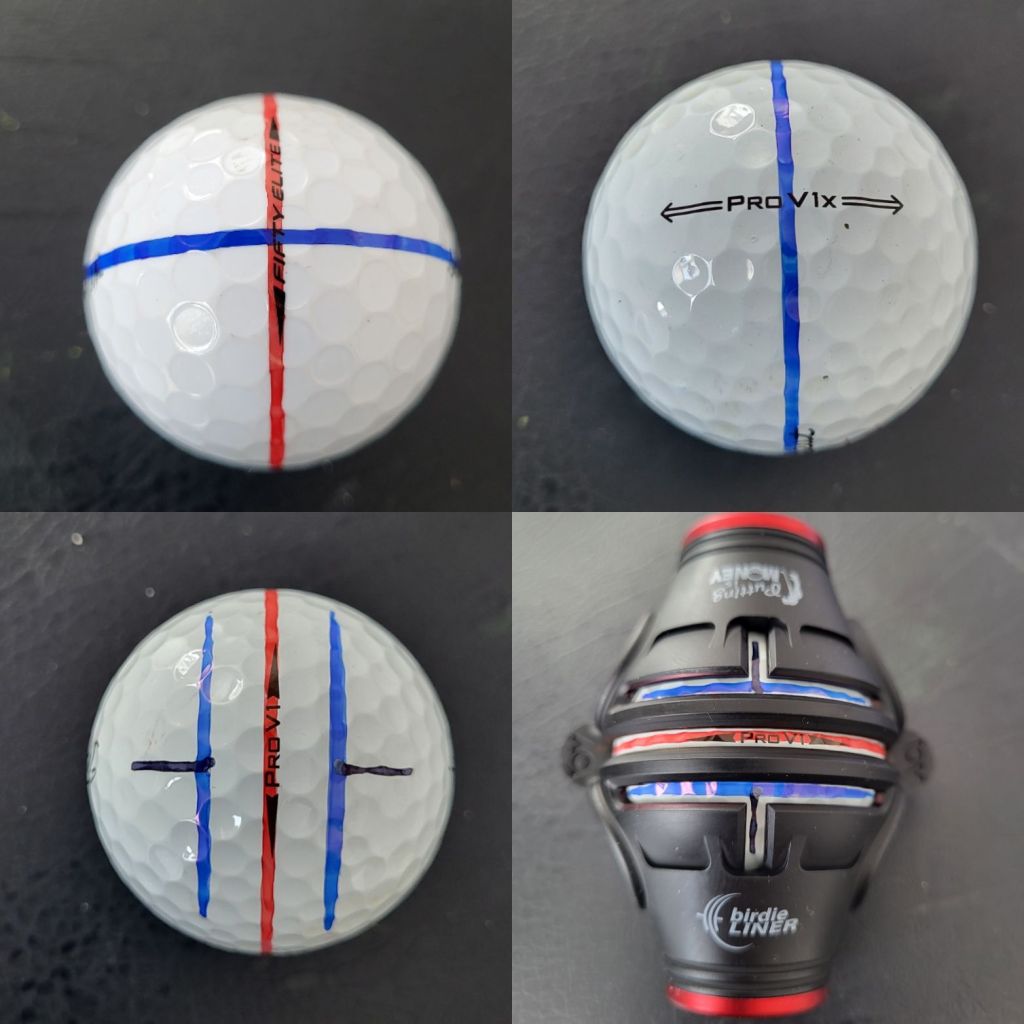
My test was conducted in a very logical manner. I started with the top right single blue line, then the cross hair lines and finally with the full lines drawn with different coloured markers. The intent was to use each set of lines to determine the above criteria. I hit five balls for each criteria (15 with each) figuring this was enough to draw my conclusions. After finishing, I believed I achieved my goals. This is what I found.
Single Blue Line. This was the simplest to use because of the lack of other lines on the ball. I found that turning the line perpendicular to my aim point was valuable to square my club face. The small black alignment line produced by the manufacturer was beneficial, however it was too small to help ensure that all the lines were in the proper position. I could not tell if my the roll was sufficient due to the lack of feedback provided by the single blue line in a perpendicular position. The opposite was true when I the blue line was parallel to my aim point. I could easily follow the path of my ball and how effective the ball contact was to roll it properly. Overall, this single line worked best for squaring the club face to the ball.
The difference between the single and double line was significant, including the positives above, the red line parallel with my aim point helped provide a two dimensional result. I was able to easily adjust for aim and squaring of the clubface with ease. This particular alignment provide great results for the three criteria.
Lastly, the three lines with the black hash marks for squaring the club. This particular grouping of lines provided the best results for roll feedback. It was easy to tell if I had made square contact with the ball. Once I was used to looking at all the lines on my ball, I was able to figure out the best way to make contact for my stroke.
My test was successful in determining which lines worked in the various scenarios with the following criteria: squaring the club face, hitting the ball square, and producing feedback on the roll of the ball. All three had value. I did encounter one challenge for all three sections of the test. The challenge was ensuring the lines were properly set up vertically and horizontally. It took a bit more time aligning the lines with my aimpoint and to set the lines in the vertical position to attain the best results. If the lines are not set properly, they do not provide the best results because they will look wobbly when rolling. This was a minor challenge, but one I am now cognizant about moving forward.
So, now what? I think I will use the lines on my ball during practice. I do not see the value of using them during my round, but this decision might change. I have used lines before (single line) and did not always like the result. I am thinking that the three lines might help once I perfect the setup. Overall, this test was a positive experience and I am happy with the results.
I am a grateful golfer! See you on the links!
 The Grateful Golfer
Pingback: Drawing A Line On Your Golf Ball | The Grateful Golfer