Trusting Your Golf Swing

Trusting your golf swing is a fundamental principle to great golf. Any professional golf instructor talks about mechanics, weight distribution and follow through like we have an innate ability to perform this complex movement. Their instruction, although extremely valuable in most cases, breaks the golf swing down to a million little movements. Now, I do not know about you, but I am not sure I can think of all the movements required to perform the perfect golf swing.

Dr Bob RotellaRecently, I started reading the book “Golf is Not a Game of Perfect” by Dr. Bob Rotella. It is an older book, but many of the topics he mentions resonates with me. Specifically, the stated:

You cannot hit a golf ball consistently well if you think about the mechanics of your swing as you play!

This specific line hit me like a ton of bricks. Basically, Rotella suggests that it is important to trust your swing during play and do not focus on the mechanics! Focus on course management, the conditions of the course, aim points, well basically all the things that most amateurs do not usually focus on (myself included some rounds). He says to leave all the swing adjustments for the driving range!

I cannot count the number of times I have tried to make adjustments on the course. Most of the time, these changes caused more trouble and did not achieve what I was hoping for! Notice I used the word ‘hoping’! Unless I can hit several balls in a row after an adjustment, it is extremely unlikely I can determine if the change was effective or just a fluke.

Additionally, the number of times I have given advice while playing (not in competitive rounds) is up there as well. Sometimes it helps my friends for a shot or two, but the suggestion is not sustainable because they cannot hit enough shots in a row to develop a new swing technique.

I follow a blog called: The Goofy Game of Golf Trying to Execute the Answer! There, Vet talks about accepting and playing your swing of that day, which he calls ‘that day method’, instead of trying to wrestle with it! To me, this fits perfectly into what Dr. Bob was saying!

Today is almost an epiphany. Moving forward, I am going to focus on the game instead of swing mechanics during my golf rounds. I am going to save my practice for the range! With only a couple of weeks before golf season, I am excited to try this new technique as I pursue the goal of being a scratch golfer!

I am a grateful golfer! See you on the links!

Drive for Show – Putt for Dough!

Loyalist Country Club (12)

Putting for Dough!

Drive for Show – Putt for Dough is nothing new to any fanatic golfer. For some, it is how they build their golf game. Yet for others, it means absolutely nothing!

My question is: which is more important for an amateur golfer: driving for show or putting for dough?

Over the past 15 years, the top professional golfers have increased their average driving distance by 20 yards. In 2000, John Daly was the only player to average over 300 years. Today, there are 25 players who average over 300 yards off the tee! I think the increase in distance can be attributed to technology, but also the philosophy of “get it as close to the green and let your short game take over!” We can thank Tiger Woods and Phil Mickelson for that shift in thought.

For professional golfers, both driving distance and putting are equally important. Their GIR, putting, and scrambling percentages have not changed much in the past 15 years. And except for Tiger Woods in 2000 (who was a full 2 strokes per round better than everyone else) the average number of strokes per round has not changed.

Therefore, even though professional golfers are 20 yards farther off the tee in 2015, not much else has changed since 2000. If this is the case, how do all these stats apply to the amateur golfer?

Well, the short answer is that they really do not apply!

Amateur golfers are a different. They are not at the top of the sport and most have swing issues that professional golfers do not contend with week in and week out. Most amateurs already have a job and it is not on the golf course, so their ability to focus and dedicate time to improving is usually limited.

Keeping all this in mind, where should amateurs focus their efforts to become a better golfer. I have discussed quick fixes in earlier posts, but ultimately amateurs should use Pareto’s Principle of 80/20. I recommend amateurs with a handicap greater than 15 to focus 80% of their time on their short game (25 yards and closer). This number will slide slightly as their scores lower. But, focusing on your short game as a higher handicapper is how to make the best use of your practice time.

I am 2.8 handicap and spend 60% of my time practicing my short game. In my short game practice, I include shots from 25 yards, 15 yards, 5 yards, out of the sand, odd lies and of course putting. I refine my focus to address known areas of weakness in my game, but for the most part practice the short shots mentioned above. Consistently practicing my short game has lower my scores over the years and will be the main focus as I reach my goal of being a scratch golfer this year.

Driving for show – putt for dough is a very good saying. I believe that putting for dough is the most important part of this statement! What do you think?

I am a grateful golfer! See you on the links!

The Sweet Spot on Your Putter

Every club has a sweet spot! It is that one place on the club face where the ball reacts as intended by travelling straight and long. Most golfers understand this simple concept when they talk about their driver, irons or wedges. But most amateurs do not think the same way when they use their putter.

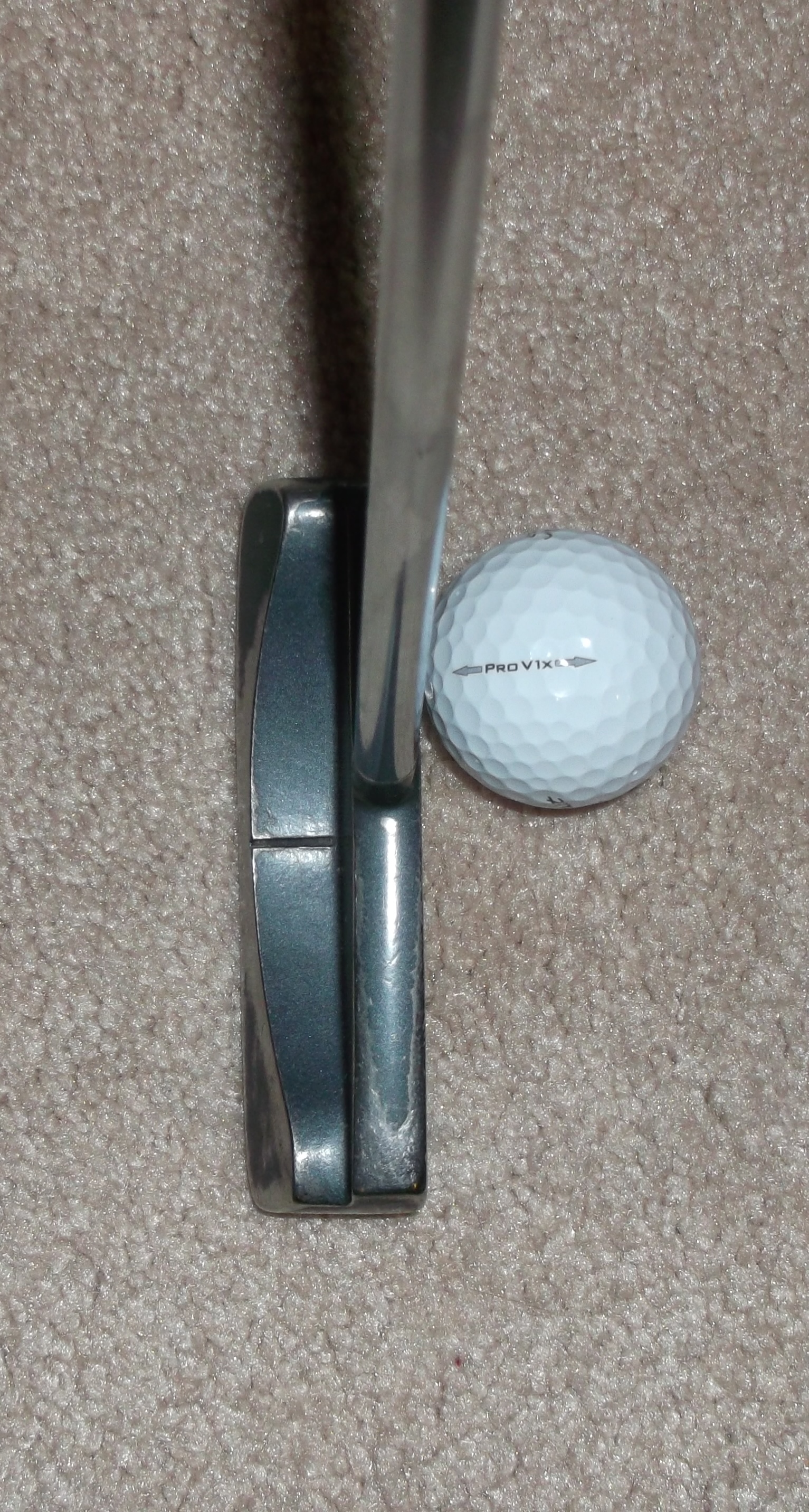
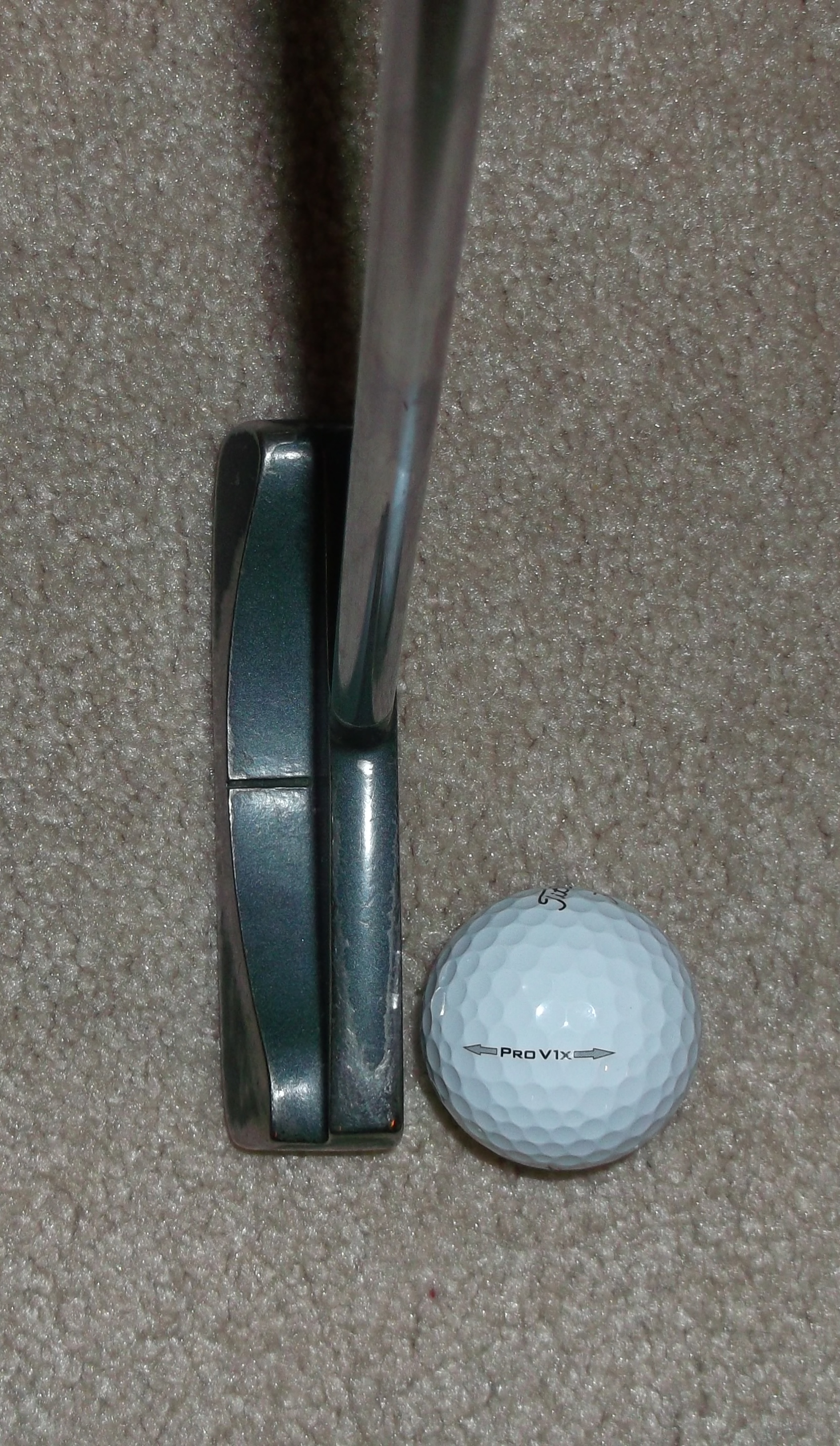
When making a putt, the intent is to make solid, square contact between the putter head and the ball. To find the sweet spot on your putter, look at the back and you will see a dot or a line indicating the centre or sweet spot of your putter. Sometimes there is a line on top of the putter head that can be used as a guide during your putting stroke.

Putt Centre

Centre

Hitting the all in the centre of your club face is very important. By doing so, the ball will bounce off the putter consistently every time. Also, it helps with judging the speed of the ball because the same stroke will produce the same distance every time. By hitting the ball off-centre of the putter face, the ball will not travel as far as it normally would. This contact inconsistency sometimes leads players to think the green is slow, but in fact it is the fault of the putting stroke.

Putt Toe

Toe

Unintentionally hitting the ball off the toe of the club causes the club face to open. The result is the ball will travel right of line (for right-handed players). Additionally, the ball will not travel as far as discussed above. Now, sometimes players, including myself, will intentionally hit the ball off the toe of their putter. This is usually done when the greens are very fast, you have a slick down hill putt or a hard breaking putt from right to left. For me, when I intentionally hit the ball off the toe, I ever so slightly grip tighter with my left hand to make sure the putter face remains square during contact.

Putt Heel

Heel

Unintentionally hitting the ball off the heel causes the club face to close. As a result the ball will start left of its intended line (for right-handed players). The ball will not travel as far either. I never intentionally hit the ball off the heel, but logic would suggest the results would be opposite than hitting it off the toe. Maybe one of the readers can help us out with their explanation of intentionally hitting the ball of the heel of their putter.

I try to intentionally hit the ball in the centre of my putter most of the time. To practice hitting the sweet spot, I use two tees on either side of the putter head. The tees are just wide enough so the putter can travel through when making my stroke. It is important to pay attention to the placement of the ball in between the two tees. You want to make sure you are placing the ball in line with the putter sweet spot.

Lastly, the three putter drills provided in the video below are new. I have not seen them before and think they would great for us house bound players waiting for the snow to melt. My favorite drill is the first one. Which is yours?

I am a grateful golfer! See you on the links.


Pareto’s Principle and Golf

In 1906, Italian economist Vilfredo Pareto created a mathematical formula to describe the unequal distribution of wealth in his country, observing that twenty percent of the people owned eighty percent of the wealth. In the late 1940s, Dr. Joseph M. Juran inaccurately attributed the 80/20 Rule to Pareto, calling it Pareto’s Principle. While it may be misnamed, Pareto’s Principle or Pareto’s Law as it is sometimes called, can be a very effective tool to help you manage effectively. (about money)

Wow, how does this interesting economic factoid influence your golf game, you may ask? Let me explain it in another way. The Pareto principle, also known as the 80–20 rule, states that, roughly 80% of the effects come from 20% of the causes. So basically, when working on your golf game, make sure practice time on the 20 percent that really matters.

Pareto's Law Works In Golf!

Pareto’s Law Works In Golf!

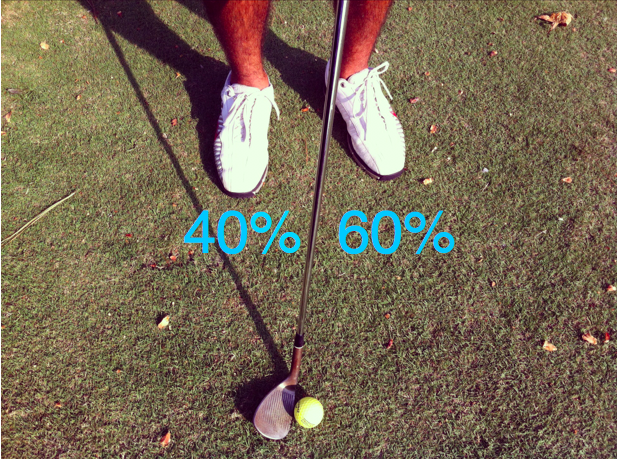
Those 20 percent produce 80 percent of your results. Identify and focus on those things. For example, I had trouble is chipping from 50 yards. I did not focus on the real issue that was common to all chips, but focused on each individual challenge. Before, I never distributed most of my weight to my front foot when chipping. I had an even distribution of weight on both feet. The result was I scooped the ball often and was short on most of my chip shots. I tried many things like changing clubs, a different ball, more hand motion, less hand motion, etc….basically I was focusing on the 80%. Once I figured out that I needed to have more weight on my front foot, all my chips improved and positive results occurred during all my chips from within 50 yards.

I believe in Pareto’s Principle. It can be applied to all areas of my life, especially my golf game. I now take a different approach to improving my golf game, I look at the larger picture to see what area of improvement will benefit the most parts of my game.

This year, I am working on my swing sequence as discussed in previous posts. The bump, chest catch up, and complete follow through will be beneficial to all my full swings….focusing on this 20 percent that will affect the 80 percent.

What is your 20% this year?

I am a grateful golfer! See you on the links!
15 Minute Golf Lesson

Who would have thought that a 15 minute golf lesson would shape the future of my 2015 golfing season. My recent excursion to the Toronto Golf and Travel Show, as you have read from the past two posts, was fun and educational. However, the highlight of my time at the golf show as the 15 minute golf lesson I received from James Hutchinson, an Associate Golf Professional at Blue Springs Golf Club.

At the start of the lesson, James asked me what I wanted to work on, how much I golfed, and where I played. My objective of the lesson was to hit the ball further off the tee and after a quick discussion, we were ready to start. We grabbed a 7-iron to warm up and a driver with a stiff shaft; it was almost exactly like my driver back home. As I warmed up, we continued to discuss my goals and he said something I thought was quite funny, yet extremely important.

I explained that by gaining the extra distance, it would equate to lower scores. I mentioned I was trying to consistently hit the ball about 260-270 yards off the tee instead of my normal 240-250. This would allow me to approach the green with an 8 or 9 iron instead of my usual 6 or 7 iron. Above all, I wanted to keep my accuracy. James suggested that I should practice putting and chipping more to lower my scores. Although he was tough and cheek at that time, this advice is excellent and should be heeded by everyone.

Golf lesson

Golden Tips


Ok, back to the lesson. After he watch me hit about 15 balls, he notice that my swing was smooth, but not generating the power I was looking for!  James explained that a swing has three distinct motions: the first movement of the lower body (he called the bump), the rotation of the chest to catch up with the hips, and the follow through of all body parts to the a high finish. Well this was profound for me. I understood the mechanics, but James suggestion of a bump first with the hips was the missing piece I was looking for to hit the ball farther.

Check out the video below to see what I mean:

So I am practicing the three distinct movements without a club. It does feel uncomfortable, but I think this is going to be my way forward to improve my game in the early part of the upcoming golf season.

Thanks James, I am grateful for the tip. Anyone looking for a lesson and you are in the Acton, Ontario area, James is your man.

I am a grateful golfer! See you on the links!